How to remove scorch marks and iron stains from clothes
To remove a light scorch mark, wash the item with chlorine bleach if the fabric allows, or soak it in oxygen bleach and hot water and then launder. On white fabric, dabbing 3% hydrogen peroxide on the mark also works. A scorch isn't dirt; it's fiber that heat has browned, so you can only bleach the discoloration. Heavy scorch that has left fabric stiff, brittle or thin is permanent.
- Best method
- Bleach wash, oxygen bleach soak or hydrogen peroxide
- Time
- 30 minutes to a few hours, plus a wash
- Difficulty
- Moderate
- Stain type
- Scorch and heat damage
You will need
- Chlorine bleach or oxygen bleach, per the label
- 3% hydrogen peroxide, for whites
- Two clean white cloths
- Laundry detergent
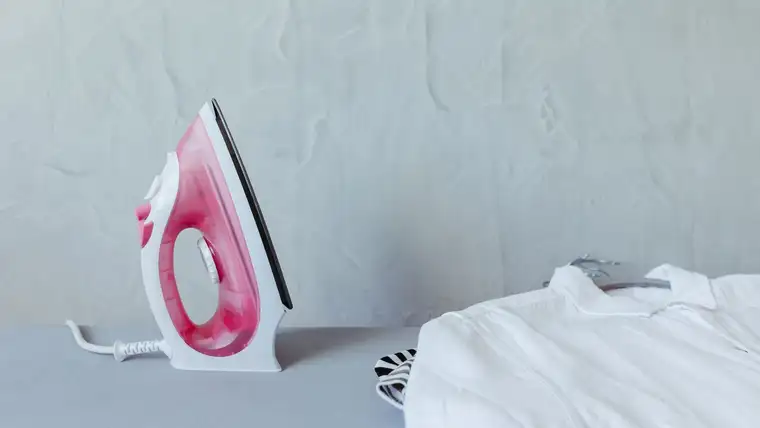
How to remove scorch stains
- 1
Check how bad it is
Feel the scorched area. A light tan mark on soft fabric can often be treated. Fabric that's stiff, brittle, shiny or thin has been damaged.
Why: Light scorch is surface discoloration that bleach can lighten. Heavy scorch means charred fiber, which no treatment restores.
- 2
Read the care label
Check which bleach the label allows and how hot the water can be, and test any bleach on a hidden seam of colored fabric.
Why: The treatments rely on bleach and hot water, which can damage some fibers and dyes.
- 3
Wash or soak with bleach
Launder with detergent, hot water and chlorine bleach if safe for the fabric. Otherwise, soak in oxygen bleach and hot water, then launder.
Why: Oxidizing bleach breaks down the brown compounds that heat created on the fiber surface.
- 4
Whites: hydrogen peroxide for a stubborn mark
Wet a light scorch with 3% hydrogen peroxide and keep it moist for several minutes. For a heavier mark, lay a cloth dampened with peroxide on it, cover with a dry cloth and press with an iron. Rinse well and launder.
Why: Peroxide oxidizes the discoloration, and gentle heat speeds it up. Ironing through a dry cloth keeps the iron off the wet spot.
- 5
Dry in the sun and check
Air-dry, in the sun if possible, and check. Repeat the oxygen bleach soak if it's still lightening.
Why: Sunlight is a mild bleach that can fade slight traces.
What a scorch mark really is
A scorch isn't something on the fabric; it's the fabric itself, browned and partly broken down by heat, usually from an iron set too hot. That makes it a heat-damage stain, and the outcome depends on how deep the damage goes. Light scorch is a surface discoloration that bleach can often lighten or remove. Heavy scorch has weakened or charred the fibers, and the University of Georgia extension is blunt: severe scorch can't be removed.
Fiber type matters too. Old government stain bulletins note light scorch on cotton and linen can usually be removed, but wool and silk can seldom be restored. Synthetics such as polyester and nylon often melt instead of browning, and a melted, shiny patch can't be repaired.
Iron stains: scorch or rust?
People say iron stains for two different things. A brown, flat mark the shape of the iron's soleplate is scorch, covered on this page. Orange-brown spots from rusty water, a rusty hanger or a steam iron's tank are rust, and they need the opposite treatment: chlorine bleach makes rust worse. See rust stains for those.
To prevent scorch, set the iron to the temperature the care label shows, and use a pressing cloth on dark or delicate fabric.
Scorch on every surface
The method changes with the surface: fabrics can soak, carpets and mattresses can't. Pick yours for the full steps.
| Surface | What works |
|---|---|
| Clothes | Wash light scorch with chlorine bleach if the label allows, or soak in oxygen bleach and hot water; on whites, 3% hydrogen peroxide helps. Stiff, brittle or melted fabric can't be restored. |
By situation
Light scorch on white cotton or linen
This has the best odds. Use a chlorine bleach wash if the label allows, or hydrogen peroxide, then dry in the sun.
Scorch on colored fabric
Use oxygen bleach only, after a test. Bleach may lighten the dye around the scorch as well, leaving a pale patch instead of a brown one.
Sources disagree on the iron temperature
Old government bulletins pressed the peroxide cloth with a medium-warm iron, while the University of Georgia extension uses an iron as hot as is safe for the fabric. Start with the cooler setting; it's the safer choice.
Wool, silk and synthetics
Wool and silk can seldom be restored, and chlorine bleach damages them. Melted synthetic fabric can't be repaired. Take valuable or tailored pieces to a professional, who can advise on reweaving or repair.
Scorch on wood or carpet
These need refinishing-style repairs, such as light sanding or wood bleaching, which can damage the finish around the mark. Test in a hidden spot, or call a professional.
What not to do
- Don't iron directly on a peroxide-dampened spot. Always iron through a dry cloth. Old bulletins warned that ironing straight onto the wet spot can cause rust marks.
- Don't use chlorine bleach on wool, silk or spandex. It damages these fibers.
- Don't rub a scorched area hard. Heat-weakened fibers can tear.
- Don't use chlorine bleach on rust-type iron stains. Chlorine bleach sets rust and can make it permanent.
Other methods that work
Salt and lemon juice in the sun
The University of Georgia extension suggests sprinkling salt on the scorch, wetting it with lemon juice and spreading it in the sun to dry, then laundering.
Caution: Whites and colorfast fabric only; sun and acid can fade dyes.
Washing and sun-drying
For very slight scorch, a normal wash and a day in the sun may be enough. This is a traditional method with weak evidence.
Caution: Sun fades colors.
Stain still there?
The mark lightened but a shadow remains
Repeat the oxygen bleach soak or the peroxide treatment. If it stops improving, the remaining mark is fiber damage.
The fabric feels stiff or has a hole after treatment
The scorch had weakened the fibers. It can't be reversed; a tailor may be able to patch or reweave it.
Safety
- Never mix chlorine bleach with ammonia or acids.
- Use only 3% hydrogen peroxide, and rinse it out before washing with other products.
Never mix cleaning products; see chemicals you must never combine.
Questions
Can scorch marks be removed?
Light ones often can, with a bleach wash, an oxygen bleach soak or hydrogen peroxide. Heavy scorch that has left fabric stiff or brittle is permanent.
How do you remove iron stains from clothes?
If it's a brown scorch from the iron, use a bleach wash or 3% hydrogen peroxide. If it's orange rust from water or a hanger, use a fabric rust remover and never chlorine bleach.
Does hydrogen peroxide remove scorch marks?
On white fabric, often yes. Keep the mark moist with 3% peroxide for several minutes, or press it under a peroxide-dampened cloth with a dry cloth on top, then rinse and launder.
Sources
- Stain Removal Guide, American Cleaning Institute
- Remove Stains From Scorch, Burns, University of Georgia Cooperative Extension
- Stain Removal from Fabrics: Home Methods (Farmers' Bulletin 1474, rev. 1951; historical), U.S. Department of Agriculture (digitized by Project Gutenberg)
- Stain Removal for Washable Fabrics (HE 2-840), University of Kentucky Cooperative Extension Service
- Chlorine gas: What happens if you mix bleach and other cleaners, National Capital Poison Center (Poison Control)
Last updated . Methods are drawn from the sources above; how we research and check our guides.