Cleaning methods explained
Every cleaning agent works by one of a few mechanisms: acids dissolve minerals, bases cut grease, oxidizers bleach color, surfactants lift oil, solvents dissolve what water can't, and enzymes digest proteins. Knowing which is which tells you what a product will clean, what it will damage, and why some popular combinations cancel each other out.

Cleaning agents
Acetone
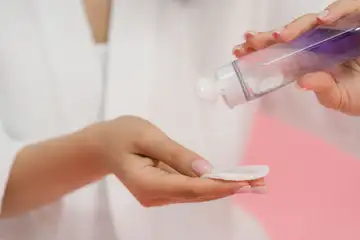
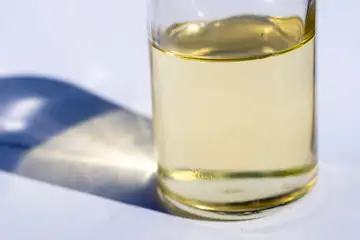
Acetone is a fast-evaporating solvent that dissolves nail polish, lacquer, some glues and resins that water and detergent can't touch.
Household ammonia
Household ammonia is ammonia dissolved in water, a moderate alkali that loosens greasy and protein soils, neutralizes acids and evaporates without much residue.
Baking soda
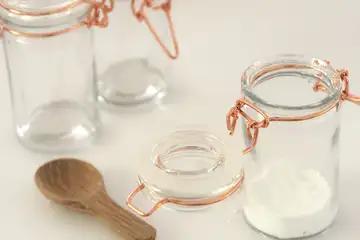
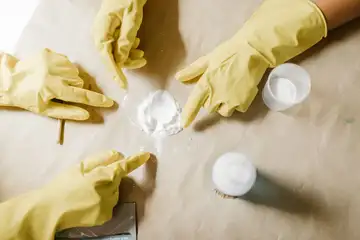
Baking soda (sodium bicarbonate) cleans in three ways: as a gentle abrasive in a paste, as a mild alkali that loosens greasy and acidic soil, and as an odor absorber.
Borax
Borax (sodium tetraborate) is a mild-to-moderate alkali and water softener sold as a laundry booster.
Chlorine bleach
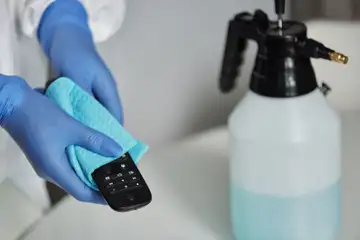
Chlorine bleach is sodium hypochlorite in water, a strong alkaline oxidizer that decolorizes stains, whitens, deodorizes and, diluted correctly, disinfects hard surfaces.
Cornstarch and other absorbents
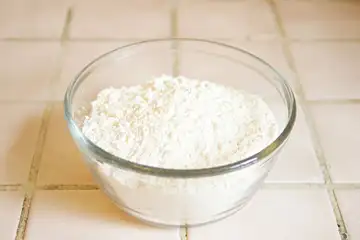
Cornstarch and other absorbent powders draw loose oil and grease out of fabric, carpet, suede and stone by capillary action, the way a paper towel soaks up water.
Dish soap
Liquid dish soap is a mild, near-neutral surfactant that surrounds oily soil and holds it in water so it rinses away.
Dry-cleaning solvent
Dry-cleaning solvent, sold as cleaning fluid or spot remover, is a non-water solvent that dissolves grease, oil, wax, tar and resin that water can't.
Enzyme cleaner
An enzyme cleaner uses biological catalysts (proteases, amylases, lipases) to cut protein, starch and fat into small, water-soluble pieces that rinse away.
Glycerin
Glycerin for stain removal works as a softener, not a cleaner: it rehydrates dried or set stains and dissolves some ink dyes, so detergent or a solvent can then carry them away.
Hydrogen peroxide (3%)
Hydrogen peroxide for stains means the 3% drugstore solution, a mild oxygen-type bleach.
Laundry pretreatment
To pretreat stains, apply a prewash spray, gel or stick, or rub heavy-duty liquid detergent into the spot, let it work briefly, then wash right away in the warmest water the care label allows for that stain.
Lemon juice and citric acid
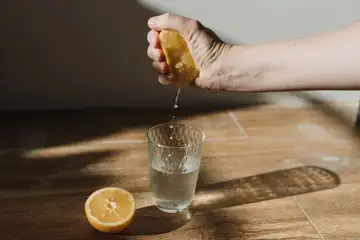
Lemon juice for cleaning works because it's a weak acid.
Oxygen bleach
Oxygen bleach is powdered sodium percarbonate, which releases hydrogen peroxide and washing soda when it dissolves.
Rubbing alcohol
Rubbing alcohol for stains works as a solvent: isopropyl alcohol dissolves many dyes, inks and resins that water won't touch, then evaporates without leaving residue.
Salt
Salt for stains works physically, not chemically.
Washing soda
Washing soda is sodium carbonate, a strong household alkali sold as a laundry booster.
White vinegar
Cleaning with vinegar works because white vinegar is a dilute acid, about 5% acetic acid.