Cleaning with chlorine bleach: what it cleans and what it ruins
Chlorine bleach is sodium hypochlorite in water, a strong alkaline oxidizer that decolorizes stains, whitens, deodorizes and, diluted correctly, disinfects hard surfaces. It's the most effective household bleach, which is also why it ruins wool, silk, spandex and some finishes and sets rust stains. Dilute it only with water: mixed with ammonia, acids or alcohol it releases toxic gases.
- Best method
- Disinfecting hard surfaces and whitening bleach-safe whites
- Time
- At least 1 minute wet contact to disinfect
- Difficulty
- Moderate
You will need
- Regular, unscented household bleach
- Room-temperature water and measuring spoons
- Gloves and eye protection
- Good ventilation
- Soap or detergent, to clean first
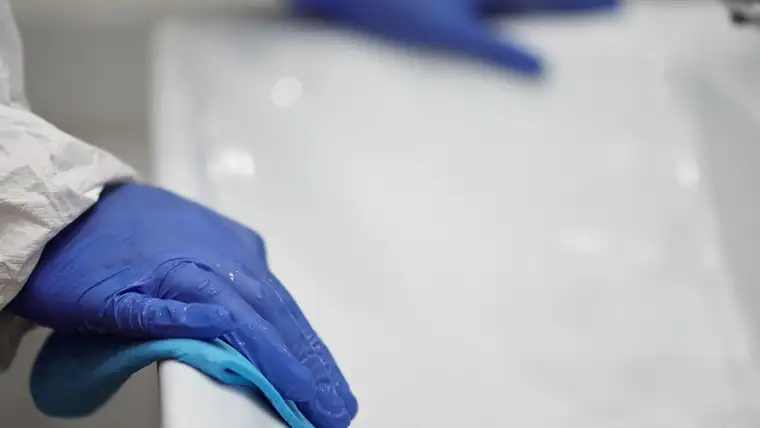
Step by step
- 1
Read the bottle
For disinfecting, use regular, unscented bleach whose label lists disinfection. Most US household bleach contains 5 to 9% sodium hypochlorite; concentrated, scented and splash-less versions differ.
Why: The CDC dilutions assume regular bleach. A different strength or formula changes how much you need.
- 2
Ventilate and protect your skin and eyes
Open windows or doors and wear gloves and eye protection as the label directs. Make sure no other cleaner is on the surface or in the bucket.
Why: Bleach vapor irritates the airways, and leftover ammonia or acid from another product can react with it.
- 3
Clean the surface first
Wash away visible dirt and grime with soap or detergent and water, then rinse.
Why: The CDC's bleach guidance is for disinfecting surfaces that have already been cleaned of visible dirt.
- 4
Dilute with room-temperature water only
Mix 5 tablespoons (1/3 cup) of bleach per gallon of room-temperature water, or 4 teaspoons per quart. Add nothing else.
Why: This is the CDC disinfecting dilution. Plain water is the only safe thing to mix bleach with.
- 5
Keep the surface wet for at least 1 minute
Apply the solution and leave the surface visibly wet for at least 1 minute, then let it air-dry or rinse as the label directs.
Why: Disinfection depends on contact time. Wiping it off at once doesn't give the hypochlorite long enough to work.
- 6
Make it fresh each day
Pour out leftover solution at the end of the day and mix a new batch next time.
Why: Diluted bleach loses its effectiveness after about 24 hours.
What chlorine bleach is and how it works
Household chlorine bleach is sodium hypochlorite dissolved in water. It's alkaline and a strong oxidizer: it attacks the colored compounds in stains and breaks them into colorless ones, which is how it whitens. The same oxidizing power deodorizes and, at the right dilution and contact time, kills germs on hard surfaces.
That strength cuts both ways. Bleach doesn't distinguish between a stain and a dye or fiber that oxidizes easily, so it removes color from fabrics that aren't colorfast and weakens protein fibers and some synthetics. It also cancels the action of oxygen bleach and enzyme presoaks, so use those separately.
What chlorine bleach is good for, with the ratios
- Disinfecting hard, nonporous surfaces after cleaning (CDC): 5 tablespoons (1/3 cup) per gallon or 4 teaspoons per quart of room-temperature water, wet for at least 1 minute, made fresh daily.
- Final traces of dye and tannin stains (coffee, tea, wine, soft drinks, mustard, grass) on white or colorfast washables: the Kentucky extension guide adds chlorine bleach to the wash if the fabric can take it. Check the care label symbols.
- Mildew on bleach-safe fabric: University of Georgia Extension soaks the item in 1/4 cup bleach plus 3/4 cup water for 10 to 15 minutes, then launders it in the hottest water the fabric allows. See mildew on clothes.
- In the washer: never pour undiluted bleach onto fabric. Use the machine's bleach dispenser, or dilute the bleach in water before adding it.
- Colorfastness test (University of Georgia Extension): mix 1 tablespoon of bleach in 1/4 cup of water, put one drop on a hidden area, wait 1 minute and blot. If the color changes, don't use chlorine bleach on that item.
What chlorine bleach damages, and what never to mix it with
- Wool, silk, spandex and polyurethane foam: bleach damages them, and chlorine stains on wool, silk and spandex can't be removed.
- Resin-treated (permanent-press) and flame-retardant finishes, and some nylon: the finish holds on to chlorine, which yellows and weakens the fabric, and some nylon yellows permanently.
- Dyes that aren't colorfast: the color bleaches out. Run the drop test first.
- Rust and iron stains: chlorine bleach intensifies them or sets them. In homes with iron-rich water, use oxygen bleach for laundry. See rust stains.
- Aluminum, linoleum, shiny enamel and metal containers: bleach darkens aluminum, makes linoleum brittle and can dull enamel if undiluted. Metal containers also speed the bleach's action and can tarnish.
Mix bleach only with water. With ammonia or ammonia-containing products (some glass cleaners, and urine) it forms chloramine gases. With acids (vinegar, lemon juice, some toilet-bowl cleaners, lime and rust removers, some dishwasher detergents, acidic drain cleaners) it releases chlorine gas. With rubbing alcohol it forms chloroform. The New Jersey Department of Health also warns against combining it with hydrogen peroxide, oven cleaners, drain openers, pool chemicals and some insecticides. See which cleaning chemicals never to mix.
By situation
White cotton and linen
Bleach works best here, but only on items whose care label allows it. Use the dispenser or dilute it first, and keep to the amount on the bottle.
Colored clothes
Do the one-drop test on a hidden seam. If the color shifts, switch to oxygen bleach, which is safe for most colorfast fabrics.
Spandex, wool, silk and stretch fabrics
Don't use chlorine bleach at all. It damages these fibers, and any chlorine marks on them are permanent.
Yellowing from iron in the water
Chlorine bleach makes iron stains worse. Switch to oxygen bleach for laundry, and use a fabric rust remover on existing marks.
Mold on walls and hard surfaces
The EPA does not recommend biocides such as chlorine bleach as a routine part of mold cleanup. Scrub hard surfaces with detergent and water, dry them, and fix the moisture problem that let the mold grow.
Toilets, litter boxes and urine spots
Urine contains ammonia compounds, and many toilet-bowl cleaners are acidic. Flush or rinse thoroughly before using bleach, and never pour it on top of another cleaner.
What not to do
- Never mix bleach with ammonia, vinegar or other acids, or rubbing alcohol. These combinations release chloramine, chlorine gas or chloroform.
- Don't pour undiluted bleach directly onto fabric. Undiluted bleach damages fabric and can remove color where it lands.
- Don't use it on rust stains. Chlorine bleach sets or intensifies iron and rust stains instead of removing them.
- Don't use it with oxygen bleach or an enzyme presoak. Chlorine bleach cancels their action, so you lose both treatments.
- Don't keep diluted bleach for later. It loses effectiveness after about 24 hours, so a stored solution may not disinfect.
Other methods that work
Oxygen bleach
For colors, spandex blends and homes with iron-rich water, oxygen bleach (sodium percarbonate) lifts stains without chlorine's damage to dyes.
Caution: Follow its own label, and never use it in the same wash as chlorine bleach, which cancels it.
Detergent and water for mold
The EPA's approach to household mold is to scrub hard surfaces with detergent and water, dry them and stop the moisture source.
Caution: Cleaning without fixing the moisture source lets the mold grow back.
Fabric rust remover
For rust and iron marks on fabric, the extension guides use a commercial rust remover made for fabrics instead of bleach.
Caution: Rust removers are acidic. Keep them well away from chlorine bleach.
Stain still there?
A stain turned yellow or orange after bleaching
It probably contained iron, and chlorine bleach intensified it. Rinse well and treat it with a fabric rust remover.
White nylon or a permanent-press shirt turned yellow
Resin finishes and some nylons hold on to chlorine and yellow. The change in some nylon is permanent. Use oxygen bleach on those items from now on.
Pale spots appeared on colored fabric
Bleach removed the dye, and that can't be reversed. Next time, do the one-drop test first.
You smell a sharp chlorine odor and your eyes or throat burn
Leave the area and get fresh air. If you mixed bleach with something, call Poison Help at 1-800-222-1222, or 911 for trouble breathing.
Safety
- Mix chlorine bleach only with room-temperature water.
- Ventilate and wear gloves and eye protection as the label directs.
- Rinse surfaces thoroughly between different products.
- Store it in its original labeled container, out of reach of children.
Never mix cleaning products; see chemicals you must never combine.
Questions
What is the bleach to water ratio for disinfecting?
The CDC uses 5 tablespoons (1/3 cup) of regular bleach per gallon of room-temperature water, or 4 teaspoons per quart. Keep the surface wet for at least 1 minute and mix a fresh batch each day.
Does bleach remove rust stains?
No. Chlorine bleach sets or darkens rust and iron stains. Use a fabric rust remover instead.
Is bleach the best thing for mold?
The EPA says biocides like chlorine bleach aren't recommended as a routine part of mold cleanup. Scrub with detergent and water, dry the area and fix the moisture problem.
Does more bleach make laundry whiter?
No. Extra or undiluted bleach weakens fibers, and resin finishes and some nylons turn yellow from chlorine. Use the amount on the label.
Can you mix bleach and vinegar to clean?
Never. Vinegar is an acid, and acids release chlorine gas from bleach. The gas irritates the eyes and lungs and can cause serious breathing problems.
Other cleaning agents
- Cleaning with acetone: what it removes and what it ruins
- Cleaning with ammonia: what it cleans and what it ruins
- Cleaning with baking soda: what it cleans and what it doesn't
- Cleaning with borax: what it does and how safe it is
- Cornstarch and other absorbents: how they lift grease stains
- Cleaning with dish soap: what it removes and how much to use
- Dry-cleaning solvent: what it removes and how to use it safely
- Enzyme cleaners: what they break down and how to use them
- Glycerin for stain removal: what it loosens and how to use it
- Hydrogen peroxide for stains: what it removes and what it can lighten
- How to pretreat stains: sprays, gels, sticks and detergent
- Cleaning with lemon juice and citric acid: what it removes and ruins
Sources
- Cleaning and Disinfecting with Bleach, Centers for Disease Control and Prevention
- Stain Removal for Washable Fabrics (HE 2-840 / FCS2-840), University of Kentucky Cooperative Extension Service
- Care Products, University of Georgia Cooperative Extension (Textiles)
- Remove Stains From Mildew, Mold, University of Georgia Cooperative Extension
- Hazard Alert: Mixing Bleach with Other Cleaning Products Can Be Deadly, New Jersey Department of Health
- A Brief Guide to Mold, Moisture and Your Home, U.S. Environmental Protection Agency
Last updated . Methods are drawn from the sources above; how we research and check our guides.