Cornstarch and other absorbents: how they lift grease stains
Cornstarch and other absorbent powders draw loose oil and grease out of fabric, carpet, suede and stone by capillary action, the way a paper towel soaks up water. Sprinkle them on, give them time (hours, not minutes), then brush or vacuum them away and repeat. They don't break anything down, so a detergent or solvent step usually follows.
- Best method
- First step for fresh grease and oil
- Time
- 2 to 3 hours or overnight on fabric; a few hours on concrete
- Difficulty
- Easy
You will need
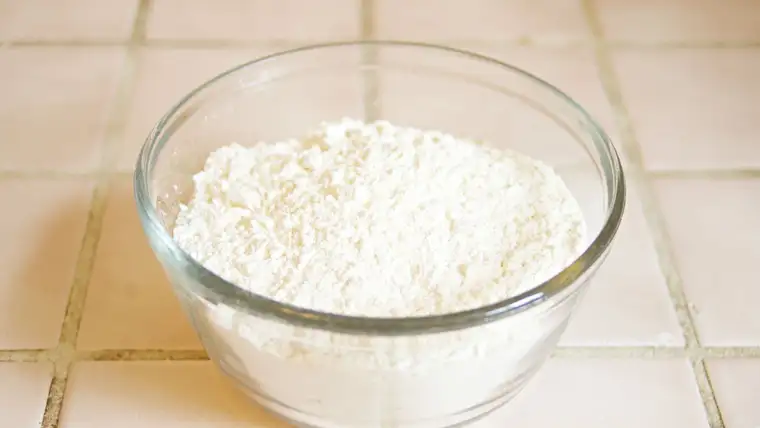
- Cornstarch, talcum powder or cornmeal
- Fuller's earth, sand or sawdust, for concrete and dark colors
- White paper towels or a white cloth
- A soft brush or a vacuum
- Detergent or a solvent, for the follow-up
Step by step
- 1
Blot off what's on the surface
Touch a white paper towel or white cloth to the spill to pick up excess oil. Don't press hard or rub.
Why: Pressing and rubbing push oil deeper into the fibers, where powder has a harder time reaching it. White materials won't transfer dye.
- 2
Cover the stain with a thick layer of powder
Lay the item flat and sprinkle cornstarch or talcum powder over the whole stain and a little beyond it. Use cornmeal on carpet and upholstery.
Why: The powder is porous. Oil wicks out of the fibers into the spaces between the grains.
- 3
Give it time
Leave the powder for 2 to 3 hours, or overnight, on fabric and upholstery.
Why: Capillary absorption is slow. A few minutes only reaches the oil on the surface.
- 4
Brush or vacuum it away
When the powder looks damp or has caked, brush it off a garment or vacuum it from carpet and upholstery.
Why: The caked powder holds the oil it has absorbed. Removing it takes the oil with it.
- 5
Repeat until nothing more is absorbed
Apply fresh powder and wait again until the new layer stays dry and loose.
Why: Each layer can hold only so much oil. When it no longer cakes, the loose oil is gone.
- 6
Pretreat and wash
Work a laundry pretreatment or liquid detergent into what's left, then wash in the hottest water the care label allows.
Why: Absorbents don't remove the oil that's bound to the fibers. Detergent emulsifies it and hot water helps carry it away.
- 7
Air-dry and check before using heat
Let the item air-dry and look at it in good light. Repeat the pretreatment if a mark remains. Don't iron or machine-dry it until the stain is gone.
Why: Heat sets oily stains, making them much harder to remove later.
How absorbents pull oil out
Absorbents work by capillary action. A fine, porous powder pressed against an oily fiber draws the oil out into the tiny spaces between its grains. As it fills, the powder darkens and cakes. You brush or vacuum it off, and fresh powder starts the process again.
Nothing is chemically broken down. That's both the advantage and the limit. Absorbents are gentle enough for suede, upholstery and stone, but they only take loose oil. Whatever has bonded to the fibers needs dish soap, a laundry pretreatment or a solvent afterward.
Which absorbent to use where
- Cornstarch and talcum powder: fine powders for fresh grease on clothing and light-colored fabrics. University of Georgia Extension uses talcum powder to absorb as much grease as possible before pretreating. See grease on clothes.
- Cornmeal: coarser, for oily spills and furniture polish on carpet and upholstery. Sprinkle, let it stand, vacuum, then follow with a solvent.
- Fuller's earth: a clay absorbent that suits dark colors and is used as a paste on leather and suede. On light suede, Georgia's guide uses cornstarch or cornmeal instead. See grease on suede.
- Sand, sawdust, cornmeal or Fuller's earth on concrete, brick and stone: spread a layer, leave it a few hours, then sweep it up. See oil stains on concrete.
- White paper towels and soft white cloths: for blotting any spill. Colored or printed ones can transfer dye.
By situation
Fresh grease or oil on clothes
This is where absorbents work best. Powder the spot before the oil spreads, wait a few hours, brush off, then pretreat and wash hot if the fabric allows.
An old or already-washed grease stain
Absorbents only take loose oil, so they do little once oil has bonded to fibers or been through a dryer. Go straight to a pretreatment or dry-cleaning solvent.
Carpet and upholstery
Sprinkle cornmeal over the oily spot, let it stand, vacuum, and then use a solvent cleaner on what remains.
Suede and leather
Use a Fuller's earth paste on darker colors, or cornstarch or cornmeal on light colors, as University of Georgia Extension recommends. Leave it to absorb, then brush it away gently.
Makeup, sunscreen and other oily cosmetics
University of Georgia Extension's cosmetics guide uses the same approach: an absorbent left for 2 to 3 hours or overnight, then pretreatment.
Driveways, garage floors and brick
Cover fresh oil with sand, sawdust, cornmeal or Fuller's earth, leave it a few hours and sweep it up.
What not to do
- Don't rub the powder in. Rubbing pushes oil deeper into the fabric and spreads the stain.
- Don't iron or machine-dry the item before the oil is out. Heat sets oily stains.
- Don't blot with colored or printed paper towels. Their dye can transfer into the damp, oily fabric.
- Don't use Fuller's earth on light-colored suede. University of Georgia Extension recommends cornstarch or cornmeal on light colors instead.
- Don't stop after the powder. Absorbents only take loose oil. The rest needs detergent or a solvent.
Other methods that work
Dish soap
Liquid dish soap emulsifies the oil that absorbents leave behind. Work a little into washable fabric, then wash.
Caution: Use only a little and rinse it out completely.
Dry-cleaning solvent
For oil on dry-clean-only fabrics and upholstery, a solvent dissolves what powder can't absorb.
Caution: Ventilate, keep it away from flames and test on a hidden area first.
Laundry pretreatment
A pretreatment spray or liquid detergent rubbed into the spot is the standard follow-up on washable clothes.
Caution: Check the garment before drying, and repeat if any mark remains.
Stain still there?
The powder didn't seem to do anything
It may not have had long enough, or the oil had already set. Leave fresh powder overnight. If the stain has been washed and dried, skip to a pretreatment or solvent.
A dark ring remains after brushing
That's bound oil the powder couldn't reach. Pretreat with detergent and wash, or use a solvent on fabrics that can't be washed.
Powder is left in the fabric or carpet
Brush a garment outdoors before washing it. Vacuum carpet and upholstery again until no powder comes up.
Safety
- Avoid breathing fine powders such as talc or cornstarch; sprinkle gently.
- Vacuum carpet thoroughly once the powder has done its work.
Never mix cleaning products; see chemicals you must never combine.
Questions
Does cornstarch remove grease stains?
It removes the loose oil, which is the first and most important step. It doesn't break down oil already bonded to fibers, so extension guides follow it with a pretreatment or solvent and a hot wash.
How long do you leave cornstarch on a grease stain?
On fabric and upholstery, 2 to 3 hours or overnight, according to University of Georgia Extension. Replace it with fresh powder until it stops caking.
Is baby powder or cornstarch better for oil stains?
Both work the same way, by absorbing oil. University of Georgia Extension uses talcum powder on grease and lists cornstarch alongside it, so use whichever you have.
What absorbs oil on concrete?
Sand, sawdust, cornmeal or Fuller's earth. Spread a layer over the fresh oil, leave it a few hours and sweep it up.
Can you use cornstarch on suede?
Yes. On light-colored suede and leather, cornstarch or cornmeal is the gentler choice. Fuller's earth suits darker colors.
Other cleaning agents
- Cleaning with acetone: what it removes and what it ruins
- Cleaning with ammonia: what it cleans and what it ruins
- Cleaning with baking soda: what it cleans and what it doesn't
- Cleaning with borax: what it does and how safe it is
- Cleaning with chlorine bleach: what it cleans and what it ruins
- Cleaning with dish soap: what it removes and how much to use
- Dry-cleaning solvent: what it removes and how to use it safely
- Enzyme cleaners: what they break down and how to use them
- Glycerin for stain removal: what it loosens and how to use it
- Hydrogen peroxide for stains: what it removes and what it can lighten
- How to pretreat stains: sprays, gels, sticks and detergent
- Cleaning with lemon juice and citric acid: what it removes and ruins
Sources
- Care Products, University of Georgia Cooperative Extension (Textiles)
- Remove Stains From Grease (Automotive, Cooling, Vaseline), University of Georgia Cooperative Extension
- Remove Stains From Cosmetics/Makeup/Sunscreen, University of Georgia Cooperative Extension
- Remove Stains From Oil, University of Georgia Cooperative Extension
- Remove Stains From Crayon, University of Georgia Cooperative Extension
- Stain Removal for Washable Fabrics (HE 2-840 / FCS2-840), University of Kentucky Cooperative Extension Service
Last updated . Methods are drawn from the sources above; how we research and check our guides.