Cleaning with acetone: what it removes and what it ruins
Acetone is a fast-evaporating solvent that dissolves nail polish, lacquer, some glues and resins that water and detergent can't touch. Use it undiluted in small amounts, applied from the back of the stain onto paper towels. It also dissolves acetate, triacetate and modacrylic fabric, many plastics and furniture finishes, so check the fiber and test first.
- Best method
- Nail polish, lacquer and some inks on sturdy fabrics
- Time
- A few minutes of blotting; it evaporates almost at once
- Difficulty
- Moderate
You will need
- Pure acetone or acetone nail polish remover
- Plain white paper towels
- A white cloth or a dropper
- Gloves
- Good ventilation, with no flames nearby
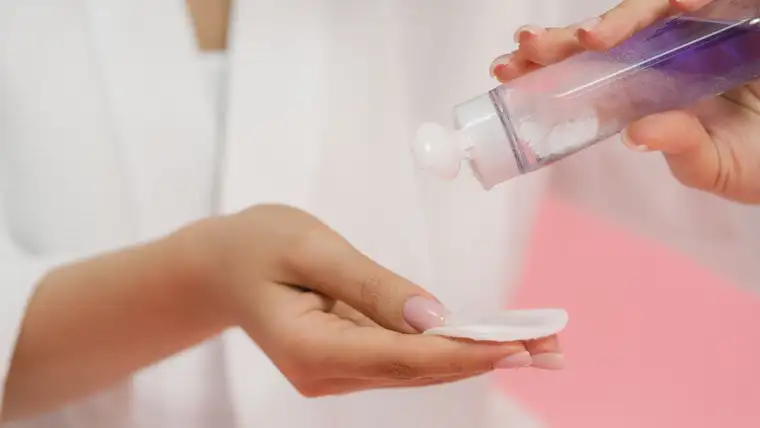
Step by step
- 1
Check the fiber content first
Read the care label. If it lists acetate, triacetate or modacrylic, don't use acetone at all: take the item to a dry cleaner. On other fabrics, dab a little on a hidden seam and let it dry before you go further.
Why: Acetone dissolves those three fibers outright. On other fabrics, the test shows whether the dye or a finish reacts.
- 2
Ventilate and remove ignition sources
Open a window, turn off nearby flames and pilot lights, and put on gloves. Work with a small amount, never a bowlful.
Why: Acetone is highly flammable, its vapor irritates the eyes, nose and throat, and repeated contact dries the skin.
- 3
Lay the stain face down on paper towels
Place the stained side against a thick pad of white paper towels so you can work from the back of the fabric.
Why: The dissolved polish moves out of the fabric into the towels instead of being pushed deeper or spread across the front.
- 4
Apply acetone to the back of the stain
Dab undiluted acetone onto the back of the stain with a white cloth or a dropper. Use just enough to wet the spot.
Why: Acetone softens and dissolves the lacquer so it can transfer out. Small amounts limit spreading and vapor.
- 5
Change the towels often and repeat
Move the stain to a clean area of towel each time color appears on it, and keep applying until nothing more transfers.
Why: A saturated towel puts dissolved polish back into the fabric. Fresh towels keep pulling it out.
- 6
Let it air out, then wash
Let the spot dry in a ventilated place, then wash the item as its care label directs and check it before machine drying.
Why: Washing removes the leftover solvent and any oils or color that came from a nail polish remover.
What acetone is and why it works
Acetone is a ketone, a small organic solvent. It dissolves lacquers, nail polish, some glues, plastics and resins, which are exactly the stains water and detergent can't break up. It also evaporates very quickly, so it does its work in seconds and leaves little behind. That makes it the standard remover for nail polish stains.
You'll find it in two forms in US stores. Pure acetone is sold in drugstores, beauty aisles and hardware stores. Acetone nail polish remover is acetone plus water, oils, fragrance and sometimes color, and those extras can make a fabric stain worse. University of Georgia Extension advises pure acetone where a guide calls for it. Non-acetone removers use different solvents, such as ethyl acetate, and they are a different product.
What acetone is good for
- Nail polish on washable fabrics (not acetate, triacetate or modacrylic): applied from the back onto paper towels that you change often. Even then, nail polish is sometimes impossible to remove completely.
- Water-based wood stain on clothing: the American Cleaning Institute says to blot it with acetone over paper towels.
- Felt-tip and stamp-pad ink (except red): University of Georgia Extension says to sponge it with acetone, rubbing alcohol or a prewash stain remover until the color stops bleeding.
- Nail polish on brick, concrete and stone, where it dissolves the lacquer on a surface water can't clean.
- Carpet spots: the Carpet and Rug Institute lists nail polish remover among its steps for nail polish, grease, lipstick and shoe polish, applied to a cloth, never poured.
There is no dilution. Acetone is used undiluted, in small amounts, on a white cloth or from a dropper.
What acetone damages, and what never to mix it with
- Acetate, triacetate and modacrylic fabrics and acetate carpet: acetone dissolves these fibers, and the Kentucky extension guide warns they can turn to froth immediately. Check the label before you start.
- Plastics, vinyl and furniture finishes: acetone attacks many plastics, nail polish remover can affect vinyl, and solvents can damage furniture finishes.
- Carpet backing: solvents poured onto carpet can damage the latex that holds the backing layers together.
Keep it away from chlorine bleach. Acetone and hypochlorite react to form chloroform. The New Jersey Department of Health also lists hydrogen peroxide and other oxidizers, and acetic acid (the acid in vinegar), as chemicals acetone reacts with; its warning is based on industrial strengths, but there is no reason to combine them at home. See which cleaning chemicals never to mix.
By situation
Nail polish on clothes
Blot rather than wipe, then work from the back with acetone over paper towels, as in the steps above. For the full fabric procedure, see nail polish on clothes.
You don't know what the fabric is
If there is no label, treat the item as if it might be acetate and test on a hidden seam first. If the test spot softens, puckers or gets sticky, stop and take it to a dry cleaner.
Acetate, triacetate or modacrylic
Don't use acetone or acetone nail polish remover. The Kentucky and Georgia extension guides send these fabrics to a dry cleaner for nail polish and lacquer stains.
Carpet
Put a small amount on a white cloth and blot, rather than pouring it on, so it doesn't reach the backing. Pretest in a closet or under furniture, and don't use it at all on acetate carpet.
Hard surfaces and plastics
Acetone is useful on brick, concrete and stone, but it can mark plastic, vinyl and finished wood. On anything with a finish or a plastic coating, test in a hidden spot or choose a different method.
What not to do
- Don't use acetone on acetate, triacetate or modacrylic. It dissolves these fibers and leaves a hole or a melted patch that can't be repaired.
- Don't pour acetone onto carpet or upholstery. Excess solvent can soak through and damage the latex holding the carpet backing together.
- Don't use it near a flame, a pilot light or a cigarette. Acetone is highly flammable, and its vapor can ignite before you see a spark.
- Don't mix it with chlorine bleach or use the two on the same spot without rinsing. Acetone and hypochlorite react to form chloroform.
- Don't use it on plastic, vinyl or finished furniture without a test. Acetone attacks many plastics and furniture finishes.
Other methods that work
Amyl acetate
University of Georgia Extension names amyl acetate as an alternative solvent for nail polish and lacquer on some fabrics.
Caution: It is still a flammable solvent. For acetate and triacetate, a dry cleaner remains the safer choice.
Rubbing alcohol
For felt-tip and stamp-pad ink, Georgia's guide lists rubbing alcohol as an equal option to acetone, sponged on until the color stops bleeding.
Caution: It does not dissolve nail polish the way acetone does. It is also flammable.
A professional dry cleaner
For acetate, triacetate, modacrylic, silk and valuable items, a cleaner can use solvents matched to the fiber. Tell them it's nail polish or lacquer.
Caution: Don't try acetone first and then take it in: if the fiber has dissolved, the damage is done.
Stain still there?
The polish spread into a bigger stain
The towel underneath was saturated, or the acetone was applied from the front. Turn the fabric over, use a fresh pad of towels, and change them every time color appears.
A colored or oily ring is left
Nail polish remover adds oils, fragrance and dye of its own. Repeat with pure acetone, then wash the item to remove the residue.
Some polish won't come out
The extension guides note that nail polish can be impossible to remove completely. After several rounds with fresh towels, stop before you damage the fabric and consider a dry cleaner.
The fabric went soft, sticky or developed a hole
The fiber was acetate, triacetate or modacrylic. Acetone has dissolved it, and the damage is permanent.
Safety
- Acetone is highly flammable. Ventilate and keep flames, pilot lights, sparks and cigarettes away.
- Breathing the vapor can cause headache, nausea and dizziness; get to fresh air if you feel any of these.
- Wear gloves: repeated contact irritates and dries the skin.
- Never mix acetone with chlorine bleach.
Never mix cleaning products; see chemicals you must never combine.
Questions
Is nail polish remover the same as acetone?
Not quite. Acetone nail polish remover is acetone plus water, oils, fragrance and sometimes color, and those extras can leave a mark on fabric. Non-acetone removers use other solvents, such as ethyl acetate.
What fabrics does acetone ruin?
Acetate, triacetate and modacrylic. Acetone dissolves them, sometimes instantly. Check the care label, and take those items to a dry cleaner.
Can you use acetone on polyester or cotton?
Generally yes. Cotton, linen, polyester and nylon tolerate it, but test a hidden seam for dye changes first and use it from the back of the stain.
Does acetone damage plastic?
It can. Acetone attacks many plastics and vinyl, and solvents can damage furniture finishes. Test in a hidden spot or use a different method on those surfaces.
What happens if you mix acetone and bleach?
They react to form chloroform, a toxic compound. Never combine them, and rinse thoroughly before switching from one to the other.
Other cleaning agents
- Cleaning with ammonia: what it cleans and what it ruins
- Cleaning with baking soda: what it cleans and what it doesn't
- Cleaning with borax: what it does and how safe it is
- Cleaning with chlorine bleach: what it cleans and what it ruins
- Cornstarch and other absorbents: how they lift grease stains
- Cleaning with dish soap: what it removes and how much to use
- Dry-cleaning solvent: what it removes and how to use it safely
- Enzyme cleaners: what they break down and how to use them
- Glycerin for stain removal: what it loosens and how to use it
- Hydrogen peroxide for stains: what it removes and what it can lighten
- How to pretreat stains: sprays, gels, sticks and detergent
- Cleaning with lemon juice and citric acid: what it removes and ruins
Sources
- Remove Stains From Fingernail Polish, Lacquer, University of Georgia Cooperative Extension
- Remove Stains From Ink (Ballpoint, Felt Tip, India, Mimeo, Stamp Pad), University of Georgia Cooperative Extension
- Stain Removal Guide, American Cleaning Institute
- Stain Removal for Washable Fabrics (HE 2-840 / FCS2-840), University of Kentucky Cooperative Extension Service
- Hazardous Substance Fact Sheet: Acetone (RTK 0006, rev. 2015), New Jersey Department of Health
- Spot Solver, The Carpet and Rug Institute
Last updated . Methods are drawn from the sources above; how we research and check our guides.