Glycerin for stain removal: what it loosens and how to use it
Glycerin for stain removal works as a softener, not a cleaner: it rehydrates dried or set stains and dissolves some ink dyes, so detergent or a solvent can then carry them away. Extension guides use it mainly on ballpoint ink and old stains, and as the softening ingredient in a homemade wet spotter of glycerin, dish detergent and water. It isn't a bleach or a detergent, so always follow it with a rinse and a wash.
- Best method
- Softening dried stains and ballpoint ink before washing
- Time
- Brief: work it in, then rinse and wash
- Difficulty
- Easy
You will need
- Glycerin (drugstore vegetable glycerin)
- Liquid dish detergent
- Water and a squeeze or spray bottle
- White cloths or paper towels
- Rubbing alcohol, for ballpoint ink
Step by step
- 1
Read the label and test a hidden spot
Check the care label first: dry-clean-only items go to a cleaner. Put a little of whatever you plan to use on an inside seam, let it stand 2 to 5 minutes, rinse, and look for any color or texture change.
Why: Glycerin itself is mild, but the detergent or alcohol you pair it with can affect some dyes.
- 2
Mix a wet spotter
Combine 1 part glycerin, 1 part liquid dish detergent and 8 parts water in a bottle, and shake before each use. Plain glycerin also works on a small spot.
Why: The glycerin softens the stain while the detergent supplies the surfactant that glycerin lacks.
- 3
Work it into the stain from the back
Lay the stain face down on a white cloth or paper towels and apply the spotter to the back. Work it in gently with your fingertips or the back of a spoon, and blot rather than rub.
Why: Glycerin rehydrates a dried stain so it loosens its grip on the fibers. Working from the back pushes the stain out the way it came in.
- 4
For ballpoint ink, alternate with alcohol
Sponge with rubbing alcohol, then glycerin, and repeat while the ink keeps transferring to the towel underneath. Finish with a little detergent worked into the spot.
Why: Alcohol dissolves the ink dye, glycerin softens the oily paste that carries it, and the detergent suspends what's left so it rinses out.
- 5
Rinse thoroughly
Flush the area well with water until it no longer feels slippery.
Why: Leftover stain-removal chemicals can cause a new stain, and glycerin doesn't evaporate the way alcohol does.
- 6
Wash and check before drying
Launder as the care label directs, then look at the spot before the item goes in the dryer. If any trace remains, repeat the treatment.
Why: Glycerin only loosens the stain. The wash is what removes it, and dryer heat can set what's left.
What glycerin is and why it loosens stains
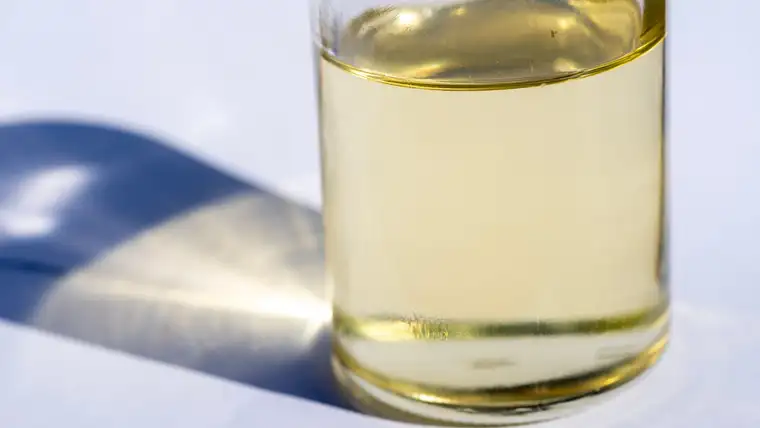
Glycerin (glycerol) is a thick, clear, water-soluble alcohol of the kind chemists call a polyol. It's a humectant: it attracts and holds water. Drugstores sell it as vegetable glycerin.
That water-holding property is the whole point. A stain that has dried hard is difficult for detergent to reach. Glycerin rehydrates and softens it, and it dissolves some ink dyes, so whatever you use next can work. Older extension bulletins made it the softening ingredient in the classic wet spotter, a mix of glycerin, detergent and water used to pretreat spots.
Glycerin is not a surfactant and not a bleach. It won't lift grease on its own, and it won't fade a colored residue. That's why the recipes pair it with dish soap, and why it's a first step rather than the whole treatment.
What glycerin is good for, and what it can't do
- Ballpoint ink. Michigan State and Kentucky extension guides name glycerin as helpful for ballpoint ink. The University of Georgia alternates rubbing alcohol and glycerin, then detergent. Some inks never come out completely, so treat ink stains before the first wash.
- Old or dried stains. Georgia's textile extension lists glycerin as a product that helps soften or loosen certain stains before laundering.
- A homemade pretreatment. A wet spotter made with glycerin keeps for repeated use on everyday spots.
The main risk is leaving it in. Extension guides tell you to rinse thoroughly after any spot treatment, because leftover chemicals can leave a mark of their own. Glycerin is mild, but the Georgia guidance still says to keep it out of reach of children.
Glycerin ratios, and what not to mix
Two published recipes differ slightly in strength:
- Wet spotter (Michigan State, Georgia): 1 part glycerin, 1 part liquid dish detergent, 8 parts water. Shake before use.
- Stain-remover squirt bottle (Vermont Department of Health): ¼ cup glycerin, ¼ cup liquid detergent and 1½ cups water, which works out to about 1 : 1 : 6.
Either is fine. The Vermont version is a little stronger. The sources list no dangerous reaction for glycerin itself, but the general rule still applies: use one stain remover at a time and rinse thoroughly before switching, and never mix bleach with ammonia, acids or alcohol. Alternating glycerin with rubbing alcohol on ink is part of the published method and is fine.
By situation
Ballpoint ink on clothes
Treat it before washing, because laundering can set some inks. Work from the back over paper towels, alternating rubbing alcohol and glycerin, and change the towels as they pick up color. Finish with detergent, rinse and wash.
An old stain that has dried stiff
Work glycerin or wet spotter into the spot and give it a little time to soften before rinsing and washing. If the stain is a protein, tannin or oil type, follow up with the method for that stain group, since glycerin only loosens it.
Dry-clean-only fabrics
Don't experiment with glycerin or water-based spotters. Take the item to a cleaner and say what the stain is.
Glycerin versus a store-bought pretreatment
A homemade wet spotter is a mild, detergent-based pretreatment. Commercial prewash products add solvents or enzymes that glycerin can't replace, so they're often the stronger choice on grease or protein stains.
What not to do
- Don't leave glycerin in the fabric. Unrinsed stain-removal chemicals can leave a new mark, and glycerin stays behind rather than evaporating.
- Don't dry the item until the stain is gone. Glycerin only loosens a stain. Heat from the dryer can set whatever the wash didn't remove.
- Don't expect glycerin to bleach or degrease. It's neither a surfactant nor a bleach, so color residues and grease need detergent, an oxidizer or a solvent afterward.
- Don't mix it into a bottle with other cleaners beyond the published recipe. Combining stain removers is how dangerous mixtures happen. Use one product at a time and rinse between them.
Other methods that work
Rubbing alcohol
The main solvent for ballpoint and felt-tip ink. It dissolves the dye directly and evaporates without residue. Glycerin is the helper; alcohol does most of the work on ink.
Caution: Alcohol can fade some dyes and damage acetate. Test first.
Laundry pretreatment
A prewash spray, gel or stick, or liquid detergent rubbed in, covers most everyday stains and adds surfactants, solvents or enzymes that glycerin lacks. See laundry pretreatment.
Stain still there?
The stain softened but didn't come out
Glycerin did its job. Now treat the stain by type: an enzyme detergent for protein, oxygen bleach for leftover color, or a solvent for oil, then wash again.
The fabric feels slick or a ring appeared after drying
Glycerin or detergent wasn't fully rinsed out. Rinse the area thoroughly with water and wash again.
Ink spread into a bigger blot
Keep a thick pad of paper towels underneath, change it often, and dab rather than rub so the dissolved ink moves into the towel instead of sideways.
Safety
- Keep glycerin and any homemade spotter out of reach of children.
- Test any spotter on a hidden area first, and label the bottle.
Never mix cleaning products; see chemicals you must never combine.
Questions
Does glycerin remove stains?
Not by itself. It softens dried stains and dissolves some ink dyes so detergent or alcohol can remove them, which is why it's used as a pretreatment before washing.
How do you make a stain remover with glycerin?
Mix 1 part glycerin, 1 part liquid dish detergent and 8 parts water, and shake before use. A Vermont Department of Health recipe uses ¼ cup glycerin, ¼ cup liquid detergent and 1½ cups water.
Is glycerin good for ballpoint ink?
Yes. Extension guides name it for ballpoint ink, usually alternated with rubbing alcohol and followed by detergent and a wash.
Is vegetable glycerin the same thing?
Yes. Vegetable glycerin is the glycerol sold in drugstores, and it's the form the recipes call for.
Can glycerin stain clothes?
It can leave a slick or darker patch if it isn't rinsed out. Rinse the area well and wash the item after treating.
Other cleaning agents
- Cleaning with acetone: what it removes and what it ruins
- Cleaning with ammonia: what it cleans and what it ruins
- Cleaning with baking soda: what it cleans and what it doesn't
- Cleaning with borax: what it does and how safe it is
- Cleaning with chlorine bleach: what it cleans and what it ruins
- Cornstarch and other absorbents: how they lift grease stains
- Cleaning with dish soap: what it removes and how much to use
- Dry-cleaning solvent: what it removes and how to use it safely
- Enzyme cleaners: what they break down and how to use them
- Hydrogen peroxide for stains: what it removes and what it can lighten
- How to pretreat stains: sprays, gels, sticks and detergent
- Cleaning with lemon juice and citric acid: what it removes and ruins
Sources
- Care Products, University of Georgia Cooperative Extension (Textiles)
- A General Guide to Stain Removal, Extension Bulletin E-1453 (adapted from Purdue; based on USDA Home and Garden Bulletin 62), Michigan State University Cooperative Extension Service
- Stain Removal for Washable Fabrics (HE 2-840 / FCS2-840), University of Kentucky Cooperative Extension Service
- Remove Stains From Ink (Ballpoint, Felt Tip, India, Mimeo, Stamp Pad), University of Georgia Cooperative Extension
- Keeping Your Home Healthy, Safe & Clean: Living Green (June 2017), Vermont Department of Health
- Removing Stains From Washable Fabric, Texas A&M AgriLife Extension
Last updated . Methods are drawn from the sources above; how we research and check our guides.