How to remove ink stains from fabric, white shirts, scrubs and more
To remove ink stains, put the fabric face down on paper towels and dab rubbing alcohol or a dry-cleaning solvent through the back, changing the towels as they pick up ink. Then rinse, rub in liquid detergent and wash. Ballpoint ink is dye in an oily paste that water can't dissolve, but alcohol can. Pretreat before washing, because a wash alone can set some inks.
- Best method
- Rubbing alcohol through the back, then wash
- Time
- 20 to 30 minutes
- Difficulty
- Easy
- Stain type
- Combination
You will need
- Rubbing alcohol or dry-cleaning solvent
- White paper towels
- Cotton balls or a white cloth
- Liquid laundry detergent
- Oxygen bleach, for leftover color
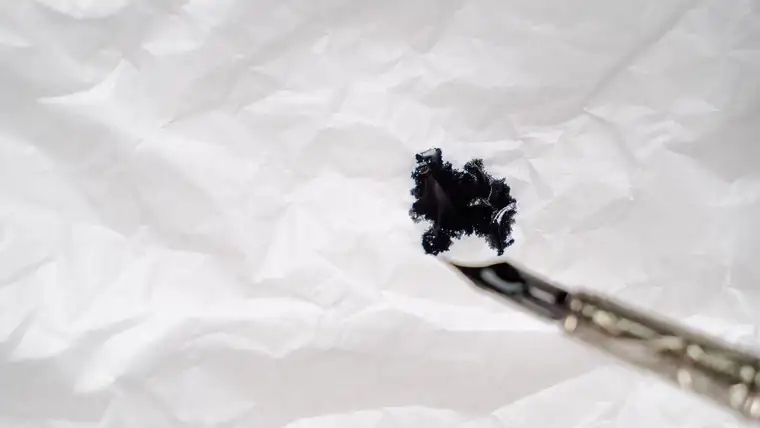
How to remove ink stains
- 1
Set the stain face down on paper towels
Lay the garment on a thick pad of clean white paper towels with the stain facing down.
Why: Ink dissolved by the solvent moves into the towel below instead of spreading sideways through the fabric.
- 2
Dampen around the stain first
Test rubbing alcohol on a hidden seam, then dab it in a ring around the outside of the stain before you treat the stain itself.
Why: Pre-wetting the edge keeps dissolved ink from wicking outward and drying as a ring. The test matters because alcohol can fade some dyes.
- 3
Dab alcohol through the back
Blot rubbing alcohol or dry-cleaning solvent onto the back of the stain with a cotton ball. Move to fresh towels as soon as ink shows on them, and keep going until no more transfers.
Why: Many ballpoint and permanent inks dissolve again in alcohol. Fresh towels stop the released ink from going back into the fabric.
- 4
Rinse and rub in detergent
Rinse the area well, then work in liquid laundry detergent. A prewash stain remover is an alternative to the alcohol step.
Why: Detergent removes the alcohol and the loosened dye before either can settle back in.
- 5
Wash, then treat any color left
Launder as usual. If a tint remains, soak in oxygen bleach, or use chlorine bleach on white fabric whose label allows it.
Why: The ink's oily carrier may be gone while its dye is still bonded to the fibers, and dye needs a bleach.
- 6
Air-dry and check
Air-dry the item and look at it in daylight. Repeat the alcohol step if any ink is visible.
Why: Dryer heat can set leftover ink permanently.
Why there's no single ink remover
Ink is a colorant carried in something that makes it flow, and the carrier varies. Ballpoint ink is a thick, oily paste of dyes in glycol-type solvents and resins, so water just beads on it. Gel and rollerball inks are water-based, with pigments or dyes in a gel. Fountain-pen and washable marker inks are water-based dyes. That mix of an oily carrier and a dye makes ink a combination stain.
So the remover has to match the ink. Alcohol or a dry-cleaning solvent dissolves ballpoint and many permanent inks. Washable inks rinse out with water and detergent while fresh. Once the carrier is gone, the dye may need an oxidizing bleach. The American Cleaning Institute is frank that some ballpoint, felt-tip and liquid inks can't be removed at all.
Ink on carpet, couches, leather, hands and paper
On carpet, the Carpet and Rug Institute's order for ink starts with nail polish remover, then dry-cleaning solvent, then a dilute dish detergent solution, all applied with a white cloth and blotted from the edges in, never poured. See ink on carpet. On a couch, follow the fabric's cleaning code. Leather is a job for a specialist; the Kentucky extension guide advises against treating it at home.
On hands, wash with soap and lukewarm water several times rather than scrubbing hard, since ink fades from skin with gentle repetition. A little rubbing alcohol on a cotton ball helps, then moisturize. Paper is different: ink soaks into the paper fibers, and alcohol or water makes it bleed, so fabric methods don't apply.
Ink on every surface
The method changes with the surface: fabrics can soak, carpets and mattresses can't. Pick yours for the full steps.
| Surface | What works |
|---|---|
| Carpet | Solvent on a cloth, blot from the edges in, rinse |
| Clothes | Rubbing alcohol blotted through the back, then wash |
| Couch | Blot with solvent or alcohol on a cloth, then mild detergent |
| Leather | Mild soap on a damp cloth, then a leather cleaner or a pro |
| Scrubs | Test rubbing alcohol on an inside seam, then dab it through the back onto paper towels, rinse, pretreat with detergent and wash before the scrubs go anywhere near the dryer. |
| White clothes | Use rubbing alcohol through the back, then wash; for a leftover blue or black tint, chlorine bleach (if the label allows) or oxygen bleach removes the dye. |
By situation
Ink on a white shirt
Do the alcohol step first, then wash. If a gray or blue shadow is left, use chlorine bleach on white cotton or linen whose label allows it, or oxygen bleach on anything else. Bleach alone won't shift the oily part of ballpoint ink, so don't skip the alcohol.
Ink on scrubs
Pens leak in scrub pockets, often through to the outside. Put paper towels inside the pocket as well as under the outer fabric, and work alcohol through from the inside. On colored scrubs, test the alcohol on an inside seam and use oxygen bleach only.
It went through the wash or the dryer
Check before drying and repeat the alcohol blotting if ink remains. If it has been machine-dried, try the same method, but the Kentucky and Texas A&M extension guides note that laundering can set some inks permanently. A pen that leaked in the dryer can mark the drum; unplug it and test any cleaner on a small area first.
Washable or gel ink
Water-based ink rinses out with cold water and detergent while it's fresh. Use alcohol only if water stops making progress.
Acetate, silk, wool and dry-clean-only items
On acetate and triacetate, dilute rubbing alcohol with two parts water and never use acetone, which dissolves these fibers. Take silk, wool and dry-clean-only items to a cleaner and tell them it's ink.
What not to do
- Don't wash the item before pretreating. A wash can set some inks, and it spreads dissolved ink across the garment.
- Don't rub the stain. Rubbing spreads dissolved ink into a larger stain. Blot through the back instead.
- Don't use milk on ink. New Mexico State's extension guide calls old remedies like milk unreliable, and milk can leave a stain of its own.
- Don't use acetone on acetate, triacetate or modacrylic. Acetone dissolves these fibers and leaves a hole.
Other methods that work
Prewash stain remover
Commercial pretreatments contain solvents and surfactants aimed at oily ink carriers. Both the Kentucky and Texas A&M extension guides list them as the first option for ink.
Caution: Pretreat and wash promptly; don't let it dry on the fabric.
Glycerin
The Kentucky extension guide lists glycerin for ballpoint ink. Working it in softens the oily paste before washing.
Caution: Rinse well and follow with detergent.
Hairspray
A traditional trick based on the alcohol in older formulas. Modern hairsprays vary and add resins, so it's weak evidence at best.
Caution: It can leave a sticky residue. Plain rubbing alcohol does the same job more cleanly.
Stain still there?
A ring formed around the stain
The ink wicked outward. Rewet the whole ring with alcohol, working from the outer edge inward over fresh paper towels, then wash.
The ink is gone but a faint tint remains
That's the dye. Soak in oxygen bleach, or use chlorine bleach on whites if the label allows.
Alcohol isn't moving the ink at all
It may be a water-based or pigment ink. Try detergent and cold water instead, then a prewash stain remover.
Safety
- Rubbing alcohol and solvents are flammable. Ventilate and keep them away from flames.
- Rinse between products, and never mix alcohol or solvents with bleach.
Never mix cleaning products; see chemicals you must never combine.
Questions
Does rubbing alcohol remove ink?
Yes, for most ballpoint and many permanent inks. It dissolves the ink's carrier so the dye can be blotted out into paper towels. Test it on colored fabric first, because it can fade some dyes.
Can you get ink out of clothes after washing and drying?
Sometimes. Repeat the alcohol blotting and a prewash pretreatment, but laundering and drying can set some inks permanently.
How do you get ink out of a white shirt?
Blot rubbing alcohol through the back onto paper towels, rinse, wash, then use chlorine bleach (if the label allows) or oxygen bleach for any leftover tint.
How do you remove ink from hands?
Wash with soap and lukewarm water a few times instead of scrubbing hard. A cotton ball with a little rubbing alcohol helps with stubborn ink; moisturize afterward.
Can ink be removed from paper?
Not reliably with household products. Ink soaks into paper fibers, and liquids make it bleed and spread. None of the cleaning guides here covers paper.
Other combination stains
Sources
- Stain Removal Guide, American Cleaning Institute
- Stain Removal for Washable Fabrics (HE 2-840), University of Kentucky Cooperative Extension Service
- Quick Stain Removal Guide (L-5199), Texas A&M AgriLife Extension
- Removing Clothing Stains (Guide C-502), New Mexico State University Cooperative Extension Service
- Spot Solver: Ink, The Carpet and Rug Institute
- Dry, scaly, and painful hands could be hand eczema, American Academy of Dermatology
Last updated . Methods are drawn from the sources above; how we research and check our guides.