How to remove grass stains from clothes, uniforms, shoes and concrete
To remove grass stains, soak or pretreat the stain with an enzyme detergent in cool to lukewarm water, rub in liquid detergent for 10 to 15 minutes, then wash. If green remains, wash again with chlorine bleach if the fabric allows, or oxygen bleach. Grass stains mix plant proteins with green chlorophyll pigment, so enzymes break down the protein and bleach handles the color. Keep hot water and the dryer away until it's gone.
- Best method
- Enzyme soak, detergent, then bleach for leftover green
- Time
- 30 minutes to a few hours, plus a wash
- Difficulty
- Moderate
- Stain type
- Combination
You will need
- Enzyme presoak or enzyme detergent
- Liquid laundry detergent or pretreater
- Soft brush
- Oxygen bleach, or chlorine bleach for white cotton
- Rubbing alcohol (optional)
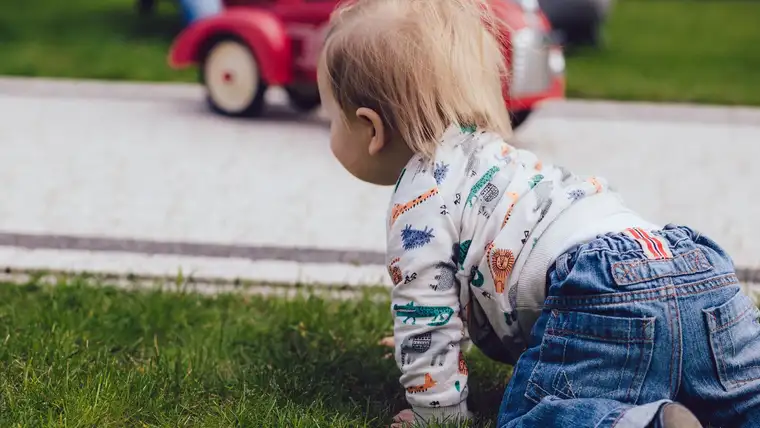
How to remove grass stains
- 1
Deal with any mud first
If the grass stain is muddy, let the mud dry, brush it off and rinse in cold water before anything else.
Why: Mud is a soil-and-protein stain that hot water would set, so Iowa State Extension treats it first.
- 2
Soak in an enzyme product
Soak or pretreat with an enzyme presoak or enzyme detergent in cool to lukewarm water, under about 100°F.
Why: Enzymes break down the plant proteins that hold the pigment in the fibers, and warmer water would start to set them.
- 3
Rub in detergent and wait
Rub liquid detergent or a pretreater into the stain with a soft brush and leave it 10 to 15 minutes. Then rinse under hot water while rubbing the fabric against itself, if the fabric allows.
Why: Detergent lifts the loosened green pigment once the protein part has been broken down.
- 4
Wash, then bleach any leftover green
Launder as usual. If a green tint remains, wash again with chlorine bleach if the label allows, or oxygen bleach.
Why: Bleach oxidizes chlorophyll, the green pigment.
- 5
Air-dry, check and repeat
Air-dry and check in daylight. Repeat the enzyme soak and bleach wash if needed.
Why: Dryer heat sets any pigment that's left.
Why grass stains are so stubborn
A grass stain is plant juice ground into the fabric by friction. It carries green chlorophyll and yellow carotenoid pigments plus plant proteins. That mix is why extension guides don't agree on how to classify it: Kentucky lists it with protein stains, Iowa State notes it can act like a dye, and the American Cleaning Institute leads with enzymes. In practice it's a combination stain, so you treat both parts.
Enzymes handle the protein. Chlorophyll doesn't dissolve in water but does dissolve in organic solvents like alcohol, and bleach oxidizes it. Starting with hot water is the classic mistake: it can set the protein and lock the green in with it.
Football pants, sports uniforms and concrete
Football and baseball pants are usually polyester, often with spandex. Iowa State's AnswerLine notes polyester holds onto oily soils and spandex needs gentler treatment, so use an enzyme presoak in cool to lukewarm water, scrub gently, and skip chlorine bleach. Treat stains the same day: the longer they sit, the harder they are to remove.
On concrete patios, steps and walks, the University of Georgia extension scrubs grass stains gently with a soft brush and a solution of washing soda or detergent (not soap) in water, then rinses thoroughly and lets it dry.
Grass on every surface
The method changes with the surface: fabrics can soak, carpets and mattresses can't. Pick yours for the full steps.
| Surface | What works |
|---|---|
| Clothes | Enzyme soak, detergent pretreat, wash, bleach for leftover green |
| Shoes | Enzyme detergent and a soft brush, then bleach on white canvas |
| Concrete | Scrub gently with a soft brush and a solution of washing soda or detergent in water, then rinse thoroughly with clear water and let it dry. |
By situation
Grass stains on jeans
Denim can handle the full method: enzyme soak, detergent rubbed in for 10 to 15 minutes, a hot rinse, then a wash with oxygen bleach for leftover green.
Grass stains on white clothes
Do the enzyme pretreatment first, then launder with chlorine bleach if the label allows.
Old or heat-set grass stains
Use longer enzyme soaks and a bleach step. Some green may remain on synthetics.
Grass on shoes and foam clogs
On canvas and mesh, scrub with mild detergent and a soft brush, then air-dry away from heat. Leather and suede belong with a specialist. See grass on shoes. For molded foam clogs, a soft brush and mild soapy water is the gentle option; no cited guide covers them.
Wool and silk
Don't use enzymes or chlorine bleach. Sponge with cool water and take the item to a dry cleaner.
What not to do
- Don't start with hot water. It can set the protein part of the stain.
- Don't use chlorine bleach on spandex, wool or silk. It damages these fibers.
- Don't machine-dry before checking. Heat sets the green pigment.
Other methods that work
Rubbing alcohol
Chlorophyll dissolves in alcohol, so sponging the stain with it before the wash is a traditional way to lift the green, with weak evidence.
Caution: It can fade dyes, so test it. Dilute it with two parts water on acetate. It's flammable.
White vinegar
Commonly suggested, but no cited source supports it for grass. Treat it as traditional, with weak evidence.
Caution: Test on colored fabric.
3% hydrogen peroxide on whites
A traditional bleach for leftover green on white fabric. Weak evidence.
Caution: Test it on colors and rinse it out.
Stain still there?
A faint green or yellow shadow remains
That's pigment. Wash again with oxygen bleach, or chlorine bleach on colorfast whites.
Uniform pants still look dingy all over
Polyester holds oily soil. Soak the whole garment in an enzyme detergent solution in cool water before the next wash.
Safety
- Rubbing alcohol is flammable. Ventilate and let it evaporate before washing.
- Never mix chlorine bleach with ammonia or vinegar.
Never mix cleaning products; see chemicals you must never combine.
Questions
How do you get grass stains out of football pants?
Soak them in an enzyme detergent in cool to lukewarm water, scrub gently, and wash. Skip chlorine bleach, since most uniform pants contain spandex.
How do you remove grass stains from concrete?
Scrub gently with a soft brush and washing soda or detergent in water, then rinse thoroughly and let it dry.
Does hot water set grass stains?
It can. The protein in grass sets with heat, so start with cool to lukewarm water and use hot water only after enzyme treatment.
Can old grass stains be removed?
Often, with longer enzyme soaks followed by a bleach wash. Stains that have been through the dryer may only fade.
Other combination stains
Sources
- Stain Removal Guide, American Cleaning Institute
- Dealing with Sport Stains (AnswerLine), Iowa State University Extension and Outreach
- Quick and Easy Stain Removal for Clothing (HS 305, May 2026), Iowa State University Extension and Outreach
- Stain Removal for Washable Fabrics (HE 2-840), University of Kentucky Cooperative Extension Service
- Quick Stain Removal Guide (L-5199), Texas A&M AgriLife Extension
- Remove Stains From Grass, Flowers, University of Georgia Cooperative Extension
Last updated . Methods are drawn from the sources above; how we research and check our guides.