How to remove chocolate stains from clothes, linen and upholstery
To remove chocolate stains, scrape off the excess, flush the back of the stain with cool water, rub in liquid detergent or a prewash stain remover, and wash in the hottest water the fabric allows. If a brown mark is left, rewash with a bleach safe for the fabric. Chocolate is fat, brown cocoa pigment, sugar and often milk protein, so each step targets one part, and cool water comes first so the protein doesn't set.
- Best method
- Cool rinse, detergent, hot wash, then bleach
- Time
- 20 minutes plus a wash
- Difficulty
- Easy
- Stain type
- Combination
You will need
- Dull knife or spoon
- Cool water
- Liquid laundry detergent or prewash stain remover
- Enzyme presoak, for milk chocolate or ice cream
- Oxygen bleach, for a leftover brown mark
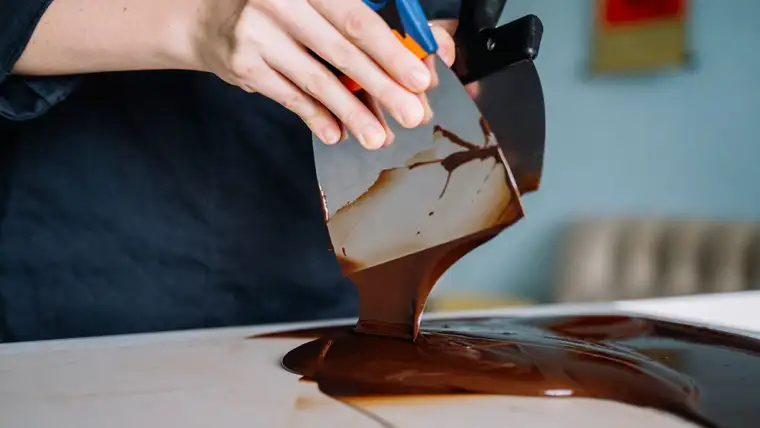
How to remove chocolate stains
- 1
Scrape off the excess gently
Lift off solid or melted chocolate with a dull knife or spoon.
Why: Rubbing presses fat and pigment deeper; lifting removes the bulk without spreading it.
- 2
Flush the back with cool water
Turn the fabric inside out and run cool water through the stain, or soak it in cool water for a few minutes.
Why: Cool water rinses out sugar and milk protein before heat can set the protein.
- 3
Pretreat with detergent or enzymes
Rub in heavy-duty liquid detergent or a prewash stain remover. For milk chocolate, hot cocoa or chocolate ice cream, soak in an enzyme presoak for at least 30 minutes.
Why: Detergent emulsifies cocoa butter and milk fat, and enzymes break down milk proteins.
- 4
Wash in the hottest safe water
Launder in the hottest water the care label allows.
Why: Once the protein is out, hot water helps melt and carry away the remaining fat.
- 5
Bleach any brown that's left
If a brown mark remains, rewash or soak with oxygen bleach, or chlorine bleach on colorfast whites whose label allows it.
Why: The leftover color is cocoa pigment, which an oxidizing bleach breaks down.
- 6
Air-dry and check
Air-dry and check in daylight before using the dryer or an iron.
Why: Heat sets any remaining fat and pigment.
Why chocolate needs more than one step
Chocolate is cocoa solids, which carry brown pigments and polyphenols, plus cocoa butter, sugar and, in milk chocolate, milk solids. So a single chocolate stain has a greasy part, a brown pigment part, a sugary part and often a protein part. That's why extension guides call it a combination stain.
The order follows from that. Cool water goes first, because heat would set the milk protein. Detergent comes next for the fat. Hot water helps once the protein is gone, and bleach handles the cocoa pigment that's left at the end. Skipping straight to a hot wash often leaves a faint brown shadow that dryer heat then fixes in place.
Cotton, linen, white pants and upholstery
Cotton handles the full method, including hot water. On colorfast white cotton labeled bleach-safe, diluted chlorine bleach is an option; it can yellow or weaken durable-press cotton, so oxygen bleach is the gentler choice. Linen takes hot water and oxygen bleach well. Use chlorine bleach on colorfast linen only lightly, because the University of Hawaii extension warns that heavy chlorine bleaching damages linen.
For white pants, follow the steps and finish with the bleach your fabric allows; see chocolate on white clothes. On a couch or carpet, the order flips: the Carpet and Rug Institute starts with a dry-cleaning solvent for the fat, then a dilute dish-detergent solution. Check the couch's cleaning code first.
Chocolate on every surface
The method changes with the surface: fabrics can soak, carpets and mattresses can't. Pick yours for the full steps.
| Surface | What works |
|---|---|
| Carpet | Scrape, solvent, then mild detergent and rinse |
| Clothes | Cool flush, detergent pretreat, hot wash, bleach if needed |
| Couch | Scrape, solvent for the fat, then dilute dish detergent |
| White clothes | Cool rinse, detergent pretreat, hot wash, then bleach |
By situation
Dried chocolate
Scrape off what you can, then give it a longer pretreatment or an enzyme presoak before washing. Old stains usually need the bleach step for leftover brown.
It already went through the wash or dryer
If it was washed but is still visible, pretreat again and rewash with a bleach safe for the fabric, and don't dry it. If it's been through the dryer, repeat the detergent pretreatment and an oxygen bleach soak. Some heat-set brown may remain.
Whites versus colors
On whites, finish with chlorine bleach if the label allows, or oxygen bleach. On colors, use oxygen (all-fabric) bleach only, after a test on a hidden seam.
Silk, wool and dry-clean-only items
Don't use enzyme presoaks or chlorine bleach on silk or wool. Blot with cool water and take the item to a dry cleaner, telling them it's chocolate.
Chocolate ice cream
There's more protein, so treat it first: an enzyme presoak for at least 30 minutes, a wash in the warmest water safe for the fabric, then bleach for any brown left.
What not to do
- Don't start with hot water. Hot water can set the milk protein in the stain.
- Don't dry or iron until the stain is gone. Heat sets the remaining fat and pigment.
- Don't rub melted chocolate. Rubbing spreads fat and pigment into a larger stain.
Other methods that work
Dish soap
Liquid dish soap emulsifies cocoa butter and milk fat. Iowa State lists it for oily stains, so it's a good pretreatment if you're out of laundry detergent.
Caution: Rinse it out well, then launder.
3% hydrogen peroxide on whites
A mild oxidizing bleach for leftover brown pigment. It's safe for cotton and linen fibers.
Caution: It can lighten dyes, so test on colors and rinse well.
Stain still there?
A faint brown shadow is left after washing
That's cocoa pigment. Soak in oxygen bleach, or use chlorine bleach on colorfast whites, then wash again.
A greasy, darker patch remains
Fat is still there. Work full-strength liquid detergent or dish soap into the spot and wash in the hottest safe water.
Safety
- Use dry-cleaning solvent on upholstery or carpet only with a cloth, in a ventilated room, away from flames.
- Never mix ammonia with chlorine bleach.
Never mix cleaning products; see chemicals you must never combine.
Questions
How do you get chocolate out of clothes?
Scrape off the excess, rinse the back in cool water, pretreat with prewash remover or liquid detergent, and wash in the hottest water safe for the fabric. Rewash with bleach if a mark remains.
How do you remove chocolate from white pants?
Use the same steps, then finish with chlorine bleach if the label allows, or oxygen bleach. Air-dry and check before using the dryer.
How do you get chocolate out of linen?
Rinse in cool water, pretreat with detergent and wash hot. Use oxygen bleach for leftover brown, since heavy chlorine bleaching can damage linen.
Does hot water set chocolate stains?
It can set the milk protein if you use it first. Start with cool water, then wash hot once the stain has been pretreated.
Other combination stains
Sources
- Stain Removal Guide, American Cleaning Institute
- Stain Removal for Washable Fabrics (HE 2-840), University of Kentucky Cooperative Extension Service
- Quick and Easy Stain Removal for Clothing (HS 305, May 2026), Iowa State University Extension and Outreach
- Spot Solver: Chocolate, The Carpet and Rug Institute
- Recommendations for Cleaning Garments and Textiles (AT-1), University of Hawaii at Manoa, College of Tropical Agriculture and Human Resources
- Products (textile care products), University of Georgia Cooperative Extension
Last updated . Methods are drawn from the sources above; how we research and check our guides.