How to get dye transfer out of clothes
To get dye transfer out of clothes, keep them out of the dryer and rewash them right away with a heavy-duty liquid detergent in the warmest water the label allows. If color is still there, soak in oxygen bleach; colorfast whites can then take a short dilute chlorine bleach soak. Loose dye sits loosely on the fibers at first, but dryer heat can make it permanent.
- Best method
- Rewash before drying, then an oxygen bleach soak
- Time
- 1 to 2 hours; up to overnight for a stubborn soak
- Difficulty
- Easy
You will need
- Heavy-duty liquid laundry detergent
- Oxygen bleach (all-fabric bleach)
- Chlorine bleach, for colorfast whites only
- Commercial color remover, as a last resort for whites
- A basin or bucket
Step by step
- 1
Don't dry anything that picked up color
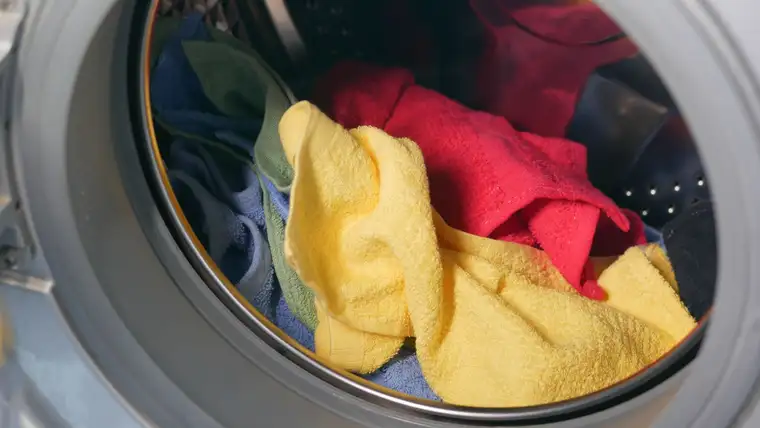
Check the load as it comes out of the washer. Pull out any item with pink, blue or gray tinting, keep it damp, and take out the garment that bled so it can't keep going.
Why: The American Cleaning Institute warns that drying can make dye transfer permanent. Wet, it's still loose enough to wash out.
- 2
Pretreat and rewash promptly
Rub heavy-duty liquid detergent into the tinted areas, then rewash in the warmest water the care label allows. Look at the items before they go anywhere near the dryer.
Why: Texas A&M and Kentucky extension guides treat dye stains with detergent first. Surfactants loosen the transferred dye and keep it suspended in the water so it rinses away.
- 3
Soak in oxygen bleach if color remains
Dissolve oxygen bleach in warm or hot water according to the product label, submerge the items and soak for an hour or more, then wash again. Texas A&M's quick guide adds about 1 cup of non-chlorine bleach to a detergent rewash.
Why: Oxygen bleach releases hydrogen peroxide, which oxidizes stray dye. It's slower than chlorine bleach and works best in hot water or a long soak, but it's safe for most colored fabrics.
- 4
Whites only: a short chlorine bleach soak
If a white or colorfast item still shows color and its label shows an empty triangle, soak it for about 15 minutes in dilute chlorine bleach, following the bleach label's dilution, then rinse and wash.
Why: Chlorine bleach is the strongest household oxidizer, so it clears dye that oxygen bleach leaves behind. It's only safe on fabric whose own color can't be harmed.
- 5
Last resort for whites: color remover
For white items that still won't come clean, use a commercial color remover on the whole piece according to its directions.
Why: Color remover strips all dye from fabric, which is useful on whites that should have no color at all.
- 6
Air-dry and check in daylight
Hang the items to dry and inspect them in good light. Repeat the soak if a tint remains before you use the dryer.
Why: Wet fabric hides faint color, and heat can lock in whatever is left.
Why colors bleed
Bleeding is dye leaching out of a garment into the wash water and settling on other items. Its cousin, crocking, is dye rubbing off onto skin, furniture or other clothes. The cause usually starts at the mill: a dye that doesn't suit the fiber, poor rinsing, or a missing fixative. Deep darks, reds, navies, neons and brights are the most likely to run.
Warm and hot water swell fibers and release more dye, and wet clothes lying together in a washer transfer color to each other. That's why you rewash the stained item warm (to release the stray dye from it) but wash the culprit cold and on its own. Iowa State's AnswerLine notes that labels saying "wash separately" or "wash with like colors" are a warning that the dye may bleed.
How to stop colors running
Wash new darks and brights separately for the first few washes, and wash like colors together after that. Use cold or cool water, turn items inside out, and keep dryer time short to reduce fading. Move wet laundry out of the washer promptly.
Dye-catcher sheets trap some loose dye in the water, but AnswerLine and ACI both say they aren't completely reliable: sorting is the only sure prevention. Soaking a finished garment in vinegar or salt to "set" the dye is a myth according to AnswerLine; the apparent success is just loose dye washing out. Commercial dye fixatives can reduce bleeding in cotton, but follow each product's specific directions. Check the laundry symbols for the right temperature.
By situation
Color bleed on white clothes
Whites give you the most options. Rewash, then soak in oxygen bleach, then use a 15-minute dilute chlorine bleach soak if the label allows it. A color remover is the last step. See white clothes for more on what whites can take.
Color bleed on colored clothes
Stay with detergent and oxygen bleach. Test first: Georgia extension's check is 1 teaspoon of oxygen bleach in 1 cup of hot water, a few drops on a hidden spot for 10 minutes. Never use chlorine bleach or color remover, which would strip the garment's own color too.
It already went through the dryer
The dye is harder to move but not always set. Repeat the detergent rewash and give a long oxygen bleach soak, several hours or overnight. Some heat-set transfer will only fade, not disappear.
Stubborn dye on sturdy washable fabric
Georgia extension gives a stronger sequence: soak 30 minutes in 1 quart warm water with ½ teaspoon hand dishwashing detergent and 1 tablespoon ammonia, rinse, then soak an hour in 1 quart warm water with 1 tablespoon white vinegar, rinse, and dab with rubbing alcohol before bleaching if safe. Test each step on a hidden area, and rinse well between them.
Neon and fluorescent colors
ACI warns that prewash stain removers can make these colors fade or run. Test any pretreatment on an inside seam first.
Wool, silk and dry-clean-only items
Chlorine bleach damages wool and silk, and the alkaline oxygen bleach solution can harm them too. Take a tinted delicate item to a dry cleaner and say it's dye transfer.
What not to do
- Don't put tinted items in the dryer. Dryer heat can make the transferred dye permanent.
- Don't wash new darks or brights with whites or lights. Excess dye washes out of new garments for the first several washes.
- Don't leave wet laundry sitting in the washer. Color transfer is more likely while wet items lie pressed together.
- Don't use ammonia and chlorine bleach on the same item without rinsing thoroughly in between. Together they release toxic chloramine gas; see never mix these cleaners.
Other methods that work
Color run remover products
Commercial color removers are designed for whites that picked up dye. Extension guides list them as the final step after detergent and bleach.
Caution: They take out all color, so use them only on white items, and treat the whole piece.
Vinegar or salt soak
Often suggested for setting dye or removing bleed. Iowa State's AnswerLine calls dye-setting with vinegar or salt a myth, though a staff reply on the same page suggests a vinegar-salt soak might help a quilt. It's traditional, with weak evidence.
Caution: Never combine vinegar with chlorine bleach.
Stain still there?
The tint faded but didn't disappear
Repeat the oxygen bleach soak with fresh solution in the hottest water the label allows, and soak longer. Oxygen bleach is slow and works better with time and heat.
A colored garment has patches of another color
Use detergent and oxygen bleach only, repeated. If the garment's own dye isn't colorfast, any stronger treatment will fade it too, so stop before that point.
The same garment keeps bleeding
Wash it alone in cold water until the rinse water runs clear, and keep it with similar dark colors from then on.
Safety
- Never mix chlorine bleach with ammonia, vinegar or other cleaners.
- Wear gloves when soaking in bleach or color remover, and ventilate the room.
Never mix cleaning products; see chemicals you must never combine.
Questions
Is color bleed on clothes permanent?
Usually not, if you rewash before drying. Heat from the dryer is what tends to make dye transfer permanent.
How do you remove color bleeding from white clothes?
Rewash with heavy-duty detergent, then soak in oxygen bleach. If that isn't enough, a short dilute chlorine bleach soak or a color remover can finish the job on bleach-safe whites.
Do color catcher sheets work?
They trap some loose dye, but extension and industry sources say they aren't fully reliable. Washing like colors together is the only sure prevention.
Does vinegar stop clothes from bleeding?
Iowa State's AnswerLine calls this a myth for finished garments: any apparent improvement is just loose dye washing out.
Can you get color bleed out of clothes after drying?
Sometimes. Repeat a detergent rewash and long oxygen bleach soaks. Heat-set dye may only fade.
More laundry guides
- How to fix bleach stains on clothes
- How to remove laundry detergent stains from clothes
- How to get fabric softener stains out of clothes
- How to wash cotton without shrinking or fading it
- How to wash jeans so they don't fade or shrink
- How to wash linen clothes and bedding
- How to wash polyester and other synthetics
- How to wash silk by hand without ruining it
- How to wash wool without shrinking or felting it
- How to get the smell out of towels
- What temperature to wash clothes: hot, warm or cold
- How to whiten yellowed clothes
Sources
- Preventing Color Transfer by Bleeding or Crocking, Iowa State University Extension and Outreach - AnswerLine
- Laundering Problems and Solutions, American Cleaning Institute
- Laundry Basics, American Cleaning Institute
- Removing Stains From Washable Fabric, Texas A&M AgriLife Extension
- Quick Stain Removal Guide, L-5199, Texas A&M AgriLife Extension
- Stain Removal for Washable Fabrics (FCS2-840), University of Kentucky Cooperative Extension
- Remove Stains From Dye (Hair, Food Coloring, Other), University of Georgia Cooperative Extension (Textiles)
- Care Products, University of Georgia Cooperative Extension (Textiles)
Last updated . Methods are drawn from the sources above; how we research and check our guides.