How to get rid of cooking smells (onion, garlic, bacon, frying)
To get rid of cooking smells, vent while you cook and clean off the grease film afterward: run a range hood vented outdoors during cooking and for 10 to 20 minutes after, then wash the stovetop, nearby surfaces and the hood's grease filter. Frying and bacon leave a fine film of fat that keeps releasing odor, which is why candles and sprays don't last.
- Best method
- Vent at the source, then clean the grease film
- Time
- 15 to 30 minutes after cooking
- Difficulty
- Easy
You will need
- Range hood vented outdoors, or a window fan
- Dish soap and hot water
- Baking soda or activated charcoal
- A portable air cleaner that doesn't make ozone (optional)
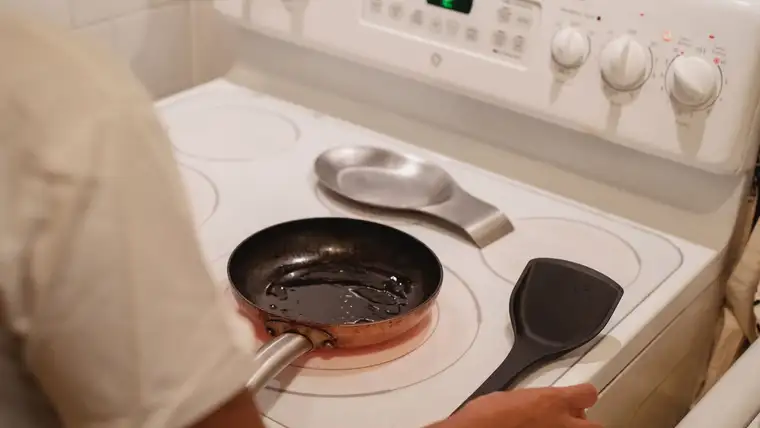
Step by step
- 1
Turn on the hood before you start
Run a range hood that vents outdoors every time you cook, use the back burners when you can, and leave the hood on 10 to 20 minutes after you finish.
Why: The hood captures odor, steam and grease aerosol at the source, before it spreads and settles. Back burners sit closer to the hood's capture area.
- 2
Open up if you don't have a vented hood
Open windows and doors when the weather and outdoor air allow, and run kitchen or window exhaust fans.
Why: A hood that recirculates into the kitchen filters some grease but sends odor gases back into the room.
- 3
Wash the grease film off
Once things cool, wash the stovetop, backsplash, cabinet fronts and appliances with hot water and dish soap. Clean the range hood's grease filter regularly.
Why: The sticky film of fat and odor compounds is a long-lasting reservoir. It's why the kitchen smells of bacon the next morning.
- 4
Take out scraps and trash
Remove onion skins, meat trimmings, fat and food scraps from the kitchen once you're done.
Why: They keep releasing odor as long as they sit there.
- 5
Wash fabrics and set out adsorbents
Launder kitchen towels, curtains and clothes that picked up the smell. Leave open bowls of baking soda or activated charcoal out overnight if it lingers.
Why: Most cooking odors wash out of fabric with detergent. Adsorbents take up what's left in the air once the source is gone.
Why cooking smells linger
Cooking releases aroma compounds, steam and a fine aerosol of grease and particles. Onions and garlic give off sulfur compounds when cut and cooked. Frying and bacon throw fat into the air. The burners themselves release particles and gases, and gas stoves are a main indoor source of nitrogen dioxide.
The grease and odor compounds settle on cabinets, walls, the hood filter and fabric. That film holds the smell and slowly lets it go, so the odor can outlast the meal by a day or more. For a whole-home routine, see cooking smells in a house.
Why candles and sprays don't solve it
Air fresheners add scent to air that still carries cooking volatiles, and they do nothing about the grease film. EPA's approach is to vent and filter while cooking and to clean surfaces and the grease filter routinely.
For stronger problems with specific foods, see fish smell and burnt smell.
By situation
Onion or garlic smell
Vent while cooking, wipe the cutting board and counters, and take the peels out to the trash. Wash hands and boards with soap; the sulfur compounds cling to surfaces.
Bacon or fried food smell
This is mostly grease. Vent hard during frying, then degrease the stovetop, backsplash, cabinet fronts and hood filter with dish soap and hot water.
The smell spread to other rooms
Wash curtains, throws and any clothes that hold it, ventilate the house, and leave baking soda or charcoal out for a day or two.
An apartment with no vented hood
Open windows, run a window fan blowing out, and use a portable air cleaner that doesn't produce ozone. Filters catch particles, not odor gases, so ventilation does most of the work.
What not to do
- Don't rely on candles or air fresheners. They don't remove the cooking volatiles or the grease film that holds them.
- Don't use an air cleaner that produces ozone. EPA recommends portable air cleaners that don't make ozone.
- Don't cook on high heat without ventilation. Burners and overheated fat release particles and irritating gases.
- Don't mix bleach-based degreasers with ammonia or acids. The combinations release toxic gases.
Other methods that work
Higher-rated HVAC filter
EPA suggests a MERV 13 filter, or the highest rating your system can take, to help with cooking emissions.
Caution: It catches particles, not odor gases.
Activated charcoal
An alternative to baking soda for soaking up lingering odor in a closed kitchen or pantry.
Stain still there?
The kitchen smells of old grease all the time
The hood filter and cabinet tops are probably coated. Degrease them, and clean the filter on a regular schedule.
Smells come back when the heat is on
Check the HVAC filter and change it. A warm grease film also releases more odor, so degrease nearby surfaces.
Safety
- Gas stoves release nitrogen dioxide indoors. EPA recommends an exhaust fan vented to the outdoors over gas stoves.
Never mix cleaning products; see chemicals you must never combine.
Questions
How do you get rid of cooking smells fast?
Leave the range hood on for 10 to 20 minutes after cooking, open windows, and wipe the stovetop and nearby surfaces with hot soapy water.
What absorbs cooking odors?
Bowls of baking soda or activated charcoal take up lingering odor. They work best after the grease film and scraps are cleaned up.
Why does my house smell like bacon the next day?
Bacon puts fat aerosol into the air that settles on surfaces and fabric and keeps releasing odor until it's washed off.
How do I get rid of household odors?
Find the source and clean it: trash, fridge, drains, grease film and fabrics. Then ventilate and use a good filter. Fragrance only covers smells.
How do you get rid of cooking smells in a house?
Run a vented range hood during and 10 to 20 minutes after cooking, open windows, degrease surfaces and the hood filter, and wash fabrics that hold the smell.
Sources
- Strategies for Improving Indoor Air Quality While Cooking (infographic text), U.S. Environmental Protection Agency
- Nitrogen Dioxide's Impact on Indoor Air Quality, U.S. Environmental Protection Agency
- Removing Stains from Washable Fabrics, Texas A&M AgriLife Extension
- Stain Removal for Washable Fabrics (FCS2-840), University of Kentucky Cooperative Extension
- How to Get the Smoke Smell out of a House After a Fire, Oklahoma State University Extension
- Chlorine gas: What happens if you mix bleach and other cleaners, Poison Control (National Capital Poison Center)
Last updated . Methods are drawn from the sources above; how we research and check our guides.