How to get rid of smoke smell (cigarette, campfire or fire)
To get rid of smoke smell, clean the residue off every surface it touched: wash fabrics several times without the dryer, wash walls and hard surfaces (inside cabinets and closets too), change HVAC filters and ventilate. Smoke odor isn't in the air for long. It comes from tarry particles stuck to surfaces that keep releasing smell, so masking sprays and candles only cover it briefly.
- Best method
- Wash the residue off surfaces and fabrics, then ventilate and adsorb
- Time
- A few hours for clothes; days to weeks for a room or a house
- Difficulty
- Moderate
You will need
- Liquid laundry detergent
- White vinegar
- Mild soap or all-purpose cleaner and buckets
- Baking soda or activated charcoal
- New HVAC filters
- HEPA-filter vacuum
Step by step
- 1
Air the space out
Open windows and doors when the outdoor air is clean, and open closets, cabinets and drawers too. Run exhaust fans.
Why: Ventilation dilutes the odor while you work. It doesn't remove the source, so it's a start, not the fix.
- 2
Wash everything washable, more than once
Launder clothes, bedding, curtains and throws in small loads with liquid detergent, warm water and no fabric softener. Smell each item after the wash and wash again until the odor is gone, which can take 3 to 5 washes for cotton. See smoke smell in clothes for the full method.
Why: Smoke residue is oily and particulate, so detergent and agitation have to work it out over several cycles. Softener would only hide what's left.
- 3
Keep smoky fabric out of the dryer
Air-dry between washes and check the smell when the item is dry. Use the dryer only once no smoke smell remains.
Why: Dryer heat can lock the odor into the fibers.
- 4
Wash walls and hard surfaces
Wash walls, ceilings, floors, furniture and the insides of cabinets, drawers and closets with mild soap and water, then rinse. For tobacco residue, wipe with a diluted white vinegar solution and, as a separate step, an alkaline cleaner. Don't skip undersides of furniture or the wall behind pictures.
Why: The smell lives in a film of particles and tar on surfaces. Removing that film removes the odor source. Missing small areas is the most common reason the smell returns.
- 5
Deal with carpet, upholstery and mattresses
Vacuum often with a HEPA-filter vacuum, then steam-clean or hot-water-extract carpets, upholstery and mattresses, or have them professionally cleaned.
Why: Extraction reaches residue in pile and padding that surface vacuuming can't. Heavily smoked soft furnishings may still hold odor and need replacing.
- 6
Change filters and set out adsorbents
Replace HVAC filters, and after fire smoke have ducts professionally cleaned. Leave open bowls of baking soda or activated charcoal around the rooms for several days.
Why: Filters and ducts recirculate odor through the whole house. Adsorbents take up the odor molecules still in the air while you finish cleaning.
Why smoke smell lingers after the smoke is gone
Smoke is a mix of gases and fine particles. EPA lists benzene, formaldehyde, acrolein and polycyclic aromatic hydrocarbons among the compounds in wood smoke. Tobacco smoke adds nicotine and tar.
The particles and sticky semivolatile compounds settle on walls, furniture, floors, fabric, hair and skin, and work into small cracks. From there they off-gas: they release odor back into the air for weeks, months or, with tobacco, years. That's why a room can smell of smoke long after anyone smoked in it, and why the smell gets stronger on warm, humid days.
Why air fresheners, candles and paint don't fix it
Scented candles, air fresheners and masking sprays cover the smell for a short time while the residue keeps off-gassing underneath. Ventilation helps, but it dilutes the odor rather than removing it. Paint and primer can trap tobacco odor for a while without removing the residue; seal walls only after they've been cleaned.
With tobacco there's a second reason to clean rather than mask. The residue left behind, called thirdhand smoke, can react with ozone and with nitrous acid from gas appliances to form carcinogenic nitrosamines. A stale-smoke smell means those chemicals are in the air, and losing the smell doesn't mean they're gone. Children are most exposed, because they crawl, touch surfaces and put things in their mouths.
Smoke smell in a house, a car, clothes or a microwave
A house: the job is cleaning every surface, inside cabinets and closets, plus filters and soft furnishings. See smoke smell in a house.
A car: tobacco residue soaks into the headliner, seats, mats and ventilation system, and is very hard to remove completely. See smoke smell in a car.
Clothes: repeated warm washes with liquid detergent and no dryer until the smell is gone.
A microwave: this is usually burnt food rather than smoke from outside. Steam-clean the cavity and deodorize with lemon water, without chemical cleaners inside.
By situation
Cigarette or vape smell
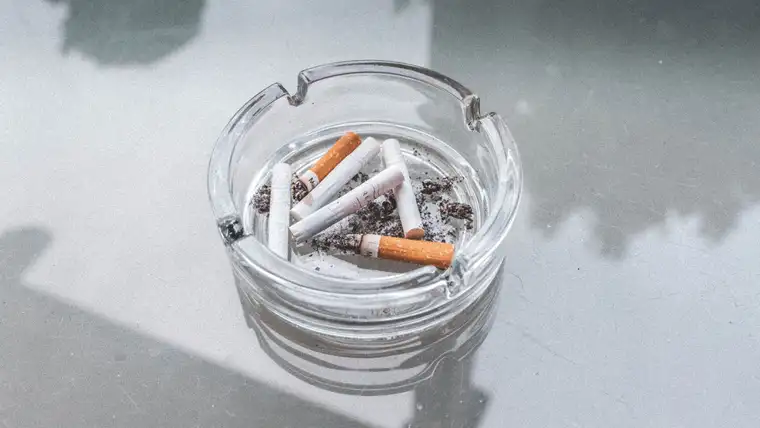
Tobacco residue is the hardest kind, because nicotine sticks strongly to surfaces and builds up over time. Lightly smoked homes can often be cleaned of much of it. Homes smoked in heavily for months or years may need carpet, padding, drywall or ducts replaced. E-cigarette vapor also leaves nicotine residue on surfaces.
Campfire or wood smoke
Campfire smell on clothes and gear washes out more easily than years of tobacco, because it's a single exposure. Wash promptly with detergent, air-dry and check the smell before using the dryer.
After a house fire or wildfire smoke
Clean every surface, wash all fabrics, change filters and have heating and cooling ducts professionally cleaned. Ash and soot outdoors keep releasing particles when disturbed, so use wet methods or a HEPA vacuum for ash, not a regular vacuum. Check whether your insurance covers professional smoke-odor treatment.
Someone smokes outside but you still smell it
People carry thirdhand smoke indoors on their clothes, skin, hair and breath. Changing clothes, washing hands and face, and showering after smoking reduce how much comes in.
The smell is in carpet, drapes or a mattress
Steam or hot-water extraction is the best home option. If the odor has permeated these items deeply, there may be little you can do except replace them. That's especially true for heavy tobacco pollution.
What not to do
- Don't rely on candles, air fresheners or masking sprays. They cover the smell briefly while the residue on surfaces keeps releasing odor.
- Don't put smoky clothes in the dryer. Heat can lock the smoke odor into the fabric, making it harder to wash out.
- Don't run an ozone generator in an occupied home. EPA says ozone at levels safe to breathe doesn't remove odors, and higher levels irritate the lungs and damage rubber, fabric and artwork.
- Don't paint over smoky walls without cleaning them first. Paint and primer can trap tobacco odor for a while, but the residue underneath stays.
- Don't add fabric softener while any smoke smell remains. Softener masks the odor instead of removing it.
Other methods that work
White vinegar in the wash
Adding 1 cup of white vinegar to the wash with your usual detergent is a common suggestion in extension guidance for smoky laundry. Treat it as a helpful extra, not a tested fix, and keep rewashing until the smell is gone.
Caution: Never add vinegar to a load that contains chlorine bleach.
Activated charcoal instead of baking soda
Both adsorb odor molecules from the air. Open bowls left for several days in closets and rooms help while the cleaning continues.
Caution: Neither cleans surfaces, so the smell returns if the residue stays.
Professional ozone treatment
Fire-restoration companies sometimes use ozone in an evacuated home as a last resort after fire smoke.
Caution: It isn't a do-it-yourself step. No people or pets may be present, it can damage materials, and it doesn't remove tobacco residue embedded in walls and furnishings.
Stain still there?
The smell came back after cleaning
A missed area is still off-gassing. Check inside cabinets and closets, behind wall hangings, under furniture, light fixtures and the HVAC filter. Warm, humid weather makes leftover residue more noticeable.
Clothes still smell after one wash
That's normal for smoke. Rewash right away in warm water with liquid detergent and no softener, and repeat up to 3 to 5 times before drying.
The whole house smells whenever the heat or AC runs
The filter or ducts are holding smoke residue. Replace the filter, then change it at least monthly for a while, and have ducts cleaned after fire smoke.
Safety
- EPA warns that ozone generators sold as air cleaners don't remove odors at safe levels and can cause coughing, chest pain and asthma attacks.
- Never mix bleach with ammonia or acids such as vinegar. Use acidic and alkaline cleaners as separate steps, rinsing in between. See never mix.
- Wear gloves and a mask when cleaning soot or ash, and use a HEPA vacuum rather than a regular one.
Never mix cleaning products; see chemicals you must never combine.
Questions
How long does smoke smell last in a house?
Until the residue is cleaned off. Thirdhand tobacco smoke can linger in dust and on surfaces for months to years, so waiting it out rarely works.
What absorbs smoke smell?
Baking soda and activated charcoal adsorb odor from the air when left out in open bowls for several days. They help, but only cleaning the surfaces removes the source.
Does vinegar get rid of smoke smell?
Diluted white vinegar is used to wipe tobacco residue off hard surfaces, and a cup in the wash is a common laundry tip. It works by helping clean the residue away, not by neutralizing the air.
Is the stale smoke smell harmful?
A stale-smoke smell means thirdhand smoke chemicals are in the air. They can be breathed in, touched and swallowed, and children are the most exposed.
Can you get rid of smoke smell permanently?
Yes, in lightly smoked spaces with thorough cleaning. Heavy, long-term tobacco smoke may need porous materials such as carpet, padding or drywall replaced.
Get rid of smoke in a specific place
Sources
- How to Get the Smoke Smell out of a House After a Fire, Oklahoma State University Extension
- How to Remove Smoke Smell from a Home, Texas A&M AgriLife Extension (Texas Extension Disaster Education Network)
- Can I remove thirdhand smoke from my home?, Thirdhand Smoke Resource Center, San Diego State University
- Wood Smoke and Your Health, U.S. Environmental Protection Agency
- Ozone Generators that are Sold as Air Cleaners, U.S. Environmental Protection Agency
- Stain Removal for Washable Fabrics (FCS2-840), University of Kentucky Cooperative Extension
Last updated . Methods are drawn from the sources above; how we research and check our guides.