How to get rid of sweat smell and body odor in fabric
To get rid of sweat smell, remove the body oil and residue the bacteria feed on: pretreat underarms and collars with liquid detergent or a 20 to 30 minute enzyme soak, then wash in the hottest water the fabric allows. Fresh sweat barely smells; the odor comes from skin bacteria breaking it down, so perfume and fabric sprays fade as soon as the fabric warms up again.
- Best method
- Pretreat, enzyme soak, then hot wash where safe
- Time
- 30 to 60 minutes plus a wash cycle
- Difficulty
- Easy
You will need
- Liquid laundry detergent
- Enzyme detergent or presoak
- Oxygen bleach
- Baking soda
- White vinegar or household ammonia, for discoloration (never together)
Step by step
- 1
Don't let sweaty clothes sit damp
Hang workout clothes and sweaty shirts to dry, or wash them soon. Don't seal them in a gym bag or pile them wet in a hamper.
Why: Bacteria keep growing on damp, soiled fabric and keep making odor compounds.
- 2
Pretreat the underarms and collar
Work liquid laundry detergent into the underarms, collar and other sweaty areas. For heavy deodorant buildup, use a prewash stain remover and let it stand 5 to 10 minutes.
Why: These areas hold body oil, sweat residue and antiperspirant film, which trap odor and feed bacteria.
- 3
Soak in an enzyme product
For stubborn smells, soak 20 to 30 minutes in warm water with an enzyme detergent or presoak.
Why: Enzymes break down the protein and fatty soil that bacteria turn into odor.
- 4
Wash in the hottest water the label allows
Launder with the recommended amount of detergent in the hottest water safe for the fabric. Add oxygen bleach for persistent cases.
Why: Hot water lifts oily soil better than cold, and too little detergent leaves residue behind.
- 5
Check before you dry
Smell the underarms once the item is out of the washer. If odor remains, soak it in baking soda and water and wash again instead of drying.
Why: Dryer heat can set stains and residue. A second round removes what the first one missed.
What causes body odor in clothes
Fresh sweat is nearly odorless. Body odor forms when skin bacteria break sweat down. In the underarm, glands release an odorless precursor that the bacterium Staphylococcus hominis converts into 3-methyl-3-sulfanylhexan-1-ol, a sulfur compound that's a key part of underarm odor.
On clothing, other bacteria keep working on fatty acids, hormones and amino acids from sweat and skin oil, turning them into smaller, smellier molecules. Antiperspirant salts and body oils also build up in the underarm area and hold odor, and heavy buildup may be impossible to remove fully. See deodorant stains for the marks it leaves.
Why gym clothes smell worse than cotton
In a study of 26 people after an hour-long spinning class, polyester shirts smelled significantly less pleasant and more intense than cotton ones after incubation. Odor-causing micrococci were found almost only on the synthetic shirts.
The study measured odor, not washing methods, but the practical point is clear: synthetic workout wear needs washing soon after wearing, an enzyme or odor-removing detergent, and the occasional baking soda soak.
By situation
Shirts and everyday clothes
Pretreat the underarms with liquid detergent every wash and use the hottest water the label allows. See sweat smell in clothes for the full method, including deodorant buildup.
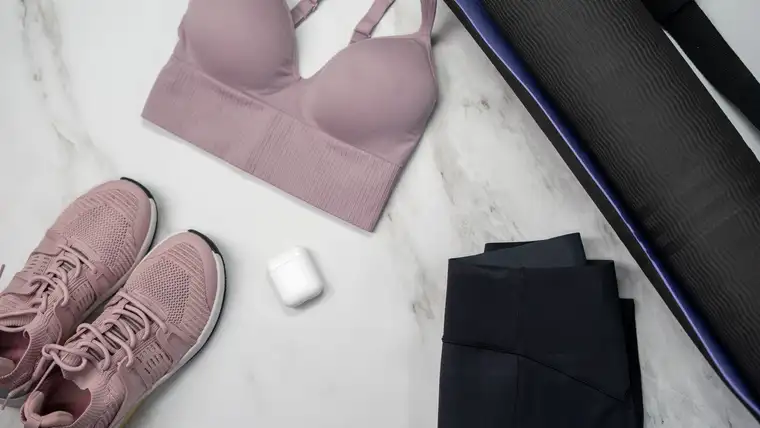
Gym clothes and synthetics
Wash soon after workouts, use an enzyme detergent, and for persistent smell soak in baking soda and water before rewashing.
Yellow underarms
Apply household ammonia to fresh perspiration stains or white vinegar to old ones, rinse, then wash hot as the fabric allows. Use one or the other, rinse between, and never with chlorine bleach.
Sweat smell in a mattress
A mattress can't be washed, so spot-clean with a little detergent solution using as little moisture as possible, then dry it thoroughly. Sprinkle baking soda, leave it overnight and vacuum it up. Airing it in the sun helps too. See sweat stains on a mattress.
Wool, silk and spandex
Skip chlorine bleach, which damages these fibers and can leave yellowing that won't come out. Use an oxygen bleach only if the label allows, or take wool and silk to a cleaner.
What not to do
- Don't mask the smell with fabric spray or perfume. The bacteria and residue stay, and body heat brings the odor back.
- Don't mix ammonia, vinegar or chlorine bleach. Ammonia with bleach makes chloramine gas and acid with bleach makes chlorine gas.
- Don't machine-dry a shirt that still smells. Heat can set the residue; rewash instead.
- Don't use chlorine bleach on spandex, wool or silk. It damages the fibers and can cause permanent yellowing.
Other methods that work
Baking soda soak
For persistent smell, soak the garment in baking soda dissolved in water, then wash again.
Caution: It helps with odor, not with antiperspirant buildup.
Oxygen bleach
Add oxygen bleach to the wash for stubborn odor or heavy deodorant buildup.
Caution: Check the care label; it isn't safe for every fiber.
Stain still there?
The smell comes back as soon as I wear it
Residue is still in the fibers and warms up with your body. Repeat the enzyme soak and hot wash, and check you're using enough detergent.
Underarms are stiff or yellow
That's antiperspirant and oil buildup. Use a prewash stain remover for 5 to 10 minutes and wash with oxygen bleach. Heavy aluminum or zinc buildup may not come out completely.
Safety
- Never combine chlorine bleach with ammonia or with acids such as vinegar.
Never mix cleaning products; see chemicals you must never combine.
Questions
Why do my clothes smell like BO after washing?
Body oil and residue are still in the fibers, often from too little detergent or water that's too cool. Pretreat the underarms and wash in the hottest water the fabric allows.
Why does polyester smell more than cotton?
Odor bacteria called micrococci grow mainly on synthetic fabric, and a study found polyester shirts smelled worse after exercise than cotton.
Does vinegar remove sweat smell?
Vinegar is an extension-guide treatment for old perspiration discoloration. For odor, enzyme detergent, hot water and a baking soda soak are the better tools.
How do you get body odor out of a mattress?
Spot-clean with a little detergent solution, dry thoroughly, then leave baking soda on it overnight and vacuum. Airing it in the sun helps.
How do you get BO smell out of clothes?
Pretreat the underarms with liquid detergent, soak 20 to 30 minutes in warm water with an enzyme detergent, and wash in the hottest water the fabric allows.
Why do my shirts smell like BO even after washing?
Residue from sweat, skin oil and deodorant is still in the underarms. Body heat warms it and the smell returns. Pretreat and enzyme-soak to remove it.
Sources
- Removing Stains from Washable Fabrics, Texas A&M AgriLife Extension
- Stain Removal for Washable Fabrics (FCS2-840), University of Kentucky Cooperative Extension
- Microbial Odor Profile of Polyester and Cotton Clothes after a Fitness Session (Callewaert et al., Appl Environ Microbiol 2014;80(21):6611-6619), Applied and Environmental Microbiology (ASM), via PubMed Central
- Structural basis for bacterial transport of body odour precursors (Minhas, Bawdon et al., eLife 2018) - abstract, University of York / White Rose eprints (eLife)
- Care for Fabric Home Furnishings (Guide G-402), New Mexico State University Cooperative Extension Service
- Chlorine gas: What happens if you mix bleach and other cleaners, Poison Control (National Capital Poison Center)
Last updated . Methods are drawn from the sources above; how we research and check our guides.