How to remove hair dye stains from fabric, carpet, tubs and skin
To remove hair dye stains, rinse the spot with cool water immediately, work in liquid detergent and rinse, then soak in an oxygen bleach solution for several hours (colors) or a vinegar or weak chlorine bleach soak (whites), and wash. Permanent hair color develops its color by oxidation inside the fibers, the same way it colors hair, so speed matters: dye that has finished developing may only lighten, not disappear.
- Best method
- Cool rinse, detergent, then a long bleach soak
- Time
- Several hours of soaking
- Difficulty
- Hard
- Stain type
- Dye
You will need
- Cool water
- Liquid laundry detergent
- Oxygen bleach
- White vinegar or chlorine bleach, for whites
- Color remover, as a last resort
- Gloves
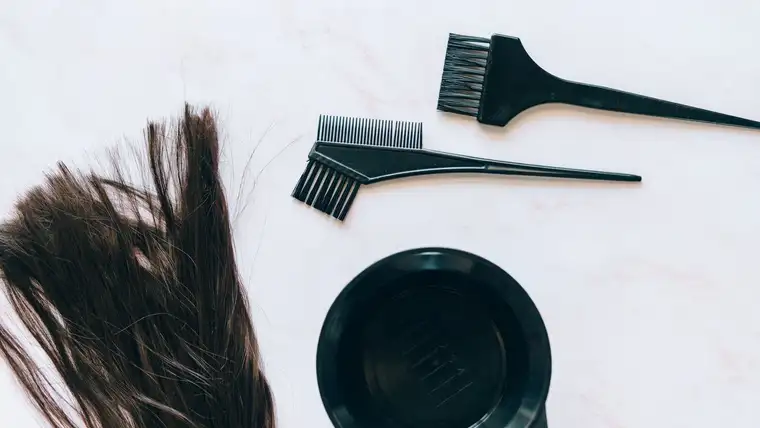
How to remove hair dye stains
- 1
Rinse immediately
Flush the stain from the back with cool water as soon as you notice it. Put on gloves first.
Why: Wet dye that's still developing can partly rinse out before the color-forming reaction finishes inside the fiber.
- 2
Pretreat with liquid detergent
Rub liquid laundry detergent into the stain and rinse thoroughly.
Why: This removes loose dye and the cream base that holds more dye against the fabric.
- 3
Colors: soak in oxygen bleach
Soak colored items in a solution of oxygen bleach and cool water for several hours, then launder.
Why: Oxidizing bleach breaks down the dye molecules without stripping most garment dyes.
- 4
Whites: vinegar or weak chlorine bleach
Soak whites in equal parts white vinegar and cool water for several hours, or use a weak chlorine bleach solution per the label if the fabric allows. Rinse completely between the two; never combine them.
Why: These are Iowa State Extension's dye-stain options for white clothing.
- 5
Wash, air-dry and recheck
Launder, air-dry and check in daylight. Repeat the soak if it's still lightening.
Why: Heat helps set leftover dye, and several soaks often lighten what one doesn't.
- 6
Last resort: color remover
If the stain is set and the item is white or expendable, try a commercial color remover following the package directions.
Why: Color remover strips stubborn dye, but it can also strip the garment's own color.
Why hair dye stains like a real dye job
Permanent hair color starts as colorless precursors, such as p-phenylenediamine, mixed with a hydrogen peroxide developer and usually ammonia. The reaction builds large colored molecules inside the hair shaft so they can't wash out. Get that mixture on a towel or shirt and the same reaction happens inside the fibers. That's why hair dye is a true dye stain rather than surface dirt.
Henna works differently but is just as stubborn: its dye, lawsone, reacts with keratin, the protein in hair and skin. Wool and silk are protein fibers too, so they take up hair dye and henna readily. The practical upshot is timing. A quick rinse while the dye is still developing can save the fabric; once it's oxidized and dried, it may only lighten with repeated bleach soaks.
Hair dye on carpet, tubs, sinks and skin
On carpet, the Carpet and Rug Institute's order is a dilute dish-detergent solution, a vinegar solution, a warm-water rinse and a spot kit, then a professional. Hair dye on carpet often needs that professional. On tubs and sinks, act while the dye is wet, since the right cleaner depends on whether the surface is enamel, acrylic or a cultured material; see hair dye on a tub.
Skin needs gentle handling: soap and water repeated over a few days rather than harsh solvents. See hair dye on skin. Wearing gloves and an old towel is easier than any of these fixes.
Hair dye on every surface
The method changes with the surface: fabrics can soak, carpets and mattresses can't. Pick yours for the full steps.
By situation
The dye has already dried
It's now a set dye stain. Repeated oxygen bleach soaks may lighten it, and on whites chlorine bleach or color remover can go further. Complete removal isn't guaranteed.
It went through the wash and dryer
Washed and dried hair dye is usually set. Your options are repeated oxygen bleach soaks, or on whites, chlorine bleach or color remover.
Towels and salon capes
Rinse them right after dyeing and wash them promptly. Dye left in a damp pile keeps developing and can transfer to other laundry.
Henna on clothes
Treat it as a dye stain with the bleach your fabric allows. Henna binds especially strongly to wool and silk.
Wool, silk and dry-clean-only items
Don't use chlorine bleach. These protein fibers absorb hair dye readily, so take them to a dry cleaner quickly.
What not to do
- Don't use chlorine bleach on colored items, wool, silk or spandex. It damages these fibers and strips many garment dyes.
- Don't leave dye-stained towels sitting damp. The dye keeps developing and spreads to other items.
- Don't mix vinegar or ammonia with chlorine bleach. Both combinations release toxic gas. Rinse fully between a vinegar soak and any bleach.
Other methods that work
White vinegar soak (whites)
Iowa State lists equal parts white vinegar and cool water, soaked for several hours, as a dye-stain option for white clothing.
Caution: Rinse it out completely before using any bleach.
Rubbing alcohol
Sometimes used to lift fresh dye, but it isn't in the cited fabric guides. Treat it as traditional, with weak evidence.
Caution: It can fade garment dyes and is flammable.
Stain still there?
The stain faded but a shadow remains
Repeat the oxygen bleach soak with fresh solution. On whites, a weak chlorine bleach soak or a color remover is the next step.
Color remover faded the whole garment
That's the known risk with dyed fabric; it can't be reversed. Use color remover only on whites or items you're willing to lose.
Safety
- Wear gloves when handling hair dye or treating stains; p-phenylenediamine is a known skin sensitizer.
- Never mix vinegar or ammonia with chlorine bleach.
Never mix cleaning products; see chemicals you must never combine.
Questions
Can you get hair dye out of clothes?
Sometimes. Rinse immediately, pretreat with detergent, then soak in oxygen bleach (colors) or a vinegar or weak chlorine bleach solution (whites). Set dye may only lighten.
Does hair dye come out of towels?
Fresh dye partly rinses out if you act fast. Once it's dried in, oxygen bleach soaks may lighten it,, and white towels can also take a chlorine bleach soak if the label allows.
How do you get hair dye out of carpet?
Blot on a dilute dish-detergent solution, then a vinegar solution, rinse with warm water and blot dry. Call a professional if color remains.
Why won't hair dye wash out of fabric?
Permanent hair color forms its color by oxidation inside the fibers, just as it does inside hair. Once that reaction is done, the dye is part of the fiber and needs a bleach to break it down.
Other dye stains
Sources
- Quick and Easy Stain Removal for Clothing (HS 305, May 2026), Iowa State University Extension and Outreach
- Spot Solver: Hair Dye, The Carpet and Rug Institute
- Stain Removal for Washable Fabrics (HE 2-840), University of Kentucky Cooperative Extension Service
- Quick Stain Removal Guide (L-5199), Texas A&M AgriLife Extension
- Chlorine gas: What happens if you mix bleach and other cleaners, National Capital Poison Center (Poison Control)
Last updated . Methods are drawn from the sources above; how we research and check our guides.