How to remove soy sauce stains from clothes and carpet
To remove soy sauce stains, blot, flush the back of the stain with cold water, pretreat with liquid detergent and rinse, then soak colored items in oxygen bleach for several hours, or whites in a vinegar or weak chlorine bleach solution, and wash. Soy sauce gets its dark brown color from browning pigments formed during fermentation, and those pigments cling to fibers like a dye, so a bleach soak does most of the work.
- Best method
- Cold flush, detergent, then a bleach soak
- Time
- 15 minutes plus several hours of soaking
- Difficulty
- Easy
- Stain type
- Dye
You will need
- Paper towels
- Cold water
- Liquid laundry detergent
- Oxygen bleach
- White vinegar or chlorine bleach, for whites
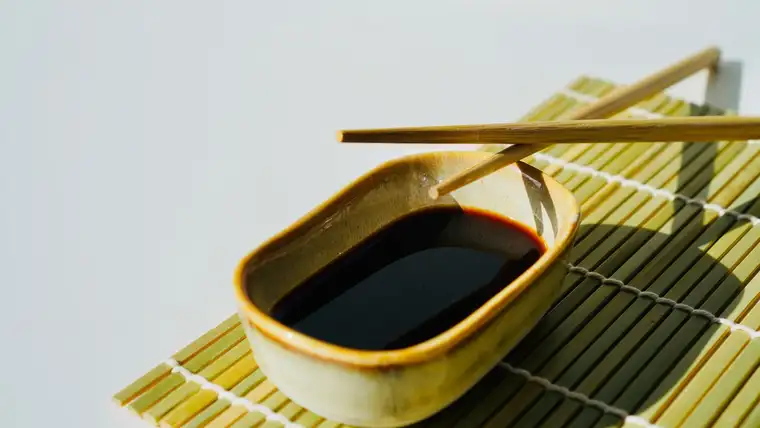
How to remove soy sauce stains
- 1
Blot and flush with cold water
Blot up the excess, then run cold water through the back of the stain.
Why: This removes loose sauce and salt before the pigment binds further.
- 2
Pretreat with liquid detergent
Work liquid laundry detergent into the stain and rinse.
Why: It's the first step for dye-type stains in both the Iowa State and Kentucky extension guides, and it lifts any oil from a stir-fry sauce.
- 3
Soak colors in oxygen bleach
Soak colored items in oxygen bleach and cool water for several hours, then launder.
Why: Oxygen bleach oxidizes the brown pigment without stripping most garment dyes.
- 4
Soak whites in vinegar or weak chlorine bleach
Soak whites in equal parts white vinegar and cool water for several hours, or use a weak chlorine bleach solution per the label. Never combine the two.
Why: These are Iowa State Extension's dye-stain soaks for white fabric.
- 5
Wash, air-dry and check
Launder, air-dry and check. A color remover is the last resort on whites.
Why: Heat would set whatever brown is left.
Why soy sauce acts like a dye
Soy sauce is fermented soybeans and wheat with salt. Its deep brown color comes from Maillard browning, the reaction between amino acids and sugars that also browns bread crust and seared meat. Those brown pigments attach to fibers much like a dye, which is why Iowa State Extension lists soy sauce among dye stains rather than food soils.
That's why rinsing alone leaves a tan mark: water removes the salt and loose sauce, but the pigment needs oxidizing. Fresh soy sauce often comes out with cold water and detergent; dried stains almost always need the bleach soak.
By situation
Fresh versus dried
Fresh soy sauce largely rinses out with cold water and detergent. Dried stains need the bleach soak.
It went through the dryer
Repeat the oxygen bleach soak and rewash. Heat-set brown may only lighten.
Teriyaki or a sauce with oil
Work in a little dish soap first to cut the oil, rinse, then continue with the bleach soak.
Soy sauce on carpet
The Carpet and Rug Institute's order is a dilute dish-detergent solution, then an ammonia solution, then a professional. Test the ammonia on a hidden spot for color change.
Silk, wool and dry-clean-only items
Blot, rinse gently with cool water and take them to a dry cleaner. No chlorine bleach. See soy sauce on clothes for more by fabric.
What not to do
- Don't dry the item before the stain is gone. Heat sets dye-type stains.
- Don't mix vinegar or ammonia with chlorine bleach. Vinegar and bleach release chlorine gas; ammonia and bleach release chloramine gas.
- Don't rub the stain. Rubbing spreads the pigment over a larger area.
Other methods that work
Dish soap
Helpful when the sauce had oil in it, as stir-fry and teriyaki sauces often do.
Caution: Rinse it out well before bleaching.
Color remover (whites)
Iowa State lists a commercial color remover as the last resort for a set dye stain on white fabric.
Caution: It strips color from dyed fabric, so use it on whites only.
Stain still there?
A tan shadow remains after washing
Soak again in oxygen bleach for several hours, or use a weak chlorine bleach soak on whites.
The ammonia step changed the carpet color
Stop and rinse with water. Ammonia can shift some dyes, which is why the test spot matters.
Safety
- Never mix vinegar or ammonia with chlorine bleach. Rinse between products.
Never mix cleaning products; see chemicals you must never combine.
Questions
How do you remove soy sauce from clothes?
Blot, flush with cold water, pretreat with liquid detergent, then soak colors in oxygen bleach or whites in vinegar or weak chlorine bleach. Wash and air-dry.
Does soy sauce stain permanently?
Usually not if you treat it before drying. Dried or heat-set stains need repeated bleach soaks and may only fade.
Why does soy sauce leave a brown mark after washing?
Its color comes from browning pigments that cling like a dye. Washing removes the sauce, but the pigment needs a bleach soak.
Does soy sauce stain clothes permanently?
Usually not if you treat it before drying. A detergent pretreatment and a bleach soak remove most soy sauce stains; heat-set ones may only fade.
How do you get soy sauce out of a white shirt?
Flush cold, pretreat with liquid detergent, then soak in equal parts white vinegar and cool water for several hours, or a weak chlorine bleach solution if the label allows. Wash and air-dry.
Other dye stains
Sources
- Quick and Easy Stain Removal for Clothing (HS 305, May 2026), Iowa State University Extension and Outreach
- Stain Removal for Washable Fabrics (HE 2-840), University of Kentucky Cooperative Extension Service
- Spot Solver: Soy Sauce, The Carpet and Rug Institute
- Chlorine gas: What happens if you mix bleach and other cleaners, National Capital Poison Center (Poison Control)
Last updated . Methods are drawn from the sources above; how we research and check our guides.