How to remove pollen stains, including lily pollen
To remove pollen stains, don't touch or rub them. Gently shake off loose pollen, lift the rest with the sticky side of tape, then rub liquid detergent into any mark and wash in the warmest water the fabric allows. Use a bleach safe for the fabric for leftover color. Pollen grains carry oily, pigmented coatings: brushing them with your hand presses them into the fibers and smears the pigment, while lifting them dry leaves almost nothing behind.
- Best method
- Shake, lift with tape, then detergent and a warm wash
- Time
- 10 minutes plus a wash
- Difficulty
- Easy
- Stain type
- Dirt and particles
You will need
- Sticky tape
- Liquid laundry detergent or pretreater
- Oxygen bleach or color-safe enzyme product
- Chlorine bleach, for whites (optional)
How to remove pollen stains
- 1
Shake off loose pollen
Gently shake the item outdoors to drop as much pollen as possible. Don't brush it with your hand.
Why: Loose grains fall away without being pressed in, and skin oils help pollen stick to fibers.
- 2
Lift the rest with tape
Press the sticky side of a piece of tape lightly onto the remaining pollen and lift it straight off. Use fresh tape each time.
Why: Tape picks up grains without smearing their pigment across the fabric.
- 3
Pretreat any mark
Rub liquid laundry detergent or a pretreater into any yellow or orange stain.
Why: Detergent loosens the oily pigment coating once the grains are gone.
- 4
Wash warm, then bleach leftover color
Launder in the warmest water safe for the fabric. If color remains, use chlorine bleach on whites if the label allows, or an oxygen bleach or color-safe enzyme product.
Why: Bleach oxidizes the remaining pigment.
- 5
Air-dry, in the sun if you can
Air-dry and check. For a stubborn mark, a cut-flower care maker suggests hanging the item in the sun, then lifting again with tape.
Why: Dryer heat sets stains, while sunlight can fade pollen pigment.
Why pollen stains when you brush it
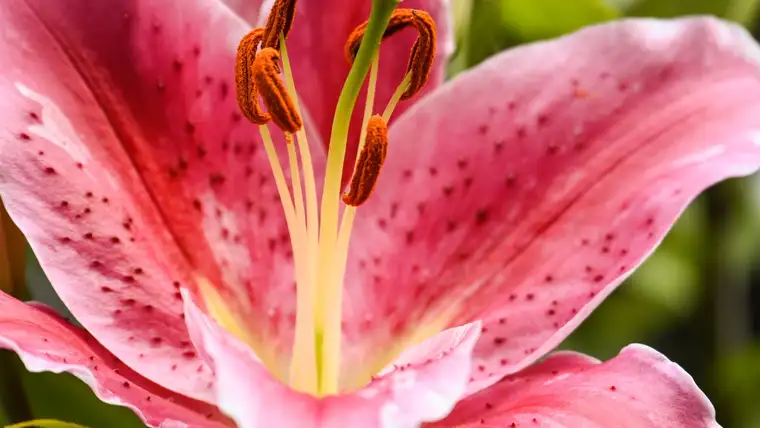
Pollen grains are tiny particles with a tough outer wall, and many carry an oily, pigmented coating. Lily pollen is the notorious one, leaving bright orange marks. Dry, the grains are a particulate stain: they sit on the surface and lift off. Rub them, though, and the coating smears into the fibers, turning a dusting into a pigment stain.
That's why both Iowa State Extension and a cut-flower care maker say the same thing: don't brush pollen off with your hand. Work dry first with a shake and tape, and use liquid only once the loose grains are gone.
By situation
Lily pollen on a shirt or tablecloth
Shake, tape, pretreat with liquid detergent and wash warm. Use color-safe bleach on colors or chlorine on whites, and sunlight for stubborn traces. See pollen on clothes.
The pollen already got wet or rubbed in
It's now a pigment stain. Skip the tape and go straight to detergent, a warm wash and a bleach step.
Orange marks after washing
Soak in oxygen bleach or a color-safe enzyme product (colors), or use chlorine bleach on whites if the label allows, and rewash. Sunlight is a gentle final step.
Silk, wool and dry-clean-only items
Lift pollen with tape only and take the item to a cleaner.
What not to do
- Don't brush pollen off with your hand. It presses the grains in and spreads the pigment, and skin oils help it stick.
- Don't wet pollen before removing the loose grains. Water spreads the pigment.
- Don't dry the item before the stain is gone. Heat sets stains.
Other methods that work
Sunlight
A cut-flower care maker suggests hanging stubborn pollen stains in the sun to fade them.
Caution: Sun fades colored fabrics too.
Rubbing alcohol
Sometimes suggested for the oily pigment, but no cited source supports it. Traditional, with weak evidence.
Caution: Test it on colors first.
Stain still there?
Tape leaves a faint orange smear
Press more lightly and lift straight up, using fresh tape each time, then pretreat and wash.
A yellow shadow remains after bleaching
Dry the item in the sun, then wash again.
Safety
- Snipping the pollen-bearing tips (anthers) off cut lilies prevents most stains.
- Never mix chlorine bleach with ammonia or acids.
Never mix cleaning products; see chemicals you must never combine.
Questions
How do you get lily pollen out of clothes?
Don't rub it. Shake off what you can, lift the rest with tape, pretreat with liquid detergent and wash warm, then use bleach safe for the fabric and sunlight for any trace left.
Does pollen stain clothes permanently?
Usually not, if you lift it dry before rubbing or wetting it. Rubbed-in lily pollen can take several treatments.
Why does lily pollen stain so badly?
Its grains carry an oily orange pigment. Rubbing or wetting smears that pigment into the fibers, so lift the grains dry before using any liquid.
Does water make a pollen stain worse?
Yes, if you wet it before removing the loose grains. Water spreads the pigment. Remove the powder dry first, then wash.
Does sunlight remove pollen stains?
It can fade a stubborn trace. A cut-flower care manufacturer suggests hanging the item in the sun, then lifting any remaining pollen with tape.
Other dirt and particles
Sources
- Summer Stains (AnswerLine), Iowa State University Extension and Outreach
- Spring Laundry Challenges (AnswerLine), Iowa State University Extension and Outreach
- How to remove pollen stains from clothing?, Chrysal (cut-flower care manufacturer)
- Chlorine gas: What happens if you mix bleach and other cleaners, National Capital Poison Center (Poison Control)
Last updated . Methods are drawn from the sources above; how we research and check our guides.