How to remove sweat stains and yellow pit stains
To remove sweat stains, pretreat with liquid detergent or a prewash stain remover, soak in warm water with an enzyme presoak or oxygen bleach for 30 minutes to overnight, then wash in the hottest water the fabric allows. Yellow pit stains are built-up body oil, protein and antiperspirant salts, so they need breaking down and oxidizing rather than just washing. Heavy antiperspirant build-up may never fully come out.
- Best method
- Pretreat, enzyme or oxygen bleach soak, hot wash
- Time
- 30 minutes to overnight, plus a wash
- Difficulty
- Moderate
- Stain type
- Protein
You will need
- Liquid laundry detergent or prewash stain remover
- Enzyme presoak or oxygen bleach
- 3% hydrogen peroxide, for whites
- White vinegar or household ammonia, if the color changed
- A basin for soaking
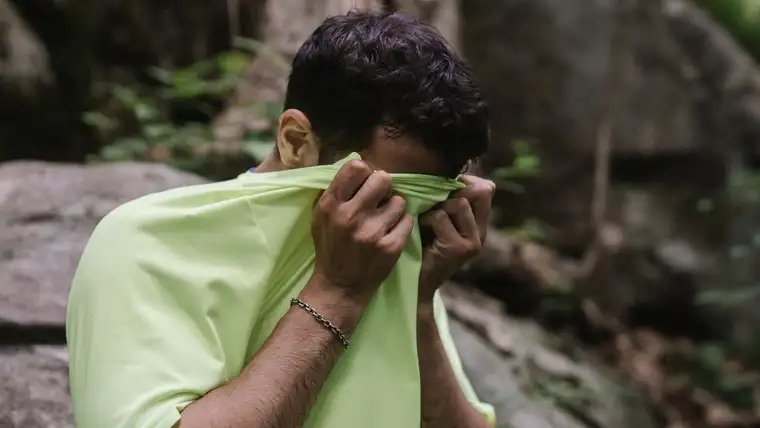
How to remove sweat stains
- 1
Pretreat the stained area
Rub liquid laundry detergent or a prewash stain remover into the underarms, collar or band, or work in bar soap. Leave it 5 to 10 minutes.
Why: Detergent lifts the body oils that hold sweat residue and grime in the fabric.
- 2
Soak in an enzyme or oxygen bleach solution
Soak the item in warm water with an enzyme presoak or oxygen bleach, from 30 minutes for light yellowing up to overnight for old stains.
Why: Enzymes break down the protein part of sweat, and oxygen bleach oxidizes the yellow discoloration.
- 3
Fix a color change, if there is one
If the sweat has changed the fabric's color, dab household ammonia on a fresh stain or white vinegar on an old one, after testing on a seam. Rinse well.
Why: Fresh sweat tends to be acidic and old sweat alkaline, and the opposite pH can sometimes bring a dye back.
- 4
Wash in the hottest safe water
Launder in the hottest water the care label allows, with a full dose of detergent.
Why: Once the stain is pretreated, heat helps detergent remove the body oil that keeps yellowing coming back.
- 5
Air-dry and repeat if needed
Air-dry and check in daylight. Old yellowing often takes several rounds of soaking and washing.
Why: Dryer heat and ironing bake leftover residue into the fabric.
What actually makes sweat stains yellow
Sweat itself is mostly water with salts, lactic acid and urea. The underarm glands add an oily secretion, and skin adds body oils that build up in collars and hat bands. Sweat counts as a protein stain, so heat sets it, but the yellow comes from layers of residue that pile up over many wears and washes.
In the underarms, aluminum salts from antiperspirants join the mix. Iowa State Extension notes that these aluminum compounds can bond with fabric, so some underarm stains won't come out completely no matter what you use. That's why the method relies on enzymes to digest protein, oxygen bleach to oxidize color, and hot water to shift oil. Stiff white residue after washing is a separate problem: see deodorant stains.
Sweat stains on colored shirts
Colored fabric limits your options. Use oxygen (all-fabric) bleach rather than chlorine, and test hydrogen peroxide, ammonia and vinegar on an inside seam first, because each can change some dyes. The Kentucky extension guide also notes that sweat itself can change dye color, which is where the ammonia and vinegar step comes in. Iowa State Extension lists a 10 to 15 minute soak in undiluted white vinegar for underarm stains.
For whites, you can go further. See sweat stains on white clothes for peroxide soaks and how far to push them.
Sweat on every surface
The method changes with the surface: fabrics can soak, carpets and mattresses can't. Pick yours for the full steps.
| Surface | What works |
|---|---|
| Clothes | Pretreat, enzyme or oxygen-bleach soak, hot wash |
| Hat | Spot-clean the band with cool water and detergent or enzyme cleaner |
| Mattress | Vacuum, mild detergent dab, enzyme cleaner, air-dry |
| Sheets | Pretreat, enzyme or oxygen bleach soak, hot wash |
| White clothes | Detergent pretreat, oxygen bleach or peroxide soak, hot wash |
| Shoes | Yellowing on white sneakers can come from sweat in the lining, detergent residue or sun, and no authoritative fix exists. Hand-clean with mild detergent and a soft brush, skip chlorine bleach, and air-dry away from heat. |
By situation
Stains that survived washing and drying
They're set. Soak in oxygen bleach or an enzyme presoak for 30 minutes to overnight, wash in the hottest safe water, and repeat over several washes. Expect improvement rather than a guaranteed fix.
Yellowed white shirts
Oxygen bleach soaks work, and Iowa State Extension also lists equal parts 3% hydrogen peroxide and water. For white cotton T-shirts, its AnswerLine service suggests salt and fresh lemon juice, then drying in the sun.
Baseball caps and hats
Many caps shouldn't be machine washed or soaked. Fold the sweatband forward and clean it with mild detergent or an enzyme product in cool water, then air-dry the cap in its natural shape. See sweat stains on hats for structured brims and trims.
Yellow stains on white shoes
Yellowing on white sneakers isn't always sweat. Detergent residue and sunlight are other suspects, and no authoritative source gives a proven fix. Hand-clean with mild detergent and a soft brush, rinse well, and air-dry away from heat and direct sun. Shoe makers rule out chlorine bleach.
Silk and wool
Don't use enzyme presoaks, which digest protein fibers, or chlorine bleach. If you use ammonia, dilute it with an equal amount of water. Hand-wash or dry-clean as the label says.
What not to do
- Don't iron or machine-dry stained areas. Heat sets the protein and oil residue that causes yellowing.
- Don't mix ammonia or vinegar with chlorine bleach. Ammonia and bleach release chloramine gas, and vinegar and bleach release chlorine gas.
- Don't count on chlorine bleach for yellow pit stains. The guides recommend enzymes or oxygen bleach instead, and chlorine bleach damages silk, wool and the spandex in many shirts.
Other methods that work
Baking soda paste
Iowa State Extension lists a paste of baking soda and water, left on for 30 minutes to overnight, for underarm stains. As a mild alkali, it helps loosen fatty residue.
Caution: Rinse well before washing.
3% hydrogen peroxide
Mixed with an equal amount of water as a soak, it oxidizes yellowing on whites.
Caution: It can lighten dyes, so test on colors. Use only the 3% drugstore strength.
Salt and lemon juice in the sun
Iowa State's AnswerLine suggests this for white T-shirts: the mild acid plus sunlight acts as a gentle bleach.
Caution: Whites only. It can weaken or yellow some fibers.
Stain still there?
The underarms are stiff and white after washing
That's antiperspirant build-up. Pretreat with prewash remover for 5 to 10 minutes and wash with oxygen bleach. Kentucky and Texas A&M note that heavy aluminum or zinc salt build-up may be impossible to remove.
The stain is gone but the shirt still smells
Body-oil residue is still holding odor. Wash again in the hottest safe water with an enzyme product or oxygen bleach. See sweat smell in clothes.
Safety
- Never combine ammonia, vinegar or chlorine bleach. Rinse thoroughly between products.
- Use only 3% hydrogen peroxide, not hair-bleaching strength.
Never mix cleaning products; see chemicals you must never combine.
Questions
Why do sweat stains turn yellow?
Body oils, protein from sweat and aluminum salts from antiperspirant build up in the fabric over many wears. Heat from the dryer or iron sets the residue.
Can old yellow sweat stains be removed?
Often they can be lightened a lot with repeated enzyme or oxygen bleach soaks and hot washes. Some won't fully come out, because antiperspirant aluminum compounds bond with the fabric.
How do you remove sweat stains from colored shirts?
Pretreat with detergent, soak in oxygen bleach or an enzyme presoak, and wash in the warmest water the label allows. Test vinegar, ammonia or peroxide on a seam before using them.
Does vinegar remove sweat stains?
It can help. Iowa State lists a 10 to 15 minute soak in undiluted white vinegar for underarm stains, and vinegar can restore colors changed by old sweat. Rinse it out before any bleach.
Other protein stains
Sources
- Stain Removal Guide, American Cleaning Institute
- Stain Removal for Washable Fabrics (HE 2-840), University of Kentucky Cooperative Extension Service
- Quick and Easy Stain Removal for Clothing (HS 305, May 2026), Iowa State University Extension and Outreach
- Spring Laundry Challenges (AnswerLine), Iowa State University Extension and Outreach
- Quick Stain Removal Guide (L-5199), Texas A&M AgriLife Extension
- Chlorine gas: What happens if you mix bleach and other cleaners, National Capital Poison Center (Poison Control)
Last updated . Methods are drawn from the sources above; how we research and check our guides.