How to clean carpet at home, and get smells out of it
To clean carpet, vacuum slowly at least once a week, blot spills with a white cloth as soon as they happen, spot-clean with a very dilute dish detergent solution and rinse it out, and have it hot-water extracted every 12 to 18 months. For smells, find and clean the source first, then sprinkle baking soda on the dry carpet, leave it several hours or overnight and vacuum. Carpet is a deep, layered pile, so scrubbing, residue and over-wetting cause most of the damage.
- Best method
- Vacuum weekly, blot spills, extract yearly
- Time
- 15 minutes a room to vacuum; several hours to deodorize
- Difficulty
- Easy
You will need
- Vacuum (suction only for wool)
- White cloths or plain white paper towels
- Clear dish detergent (no bleach or lanolin)
- Spray bottle of plain water
- Baking soda, for odors
- Wet/dry vacuum or rented extraction cleaner, for deep cleans
Step by step
- 1
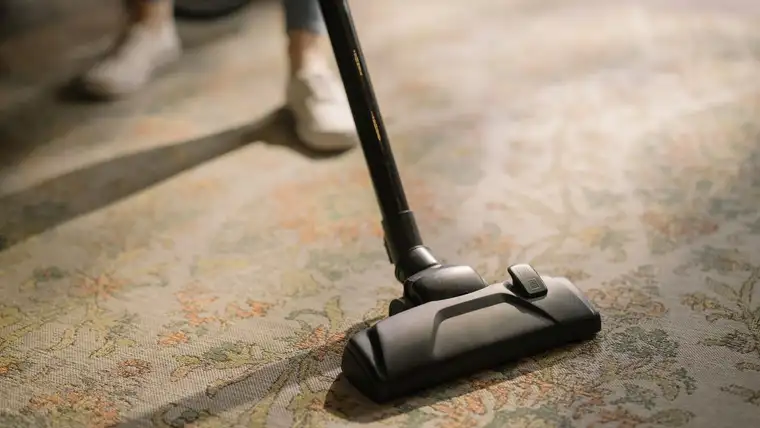
Vacuum slowly, corners included
Make slow, overlapping passes, and do high-traffic areas and entries more often. Empty the canister or change the bag when it's one-half to two-thirds full.
Why: Grit wears and cuts the fibers. Slow passes lift more of it, and an overfull bag cuts suction.
- 2
Blot spills right away
Blot liquids with a dry white cloth or plain white paper towel until almost nothing transfers. Scoop up semisolids with a spoon, and let dry soil be vacuumed before adding any liquid.
Why: The sooner you act, the less soaks down into the backing and pad. Printed towels can transfer dye to damp carpet.
- 3
Spot-clean from the edges in
Mix 1/4 teaspoon of clear dish detergent in 1 cup of lukewarm water, or use a carpet spot cleaner. Test it on a hidden area, apply it to a white cloth, not the carpet, and blot gently from the outer edge toward the center.
Why: Working inward keeps the spot from spreading. A stronger mix leaves sticky residue that attracts dirt.
- 4
Rinse with plain water
Mist the spot lightly with plain water and blot. Repeat once or twice until no suds appear on the cloth.
Why: Leftover cleaner is the main reason a cleaned spot turns darker than the rest of the carpet a few weeks later.
- 5
Dry under a weighted pad
Lay a thick pad of white paper towels on the damp spot and weigh it down, changing it as it absorbs. Use a fan to speed things up, then fluff the pile with your fingers when dry.
Why: Liquid left in the base wicks back up as the surface dries, bringing the stain with it. The pad catches it instead.
- 6
Deep clean every 12-18 months
Have carpet professionally hot-water extracted every 12 to 18 months, before it looks dirty, or rent an extraction cleaner for very dingy carpet after spot-treating.
Why: Extraction flushes out soil vacuuming can't reach. Many carpet warranties require periodic professional cleaning.
What carpet is made of, and what that rules out
Wall-to-wall carpet is pile yarn tufted into a backing, glued with latex, and laid over a cushion (pad). Most US carpet is nylon, polyester, olefin or triexta; wool is the main natural fiber. Many synthetics carry a stain-resist finish, which slows staining but doesn't make carpet stain-proof.
That structure explains the rules. Scrubbing and stiff brushes untwist and fray the yarn tips, leaving a fuzzy patch even after the stain is gone. Over-wetting soaks the backing and pad, slows drying and can weaken the glue. Residue from strong cleaners stays sticky and resoils fast. Laundry detergent may contain optical brighteners that dye the fiber, dishwasher detergent and chlorine bleach destroy carpet dyes, and wool is damaged by alkalis and chlorine bleach. Vacuum wool carpet with suction only, no beater bar.
How often: vacuum at least weekly (the Carpet and Rug Institute's FAQ says twice a week in busy homes), treat spills immediately, and extract every 12 to 18 months.
How to get smells out of carpet
Carpet works like a layered sponge. Spills and accidents pass through the pile into the pad and sometimes the subfloor, and odors come back from there, especially on humid days. So the order is: find the source, clean it, dry it, then deodorize what's left.
- Pet urine: blot, rinse with cool water, extract with a wet/dry vacuum, then soak the spot with an enzyme cleaner that reaches as deep as the urine did and let it air-dry. Never steam-clean urine: heat sets the stain and the smell. A black light helps find old spots. See pet odor in carpet.
- Musty or mildew smell: the carpet or pad has stayed damp. Dry it fast; if the moisture is coming from the floor or the pad is soaked, the carpet has to come up and the cause has to be fixed. See mildew smell in carpet.
- General or lingering odor on dry carpet: sprinkle baking soda, leave it several hours or overnight, then vacuum. It absorbs and neutralizes acidic odor compounds but doesn't clean a source that's still there.
- Smoke: steam or hot-water extraction helps, but tobacco residue that has reached the pad often survives even professional cleaning.
How stains behave on carpet, and spot-treating rules
Stains on carpet go down as well as out. A spill runs down the yarns into the backing, and whatever stays in the base can wick back up after the surface looks clean. That's why carpet stain removal is always blot, treat, rinse, dry under weight, never scrub.
For any stain on carpet: test every solution in a closet or under furniture first; apply it to a cloth; work from the edge to the center; use no more liquid than you can blot back out; and rinse with plain water. Use the gentle solutions first (water, dilute dish detergent, then a solution of 1 cup white vinegar to 2 cups water to neutralize alkaline residue). Dilute ammonia (1 tablespoon per cup) and 3% hydrogen peroxide are for stubborn stains on synthetic carpet only, after a test, and never on wool. Specific stains, such as urine on carpet, are listed below with their own methods.
By situation
Carpet smells after it got wet or was shampooed
A musty smell after a leak or a shampoo means the carpet or pad stayed wet too long. Properly extracted carpet should dry within about 12 hours. Extract as much water as you can with a wet/dry vacuum, run fans and a dehumidifier, and get soaked carpet dry within 24 to 48 hours. Saturated pad usually needs replacing, and moldy pad should always be thrown out.
The smell is in the padding
If an odor returns every time it's humid, liquid reached the pad. Surface cleaning can't reach it. Enzyme cleaner applied generously enough to reach the same depth sometimes works for small pet spots; otherwise that section of carpet pad, and sometimes the carpet, needs replacing.
Deodorizing without baking soda, or naturally
Baking soda is only one tool. Removing the source and drying the carpet matter more: enzyme cleaner for urine and other organic messes, extraction for general soil, open windows and fans for airing out. Sunlight and fast drying help mildewed rugs that can be taken outside. Sprays and fragrances only cover the smell.
Carpet on stairs
Stairs wear fastest at the nose of each step. Work from the top down with a handheld vacuum or crevice tool, getting the back corner of each tread. Spot-clean the same way as floors, keeping liquid to a minimum so it doesn't run down the riser.
Car carpet
The same rules apply: vacuum thoroughly, blot spills, use minimal liquid and dry completely, because a car's closed space traps damp smells. See how to clean a car interior for the details.
Wool carpet
Wool is a protein fiber. Vacuum with suction only, use the very dilute dish detergent solution and rinse it thoroughly, and skip ammonia, oxygen bleach, chlorine bleach and enzyme cleaners. Call a professional for anything stubborn.
What not to do
- Don't scrub or use a brush on a spot. Scrubbing pushes the stain deeper and permanently frays and distorts the pile.
- Don't use a steam cleaner on urine spots. Heat sets both the stain and the odor.
- Don't use laundry or dishwasher detergent, or chlorine bleach. Laundry detergent can contain brighteners that dye the fiber; dishwasher detergent and bleach destroy carpet dyes and some fibers.
- Don't over-wet the carpet or leave cleaner in it. Excess liquid soaks the pad and brings stains back by wicking; residue makes the spot resoil quickly.
- Don't mask odors with fragrance. Perfumes cover the smell briefly, and the source keeps producing odor until it's cleaned and dried.
Other methods that work
Rented extraction cleaner
For very dingy carpet, the American Cleaning Institute suggests spot cleaning first, then renting an extraction (often called steam) cleaner. Use the recommended amount of solution and do extra water-only passes to pull out residue.
Caution: Don't over-wet, and use fans so the carpet dries within a day.
Dry carpet-cleaning compound
Absorbent powder compounds are worked into the pile and vacuumed out, which keeps moisture very low.
Caution: Vacuum thoroughly afterward, and follow the carpet maker's approved product list.
Professional hot-water extraction
Recommended every 12 to 18 months, and the right call for large spills, deep pet odors, wool and stains that keep wicking back.
Caution: Check your warranty: many require cleaning by a certified professional.
Stain still there?
A cleaned spot came back
Either the stain wicked up from below, or residue is attracting dirt. Rinse with plain water, blot, and dry under a weighted pad of paper towels.
The smell returns on humid days
The source is in the pad or subfloor. Find it with a black light (for urine) and treat it deeply with enzyme cleaner, or replace that section of pad.
The carpet still smells after shampooing
It's probably still damp underneath, or there's detergent residue. Dry it fully with fans and a dehumidifier, then do a water-only extraction pass.
Safety
- Never mix ammonia and bleach, or bleach and vinegar. See what never to mix.
- Sewage-soaked carpet and pad should be removed by a restoration professional, not cleaned.
Never mix cleaning products; see chemicals you must never combine.
Questions
How do I deodorize carpet with baking soda?
Sprinkle it evenly over dry carpet, leave it for several hours or overnight, then vacuum thoroughly. It helps leftover odor but won't fix a source that's still wet or soiled.
What is the best way to clean carpet stains?
Blot, then apply a small amount of 1/4 teaspoon dish detergent per cup of lukewarm water to a white cloth and work from the edges in. Rinse with water and dry under weighted paper towels.
How do you get a smell out of carpet fast?
There's no instant fix for a soaked-in odor. Ventilate with fans, blot or extract any wet source, then use baking soda for a few hours and vacuum. Pet urine needs an enzyme cleaner and full drying time.
How often should carpet be cleaned?
Vacuum at least weekly, more in busy areas, and have it deep cleaned by hot-water extraction every 12 to 18 months.
Why does new carpet smell?
Off-gassing from new carpet is mostly finished within about 24 hours. The Carpet and Rug Institute suggests ventilating for 48 to 72 hours.
Stains on carpet
- Blood on carpet
- Cat urine on carpet
- Chocolate on carpet
- Coffee on carpet
- Crayon on carpet
- Dog urine on carpet
- Glue on carpet
- Grease and oil on carpet
- Gum on carpet
- Hair dye on carpet
- Ink on carpet
- Makeup on carpet
- Marker on carpet
- Mildew and mold on carpet
- Milk on carpet
- Mud on carpet
- Nail polish on carpet
- Paint on carpet
- Permanent marker on carpet
- Play-Doh-style modeling dough on carpet
- Poop (feces) on carpet
- Red wine on carpet
- Rust on carpet
- Putty on carpet
- Slime on carpet
- Tomato sauce and ketchup on carpet
- Urine on carpet
- Vomit on carpet
- Wax on carpet
More guides for this room
Sources
- Cleaning and Maintenance (carpet for homes, incl. rugs, vacuuming, spots, pets), Carpet and Rug Institute
- Frequently Asked Questions, Carpet and Rug Institute
- Spot Solver: Feces (general spot-removal steps and solution recipes), The Carpet and Rug Institute
- Ask ACI: Carpet and Rug Cleaning, American Cleaning Institute
- Pet Urine and Carpet (Technical Bulletin), Carpet and Rug Institute
- Removing Pet Stains and Odors, Humane Society of Southern Arizona
- Removing Stains from Washable Fabrics, Texas A&M AgriLife Extension
- A Brief Guide to Mold, Moisture and Your Home, U.S. Environmental Protection Agency
Last updated . Methods are drawn from the sources above; how we research and check our guides.