How to clean a car interior, seats and headliner
To clean a car interior, take out the trash and floor mats, vacuum everything, then wipe surfaces and seats with a cloth dampened (not wet) in mild detergent and warm water, wipe off the residue with a clean damp cloth, and leave the doors or windows open until it's dry. Cars are harder to dry than a house and hide electronics and seat sensors under the upholstery, so the rule is minimal moisture: no soaking, no steam on seats and no harsh solvents.
- Best method
- Vacuum, then mild detergent on a damp cloth; dry with doors open
- Time
- 1-2 hours for a thorough clean
- Difficulty
- Moderate
You will need
- Vacuum with crevice and upholstery tools
- Mild detergent or dish soap
- Microfiber cloths
- Soft brush
- Enzyme cleaner, for urine, vomit and milk
- Wet/dry vacuum, for extracting spills
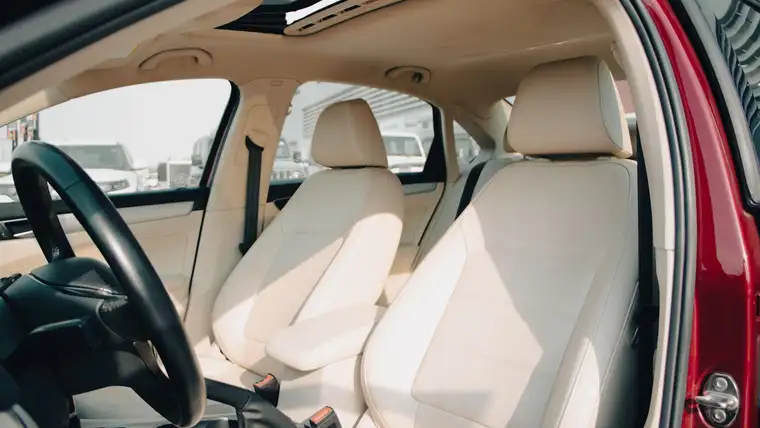
Step by step
- 1
Check your owner's manual
Look up the interior care section before using any cleaner. Note what it says about seats, leather, seat belts and screens.
Why: Interiors differ, and many front passenger seats contain an occupant sensor the air bag system relies on. Vehicle makers warn that soaking seats, steam cleaners or acidic cleaners can damage the seat or that sensor.
- 2
Clear out and vacuum
Remove trash, food and floor mats. Vacuum seats, carpet, under and between seats, door pockets and the trunk with crevice and upholstery tools.
Why: Grit is abrasive and holds stains. Hidden food, milk or trash is also the most common source of a mystery smell.
- 3
Wipe hard surfaces and trim
Wipe the dash, door panels and console with a cloth dampened in mild soap solution, then a clean damp cloth, then dry. Spray onto the cloth, never onto electronics, switches or screens.
Why: Liquids can make electrical parts malfunction, and some chemicals discolor or crack plastic trim.
- 4
Clean cloth seats with minimal moisture
Dab or wipe cloth seats with a cloth dampened in mild detergent and warm water, working stains from the edge in. Then wipe with a cloth dampened in plain water and blot dry. Extract heavy spills with a wet/dry vacuum.
Why: Mild detergent cleans without damaging the fabric. Excess water soaks into seat foam, where it can reach sensors and grow mold.
- 5
Clean leather seats gently
Vacuum or dust first, then wipe with a soft cloth dampened in about 90% water and 10% neutral soap. Wipe off the residue with a damp cloth and let it air-dry in the shade. Use a leather cleaner if your manual recommends one.
Why: That's one carmaker's leather procedure. Harsh chemicals strip leather's protective coating, and sun dries and shrinks it.
- 6
Wash floor mats and dry everything
Scrub mats with warm water and a few drops of dish soap, rinse and dry them outside the car. Leave doors or windows open, ideally on a dry, sunny day, until the interior is fully dry. Refit the mats correctly so they can't catch the pedals.
Why: A closed car holds moisture, and damp carpet and padding turn musty. Drying within 24 to 48 hours usually prevents mold.
What's in a car interior, and what that rules out
A car interior packs cloth (usually polyester or nylon) or leather and vinyl seats over foam, plastic and resin trim, electronics and switches, a fabric headliner glued to a backing board, and carpet over padding. It's a small, closed space that heats up in the sun, so moisture lingers and spills bake in.
Vehicle makers rule out a lot:
- No soaking, steam or acidic cleaners on seats, to protect the foam and the occupant sensor.
- No bleach, ammonia or hydrogen peroxide on interior surfaces; one carmaker says they damage them.
- No solvents such as benzene, paint thinner or gasoline, which damage resin parts and textiles.
- No silicone sprays on switches or audio controls, which can cause malfunction.
- No bleach, dye or solvents on seat belts, which can weaken the webbing. Clean belts with mild soap and let them dry fully, extended, before they retract.
How stains behave in a car, and the spot-treating rules
Car fabric and carpet behave like home upholstery and carpet, but they're harder to dry, and liquid that soaks into a seat can reach foam, wiring and sensors under the cover. Sun and heat set spills and fade fabric.
The rules:
- Blot spills straight away; one carmaker notes spills can soak into leather and stain.
- Use cool water and detergent or an enzyme cleaner on protein spills (urine, vomit, milk) before any heat.
- Apply cleaner to a cloth, work from the edge in, and blot-rinse with plain water, as the Carpet and Rug Institute recommends for carpet spots.
- Extract rather than soak: a wet/dry vacuum pulls liquid out of foam and padding.
- Dry with doors open or fans, keeping water away from seat sensors.
Specific spills: urine in a car and vomit in a car.
How to get a bad smell out of a car
Odors cling to everything soft in a car: seats, headliner, carpet padding and mats. Air fresheners only mask them and add their own compounds. Find and remove the source first: food, spilled milk, a soiled mat, a damp patch from a leak.
Iowa State's AnswerLine suggests clearing out trash, vacuuming thoroughly, sprinkling baking soda on carpet and cloth seats for several hours before vacuuming, cleaning surfaces, washing mats, and replacing the cabin air filter. For ongoing upkeep it suggests a weekly quick clean and a thorough clean three or four times a year. Ventilate using outside-air mode or open windows rather than recirculation.
For smoke, the Thirdhand Smoke Resource Center warns that residue embeds in upholstery, the headliner, mats and the ventilation system and may not come out even with aggressive cleaning; see smoke smell in a car. For a musty smell, look for a water leak and see mildew smell in a car. Never run an ozone generator in a car someone will be sitting in.
By situation
Pee on a car seat
Blot as much as you can, then dab with cool water and detergent and extract with a wet/dry vacuum. Apply an enzyme cleaner, which breaks down the source of urine odor, following its label. Extract again and dry with the doors open. Don't saturate the seat or use steam, which sets urine odor and can harm the seat sensor. If urine soaked deep into the foam, a professional detailer can clean it without flooding the seat.
Water stains on car seats
Water marks are edges where moisture dried. Dampen the whole affected panel evenly with a cloth wrung out in mild detergent solution, from seam to seam, then extract with a wet/dry vacuum and dry with the doors open. Spot-dabbing just the ring tends to make a new one.
Vinegar on car seats: sources disagree
One carmaker's tips page suggests about 1 cup of vinegar, a squirt of dish soap and a gallon of hot water for fabric-seat stains, and Iowa State's AnswerLine suggests a 50/50 vinegar and water spray for odors. But vehicle owner's manuals warn against acidic cleaners on seats because of the occupant sensor. Check your own manual first; if it rules out acidic cleaners, use mild detergent instead.
Smell from the car vents or air conditioning
Replace the cabin air filter as your manual schedules it, which AnswerLine also recommends for car odors. Check the carpet for damp spots that point to a leak. A musty smell that persists from the vents after that needs a mechanic or dealer to look at the system.
The headliner
No carmaker-specific method was found. The general rule is minimal moisture: vacuum gently with a soft brush, then dab marks with a barely damp cloth and mild detergent. Heavy wetting is commonly said to loosen the headliner's adhesive, so never spray it directly.
Dye on light leather seats
One carmaker notes some dark clothing, such as new jeans, can rub dye onto light leather. Wipe it promptly with the leather procedure above; set dye transfer needs a leather specialist.
What not to do
- Don't soak seats, steam-clean them, or use acidic cleaners if your manual rules them out. Vehicle makers warn this can damage the seat or the occupant sensor and affect air bag operation.
- Don't spray liquids onto electronics, switches or screens. Electrical parts can malfunction.
- Don't use bleach, ammonia, hydrogen peroxide or solvents inside the car. Carmakers say they damage interior surfaces, trim and textiles.
- Don't let wet seat belts retract. Belts should dry completely, extended, before use.
- Don't run an ozone generator in an occupied car. EPA warns ozone harms the lungs at levels that can occur in occupied spaces.
Other methods that work
Baking soda for odor
Sprinkle on dry carpet and cloth seats, leave several hours, then vacuum thoroughly. More on baking soda.
Caution: It absorbs odor but doesn't remove a spill; clean the source first.
Upholstery or carpet cleaner
A product made for upholstery or carpet, used sparingly on fabric seats per its label.
Caution: Spray onto a cloth, not the seat, and extract rather than soak.
Professional detailing
For large spills or vomit that soaked into foam, wet seats with air bag sensors, mold, persistent odor, burns and leather damage.
Stain still there?
The car smells musty after cleaning
Moisture is trapped in the seat foam or carpet padding. Extract with a wet/dry vacuum, then dry with doors open and fans. If it persists, look for a leak.
A ring formed around a cleaned spot on a seat
Dampen the whole panel evenly with a wrung-out cloth, extract, and dry quickly with the doors open.
The smell came back on a hot day
Heat makes residue in foam and fabric release more odor. The source, often a spill in the foam or padding, still needs extracting and an enzyme treatment.
Safety
- Keep liquids and sprays away from air bag covers, seat sensors and electronics.
- Never mix bleach with ammonia or vinegar-based cleaners.
Never mix cleaning products; see chemicals you must never combine.
Questions
How do you get stains out of car seats?
Vacuum, then dab with a cloth dampened in mild detergent and warm water, working from the edge in. Wipe with plain water, extract with a wet/dry vacuum and dry with the doors open.
How do you get pee out of a car seat?
Blot, clean with cool water and detergent, apply an enzyme cleaner, extract and dry fully. Avoid soaking the seat or using steam.
How do you get a bad smell out of a car?
Remove the source, vacuum, use baking soda on carpet and seats for several hours, wash the mats, ventilate with outside air, and replace the cabin air filter.
How do you get the smell out of car vents?
Replace the cabin air filter and check for damp carpet that suggests a leak. If a musty smell keeps coming from the vents, have a mechanic check the system.
Can you steam clean car seats?
Vehicle makers warn against steam and soaking on seats because it can damage the seat or the occupant sensor. Check your manual.
Stains on a car
More guides for this room
- How to clean an air fryer, basket and heating element
- How to clean area rugs by hand, in the washer or outside
- How to clean baseboards (painted or stained wood)
- How to clean a bathtub and get stains out of it
- How to clean blinds: vinyl, metal, wood and bamboo
- How to clean burnt pots and pans (and stuck-on cake)
- How to clean carpet at home, and get smells out of it
- How to clean cast iron, and get rust off it
- How to clean a coffee maker with vinegar (and other descalers)
- How to clean a comforter or duvet at home
- How to remove oil stains from concrete and driveways
- How to clean a couch, including stains and smells
Sources
- Interior Care - Civic Sedan 2023 Owner's Manual, American Honda Motor Co. (vehicle manufacturer)
- How To Clean Car Seats & Interior, Nissan USA (vehicle manufacturer)
- 2017 Sentra Owner's Manual, section 7: Appearance and care, Nissan North America (vehicle owner's manual)
- Removing Odors in the Car, Iowa State University Extension and Outreach - AnswerLine
- Cleaning and Maintenance (carpet for homes, incl. rugs, vacuuming, spots, pets), Carpet and Rug Institute
- How can I protect my child from thirdhand smoke in cars?, Thirdhand Smoke Resource Center, San Diego State University
- A Brief Guide to Mold, Moisture and Your Home, U.S. Environmental Protection Agency
- Ozone Generators that are Sold as Air Cleaners, U.S. Environmental Protection Agency
Last updated . Methods are drawn from the sources above; how we research and check our guides.