How to clean baseboards (painted or stained wood)
To clean baseboards, vacuum along them with the dust-brush attachment, then wipe with a cloth wrung out in warm water and a little mild dish soap, rinse with a clean damp cloth and dry. Baseboards are painted or stained wood or MDF sitting right at floor level, where dust, mop water and scuffs collect: the paint takes mild soap, but soaking can damage the paint and swell the wood.
- Best method
- Vacuum, then wipe with mild soap on a wrung cloth
- Time
- 20-40 minutes a room
- Difficulty
- Easy
You will need
- Vacuum with a dust-brush attachment
- Microfiber cloths
- Mild dish soap
- Bucket of warm water
- Baking soda, for scuffs
Step by step
- 1
Vacuum the dust and hair first
Run the vacuum's dust-brush attachment along the top edge and face of the baseboard and into the corner where it meets the floor. A dry or barely damp microfiber cloth also works for a quick pass.
Why: Dust and pet hair turn into gray paste once they get wet, and that paste smears into the paint texture.
- 2
Test your cleaner
Wipe a small spot behind a door with the soapy cloth, let it dry, and check that the paint looks unchanged.
Why: The American Cleaning Institute advises testing washability on painted woodwork, since finishes vary.
- 3
Wash with a well-wrung cloth
Mix a little mild dish soap in warm water (or use a nonabrasive all-purpose cleaner), wring the cloth until it's barely damp, and wipe along the baseboard in sections. Get into the top groove and the corners.
Why: A mild solution lifts scuffs and grime without softening the paint. A wrung cloth keeps water off the bottom edge and seams.
- 4
Rinse and dry each section
Go over the washed section with a cloth dampened in plain water, then dry it with a dry cloth, paying attention to the bottom edge and joints.
Why: This removes soap residue, which attracts dust, and stops water from sitting in the seams where it can swell wood or MDF.
- 5
Treat leftover scuffs
Rub stubborn scuff marks gently with a paste of baking soda and water on a soft cloth, then rinse and dry.
Why: One paint maker suggests this for scuffs on painted surfaces. The paste is a mild abrasive, so light pressure matters.
What baseboards are made of, and what that rules out
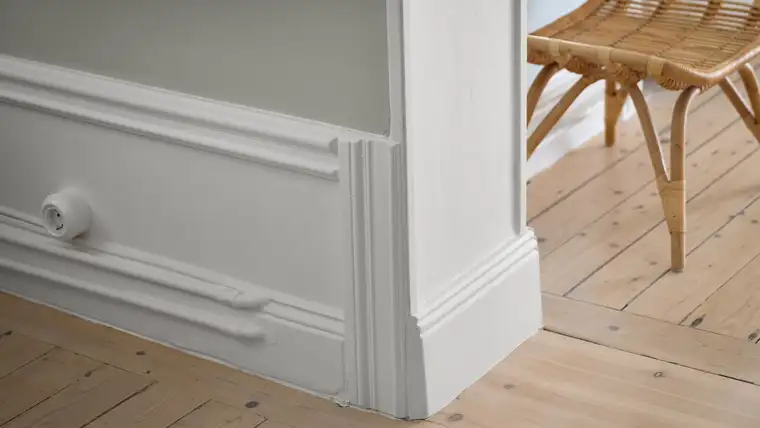
Most baseboards are wood or MDF (a board made from compressed wood fibers), finished with semi-gloss or satin paint, or stained and clear-coated. Painted trim follows the same rules as painted walls: mild soap and water, gentle pressure, no abrasive pads or harsh spray cleaners, which dull or damage the paint.
The extra risk is water. Baseboards sit where mop water splashes and pools, and any bare edge, chipped paint or open joint lets moisture into the wood or MDF, which swells. So use a wrung-out cloth, never a dripping sponge, and wipe up mop water that collects along the bottom.
How often to clean baseboards
Vacuum or dust them whenever you vacuum the floors, since that's where the dust settles. Wash them a few times a year, or when they look scuffed or gray. Keeping them dusted is the main thing that makes washing easy.
By situation
Stained or clear-finished wood baseboards
Skip soap and water. The American Cleaning Institute suggests a wood cleaner or furniture polish product on stained, clear-finished woodwork, applied to a cloth and buffed.
Cleaning baseboards and walls together
Dust both first, top to bottom, so falling dust doesn't land on clean baseboards. Then wash the walls and do the baseboards last, since drips from wall washing end up there.
Cleaning baseboards before painting
Vacuum, then wash with mild soap, rinse and let them dry completely. Remove any grease or grime, especially in kitchens, so paint has a clean surface. For heavily soiled trim, see the prep advice in how to clean painted walls.
Bathroom baseboards
Bathroom baseboards get shower splash and humidity, so look for dark mildew spots along the bottom and in corners. Wash mold off with detergent and water and dry completely; run the exhaust fan to keep humidity down. Swollen or soft MDF won't recover and may need replacing.
Cleaning baseboards with vinegar
Paint makers recommend mild soap and water for painted surfaces rather than vinegar. If you want to use diluted white vinegar, test it on a hidden spot first, and never combine it with bleach.
Cleaning baseboards with dryer sheets
Wiping with a used dryer sheet is a popular tip for dusting and for leaving a coating that's said to repel dust. It's a folk method: no cleaning authority recommends it, and there's no evidence on whether the residue it leaves affects paint. A microfiber cloth dusts just as well.
What not to do
- Don't soak baseboards or let mop water pool against them. Excess water damages paint and swells wood and MDF at the seams.
- Don't use abrasive pads or harsh spray cleaners. They dull or damage the paint finish.
- Don't wash stained wood trim with soap and water. Water can cloud the finish; a wood cleaner is the recommended product.
- Don't scrub scuffs hard. Even mild abrasives leave shiny or dull patches on paint if you press too hard.
Other methods that work
Nonabrasive all-purpose cleaner
The American Cleaning Institute lists a nonabrasive all-purpose cleaner for painted woodwork, used per the label.
Caution: Test first and rinse well.
Baking soda paste
A gentle abrasive for scuffs. Rub lightly, rinse and dry. More on baking soda.
Caution: Test on satin paint, where it can leave a shiny spot.
Stain still there?
The baseboards look gray again within days
Soap residue attracts dust. Rinse with a plain-water cloth after washing and dry them, and vacuum them when you vacuum the floor.
Paint came off with the dirt
Stop scrubbing that spot. Let it dry and touch it up with matching paint in the same sheen.
The bottom edge is swollen or soft
Water has got into the wood or MDF. Dry the area and fix the source; badly swollen MDF usually has to be replaced.
Questions
What is the easiest way to clean baseboards?
Vacuum them with the dust-brush attachment every time you vacuum the floor. Then they only need an occasional wipe with a wrung-out soapy cloth.
What is the best cleaner for baseboards?
A little mild dish soap in warm water, or a nonabrasive all-purpose cleaner, for painted baseboards. Use a wood cleaner on stained or clear-finished trim.
Can you clean baseboards with vinegar?
Paint makers recommend mild soap and water instead. If you use diluted vinegar, test it on a hidden spot first.
Do dryer sheets keep baseboards clean?
It's a popular tip, but no cleaning authority recommends it and there's no evidence it works better than regular dusting.
How do you get scuff marks off baseboards?
Rub gently with a paste of baking soda and water, then rinse and dry. Light pressure keeps it from dulling the paint.
More guides for this room
- How to clean blinds: vinyl, metal, wood and bamboo
- How to clean a couch, including stains and smells
- How to clean curtains, washing them or not
- How to clean a leather couch and leather furniture
- How to clean wallpaper, and wallpaper glue off walls
- How to clean painted walls without damaging the paint
- How to remove water stains and rings from wood and fabric
- How to clean windows without streaks, and remove water spots
Sources
- Cleaning Hard Surfaces, American Cleaning Institute
- How to Clean Newly Painted Walls (Just for Starters), Sherwin-Williams (paint manufacturer)
- How to Clean Walls Without Damaging Paint, Benjamin Moore (paint manufacturer)
- Living Room, Dining Room & Bedroom Cleaning Tips, American Cleaning Institute
- A Brief Guide to Mold, Moisture and Your Home, U.S. Environmental Protection Agency
Last updated . Methods are drawn from the sources above; how we research and check our guides.