How to clean windows without streaks, and remove water spots
To clean windows, vacuum the sills and frames first, then wash the glass with a glass cleaner or ½ cup of ammonia in a gallon of water, rinse with a clean damp cloth, and dry with a squeegee, a lint-free cloth or low-absorbency paper towels. Glass is hard and non-porous, so it takes cleaners and mild acids well; streaks come from using too much or too little cleaner, or from cloths with softener or wax on them. For hard water spots, a mild acid like vinegar dissolves the minerals.
- Best method
- Glass cleaner or ammonia solution, rinse, squeegee dry
- Time
- 10-15 minutes a window, both sides
- Difficulty
- Easy
You will need
- Vacuum or small brush, for sills
- Glass cleaner or household ammonia
- Sponge or lint-free cloths
- Squeegee
- White vinegar, for hard water spots
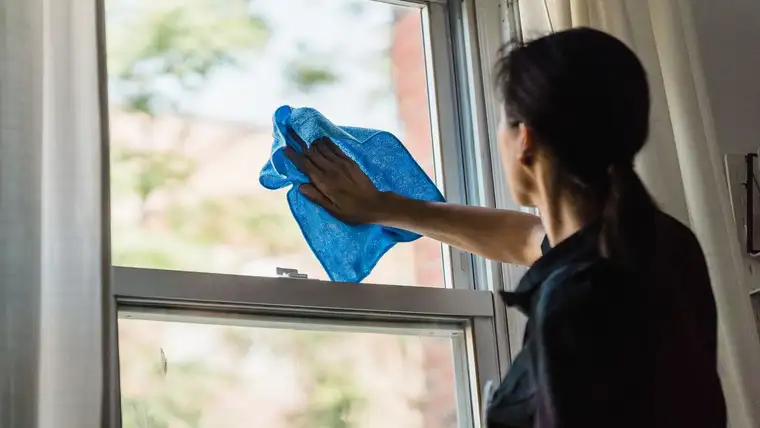
Step by step
- 1
Clean the sills and frames first
Vacuum or brush away dust, soot, cobwebs and dead insects from the sills, tracks and frames. Wipe vinyl or plastic frames with a cleaning wipe or a cloth you've sprayed with cleaner.
Why: Loose grit turns into mud on wet glass and can scratch it. Spraying the cloth instead of the frame keeps cleaner off surfaces it isn't meant for.
- 2
Wash the glass
Use a glass or glass-and-multi-surface cleaner, or mix ½ cup of household ammonia in a gallon of water and apply it with a sponge or cloth. Spray the cleaner onto the cloth, or hold a piece of cardboard against the frame while you spray.
Why: These are the American Cleaning Institute's options for window glass. Keeping cleaner off the frame protects wood, vinyl and paint.
- 3
Rinse
Wipe the glass with a clean cloth dampened in plain water.
Why: Rinsing removes cleaner residue, which is one of the main causes of streaks and haze.
- 4
Dry with a squeegee or lint-free cloth
Pull a squeegee across the glass in overlapping strokes, wiping the blade after each one, or dry with a clean lint-free cloth or low-absorbency paper towel. Use a soft toothbrush or cotton swab for the corners.
Why: Drying before the water evaporates prevents spots. Very absorbent paper towels leave lint behind.
- 5
Polish out smudges
If smudges remain, spray generously and wipe, then mist lightly and polish with a fresh dry cloth.
Why: The American Cleaning Institute notes that too little cleaner for the amount of soil leaves smudges; a second light pass finishes the job.
What windows are made of, and what that rules out
Window glass is hard and non-porous. It tolerates glass cleaners, ammonia solutions and mild acids like vinegar. The exception is hydrofluoric acid, found in some rust removers, which etches glass permanently, so keep those products away from windows.
The frames and sills are the delicate part: wood, vinyl, aluminum or fiberglass, which shouldn't be soaked with glass cleaner. Plastic storm windows and storm doors (acrylic or polycarbonate) are different again: the American Cleaning Institute warns that household cleaners, cleansers and ammonia can streak them. Some modern windows have coated (low-E) glass, so follow the window maker's instructions for those.
Removing hard water stains and water spots from windows
White spots on outside windows, often from sprinklers or rain, are minerals left when hard water evaporates. Ordinary glass cleaner rubbed gently over the spots may be enough. If not, use a mild acid: New Mexico State University Extension notes that acids like vinegar dissolve mineral deposits. The Vermont Department of Health's glass recipe is 2 tablespoons of white vinegar in 2 cups of water with 2 drops of liquid soap.
Let the acid sit on the spots briefly, wipe, rinse with clean water and dry. Keep it off stone sills and metal frames, and never use it with bleach. For heavier mineral buildup, see hard water stains; for shower glass, see glass shower doors.
By situation
Outside windows
Hose-end outdoor window sprays, used from at least five feet away, rinse with a sheeting action and don't need towel drying, according to the American Cleaning Institute. For upper floors, don't lean out or overreach from a ladder.
Streaky windows
Streaks come from too much or too little cleaner, from cloths washed with fabric softener or carrying wax, or from very absorbent paper towels. Use the right amount, a clean lint-free cloth, and rinse before drying.
Cream glass cleaners
Let them dry completely before you buff them off. Buffing while they're still wet smears them.
Plastic storm windows and doors
Don't use household cleaners, cleansers or ammonia, which can streak the plastic. Clean with mild soap and water and a soft cloth, following the maker's instructions.
What not to do
- Don't use cloths with fabric softener or wax residue, or very absorbent paper towels. They leave streaks and lint.
- Don't use ammonia or household cleaners on plastic windows and storm doors. They can streak the plastic.
- Don't use rust removers containing hydrofluoric acid near glass. Hydrofluoric acid etches glass permanently.
- Don't mix ammonia or vinegar with bleach. Ammonia plus bleach makes toxic chloramine gas, and acids plus bleach release chlorine gas. See never mix.
Other methods that work
Vinegar solution
2 tablespoons of white vinegar in 2 cups of water with 2 drops of liquid soap, from the Vermont Department of Health. Useful where hard water leaves mineral film.
Caution: Keep it off stone sills and metal frames, and rinse well.
Ammonia solution
½ cup of household ammonia in a gallon of water, applied with a sponge or cloth and rinsed. More on ammonia.
Caution: Ventilate, never combine with bleach, and don't use on plastic windows.
Stain still there?
Streaks appear as the glass dries
There's cleaner residue or the cloth is dirty or treated with softener. Rinse with plain water and dry with a clean lint-free cloth or squeegee.
White spots won't wipe off
They're mineral deposits. Apply a mild acid such as a vinegar solution, let it sit briefly, wipe, rinse and dry.
Haze that won't polish out
It may be etching from hard water or a harsh chemical, not dirt. If a mild acid doesn't change it, the glass itself is damaged.
Safety
- Never mix ammonia or vinegar with chlorine bleach.
- Use a stable ladder and don't lean out of upper-floor windows.
Never mix cleaning products; see chemicals you must never combine.
Questions
How do you remove hard water stains from windows?
Rub gently with glass cleaner first. If the spots stay, apply a mild acid such as a dilute vinegar solution, let it sit briefly, wipe, rinse and dry.
How do you clean windows without streaks?
Use the right amount of cleaner, rinse with a clean damp cloth, and dry with a squeegee or lint-free cloth. Avoid cloths washed with fabric softener.
What is the best homemade window cleaner?
The American Cleaning Institute lists ½ cup of ammonia in a gallon of water. The Vermont Department of Health suggests 2 tablespoons of vinegar in 2 cups of water with 2 drops of liquid soap.
Can you use glass cleaner on plastic windows?
The American Cleaning Institute warns that household cleaners and ammonia can streak plastic windows. Use mild soap and water instead.
More guides for this room
- How to clean baseboards (painted or stained wood)
- How to clean blinds: vinyl, metal, wood and bamboo
- How to clean a couch, including stains and smells
- How to clean curtains, washing them or not
- How to clean a leather couch and leather furniture
- How to clean wallpaper, and wallpaper glue off walls
- How to clean painted walls without damaging the paint
- How to remove water stains and rings from wood and fabric
Sources
- Clean Windows, American Cleaning Institute
- Home Cleaning Problems and Solutions, American Cleaning Institute
- Cleaning Hard Surfaces, American Cleaning Institute
- Cleaning Plastic, American Cleaning Institute
- Selection and Use of Home Cleaning Products, Guide G-304, New Mexico State University Cooperative Extension Service
- Cleaning Mirrors, American Cleaning Institute
- Keeping Your Home Healthy, Safe & Clean: Living Green (June 2017), Vermont Department of Health
- Chlorine gas: What happens if you mix bleach and other cleaners, National Capital Poison Center
Last updated . Methods are drawn from the sources above; how we research and check our guides.