How to clean wallpaper, and wallpaper glue off walls
To clean wallpaper, dust it, then test a hidden spot to see if it's washable. Wipe washable (vinyl or vinyl-coated) wallpaper with a well-wrung sponge and a wallpaper cleaner or nonabrasive all-purpose cleaner, working from the bottom up. Clean non-washable paper, fabric and grasscloth dry, with a dough-type wallpaper cleaner or art gum, because water can stain them or dissolve the paste behind them.
- Best method
- Dust, test, then a wrung sponge or a dry dough cleaner
- Time
- 20-40 minutes a wall
- Difficulty
- Easy
You will need
- Soft brush or vacuum dust attachment
- Non-abrasive sponge
- Wallpaper cleaner or nonabrasive all-purpose cleaner
- Dough-type wallpaper cleaner or art gum, for non-washable paper
- Clean towels
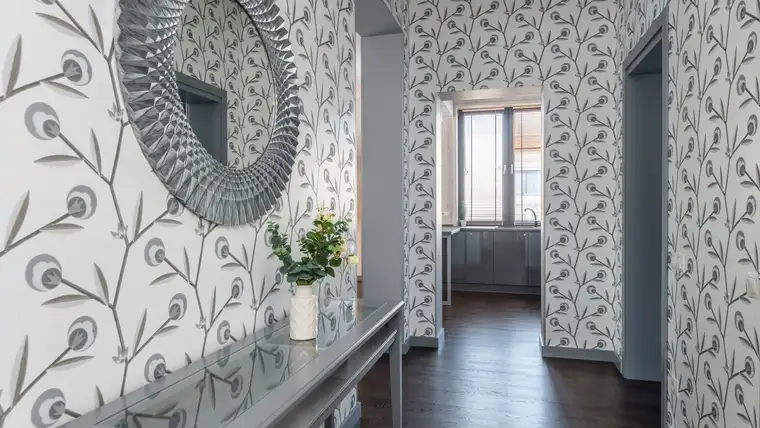
Step by step
- 1
Dust gently
Go over the wall with a soft brush or the vacuum's dust attachment on low suction, without pressing into the paper.
Why: Dry soil comes off first. Wet dust smears and can be pushed into textured or fabric papers.
- 2
Test whether it's washable
Check any leftover roll or label for washable or scrubbable. If you don't know, dab a hidden area (behind furniture or a door) with a barely damp sponge, let it dry and look for staining, shrinking or lifting.
Why: Water can stain non-washable papers, loosen seams or soften the paste behind them.
- 3
Washable wallpaper: wipe with a wrung sponge
Use a liquid wallpaper cleaner or a nonabrasive all-purpose cleaner on a sponge wrung until it's barely damp. Work in small, overlapping circles.
Why: This is the American Cleaning Institute's routine for washable papers. Little water keeps seams from lifting.
- 4
Start at the bottom and work up
Clean the lowest section first and move up the wall, wiping any drips as they appear.
Why: Drips that run onto an already-clean area wipe off easily. Drips on dry, dirty paper leave streaks that are hard to remove.
- 5
Non-washable wallpaper: clean it dry
Rub the surface lightly with a dough-type wallpaper cleaner or ground art gum, folding the dough as it gets dirty, then brush off the crumbs.
Why: These lift soil without water, which is the only safe way to clean paper, fabric or grasscloth wallcoverings.
- 6
Dry and check the seams
Pat washable paper dry with a clean towel, especially along the seams, and let the room air out.
Why: Moisture left in seams can loosen the paste and lift the edges.
Washable, scrubbable or neither: why it matters
Wallcoverings fall into three groups. Washable papers, usually vinyl-coated, can be wiped with a damp sponge and mild cleaner. Scrubbable papers, usually solid vinyl, can take a bit more pressure. Non-washable papers, including plain paper, fabric and grasscloth, can't take water at all.
The reason is the paste. Wallpaper is stuck on with an adhesive that softens when it gets wet, which is exactly how wallpaper is removed. Water that soaks through a non-washable surface or into a seam can stain the face, make the edges lift or loosen the paper. The American Cleaning Institute advises cleaning wallpaper often, because light, regular cleaning avoids buildup that's hard to remove later.
Removing wallpaper glue and paste from walls
After the wallpaper is off, a film of old paste usually stays on the wall. It must come off before painting: one paint maker warns that residual glue interferes with paint adhesion and can cause streaks, peeling or bubbling.
Paint makers describe two approaches. One uses warm water and a mild detergent on a soft sponge to wipe the glue off, then a clean-water rinse, with a wallpaper glue remover for tough spots. Another uses an adhesive-remover solution, store-bought or homemade from 1 part fabric softener to 3 parts warm water or 1 part household vinegar to 2 parts warm water, applied with a sprayer or sponge and left 10 to 15 minutes while keeping the wall damp. Wipe the softened paste off, sand rough spots lightly with fine-grit (220) sandpaper, and wipe with a wet rag as you go.
Then let the wall dry completely, generally about 24 hours depending on humidity. Paint makers recommend a high-adhesion or oil-based primer before painting, in case any glue remains.
By situation
Cleaning wallpaper before painting over it
The paint-maker guides cited here assume the wallpaper comes off first, then the glue, then primer. If you're removing it, follow the glue-removal steps above, then prep as for painted walls. If you're only cleaning wallpaper that stays up, use the washable or dry method for its type.
Wallpaper in a bathroom
Bathroom wallpaper is usually washable vinyl, so it can be wiped with a mild cleaner on a wrung sponge. Humidity is the bigger issue: EPA notes mold can hide behind wallpaper, so a musty smell with no visible mold, or bubbling and peeling seams, can mean moisture behind the paper. See mildew smell in a house. Run the exhaust fan and keep humidity below 60 percent.
Grease and fingerprints on kitchen or hallway wallpaper
On washable paper, a nonabrasive all-purpose cleaner on a wrung sponge removes most grease and fingerprints; rinse with a barely damp sponge. On non-washable paper, try the dough cleaner; grease that has soaked in may be permanent.
Old or heavily soiled non-washable wallpaper
Follow the wallcovering maker's instructions if you have them. No authoritative home method was found beyond dry cleaning, and badly soiled non-washable paper may need replacing.
What not to do
- Don't use water on non-washable wallpaper. It can stain the paper and soften the paste, lifting seams.
- Don't use a dripping sponge on any wallpaper. Water that runs into seams loosens the adhesive.
- Don't scrub washable (not scrubbable) wallpaper. Pressure can wear through the coating to the paper underneath.
- Don't paint over leftover wallpaper glue. Residual glue interferes with paint adhesion and can cause streaks, peeling or bubbling.
Other methods that work
Vinegar solution for paste removal
1 part household vinegar to 2 parts warm water, sprayed or sponged on and left 10 to 15 minutes to soften old paste. More on white vinegar.
Caution: Wear gloves and eye protection, cover the floor, and tape off outlets.
Fabric softener solution for paste removal
One paint maker lists 1 part fabric softener to 3 parts warm water as a homemade adhesive remover.
Caution: Rinse the wall well afterward so no softener film is left under the primer.
Commercial wallpaper glue remover
Liquid or gel removers made for wallpaper adhesive; gels are less messy on vertical walls.
Caution: Follow the label and ventilate.
Stain still there?
Seams lifted after cleaning
Too much water got behind the edge. Let it dry, then reattach with a seam adhesive made for wallpaper, and use a drier sponge next time.
The wall still feels tacky or slick after removing paste
Glue remains. Rewet with warm water and detergent or the remover, wipe again, rinse with clean water and let it dry before checking.
Paint is bubbling or peeling over a former wallpaper wall
Usually leftover paste. Scrape and remove the loose paint, wash off the remaining glue, let it dry fully and use a high-adhesion or oil-based primer.
Safety
- Wear gloves and eye protection when removing wallpaper paste.
- Tape off electrical outlets and switches before wetting the wall.
Never mix cleaning products; see chemicals you must never combine.
Questions
Can you wash wallpaper?
Only if it's washable or scrubbable, usually vinyl. Test a hidden spot first. Plain paper, fabric and grasscloth have to be cleaned dry.
How do you get wallpaper glue off walls?
Wipe it with warm water and mild detergent on a soft sponge, or soften it with a remover solution for 10 to 15 minutes, wipe it off, rinse and let the wall dry fully.
Can you paint over wallpaper paste?
It's not recommended. Paint makers say leftover glue interferes with adhesion and can cause streaks or peeling, so remove it and use a high-adhesion or oil-based primer.
How long should the wall dry after removing wallpaper paste?
Until it's completely dry, generally about 24 hours depending on humidity, before priming.
What is a dough wallpaper cleaner?
A soft, kneadable cleaning compound that you rub over non-washable wallpaper to pick up soil without water, folding it as it gets dirty.
More guides for this room
- How to clean baseboards (painted or stained wood)
- How to clean blinds: vinyl, metal, wood and bamboo
- How to clean a couch, including stains and smells
- How to clean curtains, washing them or not
- How to clean a leather couch and leather furniture
- How to clean painted walls without damaging the paint
- How to remove water stains and rings from wood and fabric
- How to clean windows without streaks, and remove water spots
Sources
- Cleaning Hard Surfaces, American Cleaning Institute
- How to Clean Walls Without Damaging Paint, Benjamin Moore (paint manufacturer)
- How to Paint After Removing Wallpaper, Sherwin-Williams (paint manufacturer)
- How to Remove Wallpaper in 6 Steps, Benjamin Moore (paint manufacturer)
- A Brief Guide to Mold, Moisture and Your Home, U.S. Environmental Protection Agency
Last updated . Methods are drawn from the sources above; how we research and check our guides.