How to clean a couch, including stains and smells
To clean a couch, find the cleaning code on its tag first, vacuum it thoroughly, then spot-clean with what the code allows: the foam of a mild detergent for W, a water-free upholstery solvent for S, either for W/S, and only vacuuming or brushing for X. Use as little moisture as possible and blot, never scrub. Liquids soak through the fabric into foam you can't rinse, and too much water leaves rings.
- Best method
- Vacuum, then spot-clean by the cleaning code
- Time
- 30-60 minutes, plus drying time
- Difficulty
- Moderate
You will need
- Vacuum with upholstery and crevice tools
- White cloths or paper towels
- Mild dish soap or upholstery shampoo (W fabrics)
- Water-free upholstery solvent (S fabrics)
- Enzyme cleaner, for pet urine and vomit
- Baking soda and a fan
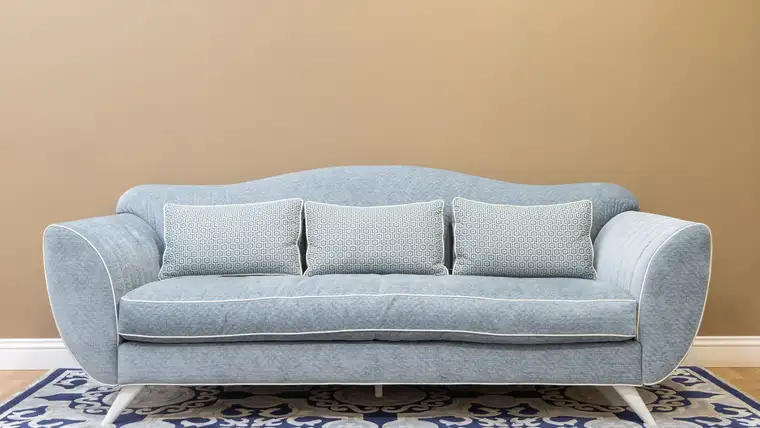
Step by step
- 1
Find the cleaning code
Look on the tag under the cushions, on the deck or underneath the frame for a code: W (water-based), S (solvent only), W/S or SW (either), or X (vacuum or brush only). If there's no code, test any cleaner on a hidden spot.
Why: The code protects the fabric's dyes, finish and backing. Water on S fabric can shrink it, bleed the dye or leave rings; X fabric takes no liquid at all.
- 2
Vacuum everything
Take off the cushions and vacuum the cushions, deck, arms, back and every crevice with the upholstery and crevice tools. Brush pile fabrics such as velvet gently in one direction.
Why: Grit and crumbs wear and dull fibers, and dry soil turns to mud if you add liquid on top of it.
- 3
Blot and scrape spills right away
Blot liquids with a white cloth or paper towel, pressing rather than rubbing. Lift solids off with a dull knife or spoon.
Why: Blotting lifts liquid before it reaches the foam. Rubbing spreads it and pushes it deeper.
- 4
Test, then spot-clean with the right agent
Try your cleaner on a hidden area first. For W or W/S, whip a little mild detergent in water and apply only the foam with a cloth. For S, use a water-free upholstery solvent sparingly, with the windows open. For X, stop at vacuuming and call a professional.
Why: Foam cleans with very little water. The test reveals dye bleeding or texture change before it shows on the front of the couch.
- 5
Work from the edge in, with minimal moisture
Work from the outer edge of the spot toward the center. If the fabric tends to ring, reverse it: work from the center out and feather the edges with quick, light strokes. Blot with a cloth barely dampened in clean water to remove soap.
Why: Over-wetting makes the fabric's finish, dye or soil migrate to the edge of the wet area and dry as a ring.
- 6
Dry with airflow, then vacuum
Blot out as much moisture as you can with dry towels, then let it air-dry with a fan running and out of direct sun. Vacuum or brush the area once it's dry.
Why: Fast, even drying prevents rings and musty smells. Heat can set any stain that's left, and sunlight fades upholstery.
Cleaning codes, and why fabric type matters less than the tag
Upholstery fabrics range from cotton and linen to rayon, polyester microfiber, olefin, velvet and blends, stretched over foam, fiber batting and a frame. You can't tell from the feel of a fabric what its dyes, finish or backing will tolerate, which is why furniture makers put a cleaning code on the tag:
- W: water-based cleaner or the foam of a mild detergent.
- S: water-free dry-cleaning solvent only. No water.
- W/S (also SW or S-W): either the foam of a mild detergent or a mild solvent.
- X: no liquid cleaner of any kind. Vacuum or brush lightly.
Microfiber and velvet are handled by their code, not their name. Whatever the code, skip chlorine bleach, which damages many fibers, dyes and foam, and use only products made for upholstery: the American Cleaning Institute warns other products can discolor fabric.
How stains behave on a couch, and the spot-treating rules
Liquids pass through the face fabric into foam and batting that can't be rinsed, so the source stays below the surface and can wick back up as it dries. Over-wetting causes rings, and heavy use of solvent can attack the foam padding and the fabric backing. Stain-resistant and durable-press finishes hold onto oily stains, so treat grease and food promptly.
The rules:
- Check the code before you use anything, and test on a hidden spot.
- Blot; don't scrub. Rubbing stretches fabric and roughens pile.
- Use foam, not liquid, with water-based cleaners, and as little of it as you can.
- Use solvents in small amounts, with ventilation and away from flames.
- Never iron or heat a stained area.
- If the whole couch is grubby, clean it all rather than one spot, or the clean patch will stand out.
Specific stains: blood on a couch (cold water only) and chocolate on a couch (scrape, then detergent foam or solvent, by code).
Getting smells out of a couch
A smell in a couch nearly always has a source in the cushions: urine, vomit, sweat and body oil, pet dander, smoke or mildew. Sprays only cover it for a while. Remove the source, then deodorize and dry.
For a general or dog smell, vacuum weekly or more often, wash throws and slipcovers weekly in hot water, and keep the dog bathed and groomed. Sprinkle baking soda on the dry fabric, leave it several hours and vacuum it off. For pee smell, see the situation below; more detail is in pet smell in a couch.
By situation
Pee on a couch: stain and smell
Blot hard with dry towels. On W or W/S fabric, Texas A&M AgriLife suggests sponging with cool water and detergent solution, rinsing with half white vinegar and half water, and letting it air-dry, then leaving baking soda on overnight and vacuuming. For pet urine, humane societies recommend an enzyme cleaner and taking off the cushions and covers to reach every layer it soaked into; repeat if the smell returns. No steam, which sets urine odor. On S or X fabric, call a professional. See urine on a couch.
Old pet accidents you can't find
Darken the room and check the couch with a black light: old urine spots glow. Treat each one with enzyme cleaner. Covering the couch with a vinyl, flannel-backed tablecloth for a while can stop a cat from re-marking the same place.
Velvet couch that smells
Check the code; many velvets are S or W/S. Vacuum and brush the pile in one direction, use baking soda on the dry fabric and vacuum it off thoroughly, and spot-clean only what the code allows, with very little moisture. Velvet crushes and rings easily, so a professional is the safer choice for anything more.
Musty or mildew smell
The couch has stayed damp. Vacuum it, get it into dry air and sun if possible, then sponge W-coded fabric with a solution of 1 cup rubbing alcohol in 1 cup water and dry it thoroughly, as University of Florida Extension describes for mildew. A couch soaked by floodwater is seldom salvageable once mold grows.
Slipcovered couches
Slipcovers can be taken off and laundered as a whole set, following their label. Wash them together so they stay the same color.
Leather couches
Leather is a different material with its own rules: no solvents, no soaking, and conditioning after cleaning. See how to clean a leather couch, which also covers leather that smells.
What not to do
- Don't use water on S-coded fabric, or any liquid on X-coded fabric. It can shrink the fabric, bleed the dye or leave permanent rings.
- Don't unzip cushion covers to wash or dry-clean them. Separate cleaning can shrink them, damage the backing or change their color so they no longer match the frame.
- Don't scrub stains hard. It stretches the fabric and damages the texture, especially on velvet and microfiber.
- Don't steam, iron or use a hair dryer on a stain or urine spot. Heat can set stains and urine odor permanently.
- Don't use chlorine bleach or non-upholstery products. They can discolor fabric and damage fibers and foam.
Other methods that work
Upholstery shampoo or solvent cleaner
For overall soil, use an upholstery shampoo (W fabrics) or a solvent upholstery cleaner (S fabrics), following the directions after a pretest.
Caution: Use solvents in small amounts with ventilation, away from flames; heavy solvent use can damage foam and backing.
Dry absorbents for oily spills
Cornstarch or talc sprinkled on a fresh grease spot soaks up the oil. Brush or vacuum it off before any further treatment.
Professional upholstery cleaning
The right call for X and S fabrics, silk, velvet, antiques, large or set-in stains, and urine that has soaked into the cushions.
Stain still there?
A ring formed around the spot I cleaned
Too much moisture moved the finish or soil to the edge. On W fabric, dampen a cloth very lightly and feather the edge outward with quick strokes, then dry fast with a fan. On S fabric, call a professional.
The smell came back when the weather got humid
Urine or another source is still in the foam. Remove the cushion cover only if the care instructions allow, or have a professional treat the cushion with an enzyme cleaner. Sprays won't fix it.
The cleaned patch is brighter than the rest of the couch
That's general soil on the rest of the couch. Clean the whole piece, or the whole panel, so it looks even.
Safety
- Ventilate when using upholstery solvents, and keep them away from flames.
- Never mix bleach with ammonia or vinegar-based cleaners.
Never mix cleaning products; see chemicals you must never combine.
Questions
How do you get pee smell out of a couch?
Blot it, clean the spot with an enzyme cleaner (or detergent and a vinegar rinse on W fabric), and let it dry fully. Then leave baking soda on overnight and vacuum. Treat the cushion foam too, not just the cover.
How do you get dog smell out of a couch?
Vacuum often, wash throws and slipcovers weekly in hot water, use baking soda on the dry fabric, and keep the dog groomed. Check for old urine spots with a black light.
What do the W, S and X codes on a couch mean?
W means water-based cleaners are fine, S means solvent only, W/S means either, and X means vacuum or brush only, with no liquid cleaners.
Can you use a steam cleaner on a couch?
Only if the cleaning code and the maker's care guide allow it, and never on urine or protein stains, where heat sets the stain and odor.
How do you get blood out of a couch?
Use cold water only. Blot, then dab with cold water and a little dish soap on W fabric, and blot dry. Call a professional for S or X fabric.
Stains on a couch
More guides for this room
- How to clean baseboards (painted or stained wood)
- How to clean blinds: vinyl, metal, wood and bamboo
- How to clean curtains, washing them or not
- How to clean a leather couch and leather furniture
- How to clean wallpaper, and wallpaper glue off walls
- How to clean painted walls without damaging the paint
- How to remove water stains and rings from wood and fabric
- How to clean windows without streaks, and remove water spots
Sources
- Care for Fabric Home Furnishings, Guide G-402, New Mexico State University Cooperative Extension Service
- Explaining Fabric Cleaning Codes, American Leather (furniture manufacturer)
- Cleaning Codes, Ashley Furniture Industries (manufacturer)
- Living Room, Dining Room & Bedroom Cleaning Tips, American Cleaning Institute
- Removing Stains from Washable Fabrics, Texas A&M AgriLife Extension
- Removing Pet Odors and Stains, Humane Society of Sonoma County
- After the Storm: Mildew Removal, Clothing and Textiles, UF/IFAS Extension Wakulla County
- Remove Stains From Oil-Based Foods, University of Georgia Cooperative Extension
Last updated . Methods are drawn from the sources above; how we research and check our guides.