How to remove hard water stains from any surface
To remove hard water stains, apply a mild acid such as white vinegar, citric acid or a hard-water remover, let it work for a few minutes, wipe with a soft sponge, then rinse and dry. The white crust is calcium and magnesium carbonate left behind when hard water evaporates, and carbonate dissolves in acid. Check the surface first: acids that dissolve scale also etch marble and limestone, attack cement grout, and damage some faucet finishes.
- Best method
- Mild acid, short dwell, soft wipe, rinse and dry
- Time
- 10-20 minutes; a few hours to soak fixtures
- Difficulty
- Easy
You will need
- White vinegar, citric acid or a hard-water mineral remover
- Spray bottle
- Soft sponge or nylon pad
- Microfiber cloth or towel
- Rubber gloves
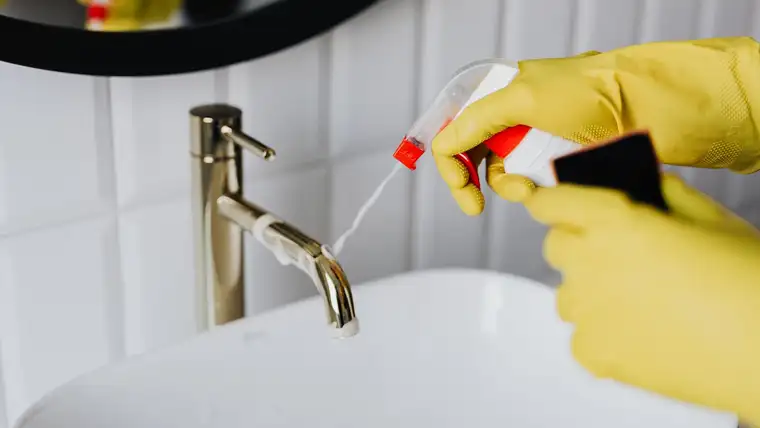
Step by step
- 1
Identify the surface
Decide what the deposit is on: glass, glazed porcelain or vitreous china, fiberglass, stainless steel, a plated faucet finish, natural stone, or grout.
Why: Acid is what removes scale, and the surface decides whether acid is allowed. Marble, limestone, travertine, grout and many plated finishes are damaged by it.
- 2
Apply a mild acid on acid-safe surfaces
On glass, glazed porcelain, vitreous china and fiberglass, spray or wipe on white vinegar, a citric acid solution or a hard-water remover used per its label. Keep it off nearby stone, grout and metal trim.
Why: Mild acids dissolve calcium carbonate and the soap film that hard water forms with soap.
- 3
Give it a few minutes
Let the acid work briefly, re-wetting it if it starts to dry. Don't leave products sitting for long on fixtures or frames.
Why: Dissolving scale takes contact time, but prolonged contact can damage finishes nearby.
- 4
Wipe with a soft sponge
Wipe or scrub gently with a soft sponge or nylon pad. Repeat the acid and wipe for thick deposits rather than scrubbing harder.
Why: The acid does the work. Abrasive pads scratch glass coatings, fiberglass and plated metal.
- 5
Rinse thoroughly and dry
Rinse with clean water, then towel-dry or squeegee.
Why: Rinsing removes dissolved minerals and acid residue. Drying prevents new spots from forming as the rinse water evaporates.
What hard water stains are
Hard water carries dissolved calcium and magnesium (with bicarbonate). When a film of it evaporates, those minerals are left as calcium and magnesium carbonate: white, chalky or flaky scale, sometimes crumbly and light tan or brown. With soap, the same minerals form soap scum. Scale builds fastest where hot water evaporates quickly, such as shower heads and faucets. The U.S. Geological Survey classes water as soft at 0-60 mg/L (as calcium carbonate), moderately hard at 61-120, hard at 121-180 and very hard above 180. Hard water also makes soap and detergent less effective.
Carbonate dissolves in acid, which is why vinegar, lemon juice, citric acid and commercial removers work. New Mexico State Extension notes vinegar can't be labeled a disinfectant because it isn't EPA-registered; it's a descaler, not a sanitizer.
Hard water stains by surface
- Glass shower doors: detergent wash first, then vinegar or a hard-water remover on the glass only. See glass shower doors.
- Toilets: an acid toilet bowl cleaner (sodium bisulfate, oxalic, or dilute hydrochloric or sulfuric acid) used only inside the bowl. See toilet rings and stains.
- Shower heads and faucets: soak removable parts in white vinegar for a few hours; on the outside finish, follow the fixture maker, since one major maker forbids acids. See shower heads and faucets.
- Stainless steel: a 25% vinegar solution or citric acid, then rinse and dry. See stainless steel.
- Fiberglass and porcelain tubs: an acid-based bathroom cleaner per its label, rinsed promptly.
- Marble, limestone, travertine: no acids at all. The Natural Stone Institute suggests buffing hard water rings with dry #0000 steel wool.
- Grout: no routine acids; they dissolve cement. Use an alkaline or neutral grout cleaner.
How often: wipe or squeegee surfaces dry after use, which prevents most deposits, and descale as soon as a white film appears. In very hard water, clean toilets and fixtures more often, and consider a water softener.
By situation
Hard water stains in the shower
Squeegee glass and walls after every shower. For existing film, use vinegar or a hard-water remover on glass and glazed tile, rinse well, and keep acids off grout, stone and metal frames.
Hard water stains in the toilet
Use an acid toilet bowl cleaner under the rim and on the ring, scrub, let it stand a few minutes and flush. Never combine it with bleach or other bowl cleaners.
White spots on stainless steel sinks and appliances
Wipe with diluted vinegar or citric acid, rinse, and towel-dry. Drying after use stops them forming in the first place.
Hard water on natural stone
Acids etch marble, limestone and travertine. Buff rings with dry #0000 steel wool as the Natural Stone Institute suggests, and call a stone professional for heavy buildup.
What not to do
- Don't use vinegar or acidic removers on marble, limestone, travertine or grout. Acids etch calcareous stone and dissolve cement grout.
- Don't use acids on faucets or fixtures whose maker prohibits them. One fixture maker warns acids, ammonia, bleach and abrasives can damage finishes and void the warranty.
- Don't mix acidic cleaners with bleach or other products. Acid with bleach releases toxic chlorine gas. See what never to mix.
- Don't use products containing hydrofluoric acid near glass or stone. Hydrofluoric acid etches glass and attacks all stone, even granite.
Other methods that work
Citric acid
An odorless alternative to vinegar that binds calcium. Use a citric-acid-based descaler per its label.
Caution: Same surface restrictions as vinegar.
Water softener
Removes calcium and magnesium before they reach your fixtures, so deposits form much more slowly.
Caution: A plumbing investment; test your water hardness first.
Stain still there?
The white film came back within days
That's normal in very hard water. Wipe or squeegee surfaces dry after every use, descale as soon as film appears, and consider a water softener.
Vinegar didn't touch it
Thick scale needs more contact time or a stronger hard-water remover. Soak removable parts for a few hours; on fixed surfaces, repeat applications.
A dull spot appeared on stone after cleaning
That's an etch from acid, not a leftover stain. It needs polishing or a stone restorer, not more cleaning.
Safety
- Wear gloves and eye protection with commercial hard-water and toilet bowl cleaners, and ventilate.
- Never use an acid cleaner in the same session as bleach.
Never mix cleaning products; see chemicals you must never combine.
Questions
What dissolves hard water stains?
Mild acids: white vinegar, lemon juice or citric acid, and commercial hard-water removers. They dissolve the calcium and magnesium carbonate the water leaves behind.
How do you clean hard water stains in a shower?
Use vinegar or a hard-water remover on glass and glazed tile, wipe with a soft sponge, rinse and squeegee. Keep acids off grout, stone and metal frames.
Does vinegar damage anything?
Yes: it etches marble, limestone and travertine, attacks cement grout, and some fixture makers say it damages their finishes. Check the surface first.
How do I prevent hard water stains?
Wipe or squeegee surfaces dry after use, descale before deposits get thick, and consider a water softener if your water is very hard.
More guides for this room
- How to clean a bathtub and get stains out of it
- How to clean glass shower doors (soap scum and hard water)
- How to remove rust stains from a toilet, tub, sink or concrete
- How to clean a shower curtain and liner (and the mildew on it)
- How to clean a shower head and remove calcium buildup from faucets
- How to clean tile grout, including mold in shower grout
- How to clean a toilet bowl and remove rings and stains
Sources
- Hardness of Water, U.S. Geological Survey, Water Science School
- Bicarbonates & Limescale (HGIC hot topic), Clemson Cooperative Extension Home & Garden Information Center
- Selection and Use of Home Cleaning Products, Guide G-304, New Mexico State University Cooperative Extension Service
- Cleaning Hard Surfaces, American Cleaning Institute
- Care & Cleaning of Natural Stone, Natural Stone Institute
- Kohler faucet homeowner's guide - Care and Cleaning (116430-5), Kohler Co. (manufacturer document)
- Frequently Asked Questions: Cleaning Stainless Steel in the Home, Euro Inox (hosted by worldstainless)
- How do I clean grout? (FAQ), Tile Council of North America
Last updated . Methods are drawn from the sources above; how we research and check our guides.