How to clean a toilet bowl and remove rings and stains
To clean toilet stains and rings, apply an acid toilet bowl cleaner under the rim and around the bowl, scrub with a long-handled brush, including the rim holes and as far into the trap as you can reach, let it stand a few minutes and flush. The bowl is glazed vitreous china, which tolerates acid, and the rings are usually hard-water scale or iron, both of which acids dissolve. Clean the seat and outside with a gentler, nonabrasive cleaner.
- Best method
- Acid bowl cleaner, brush, stand a few minutes, flush
- Time
- 10 minutes
- Difficulty
- Easy
You will need
- Toilet bowl cleaner (an acid type for rings and rust)
- Long-handled toilet brush
- Rubber gloves and eye protection
- Nonabrasive all-purpose or EPA-registered disinfectant cleaner
- Cloths or paper towels for the outside
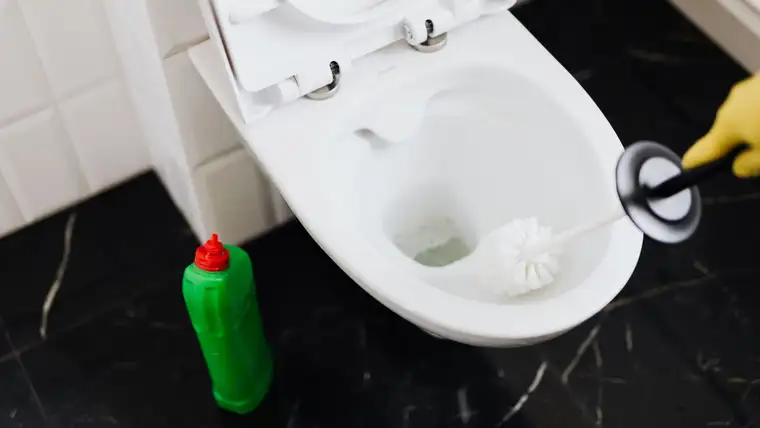
Step by step
- 1
Remove any in-tank cleaner and flush
If there's a cleaner tablet or dispenser in the tank or bowl, take it out and flush before you start, and open a window or run the fan.
Why: Different toilet cleaners can react and release poisonous gases. Removing the old product prevents mixing.
- 2
Apply bowl cleaner under the rim
Wearing gloves, squeeze toilet bowl cleaner under the rim so it runs down the sides, and around the waterline ring.
Why: Thick liquids and foams cling to the sloped sides. Many bowl cleaners contain acids that dissolve mineral scale and rust.
- 3
Scrub the bowl, rim holes and trap
Scrub with a long-handled toilet brush, working under the rim and into the rim holes, then as far down into the trap as the brush reaches.
Why: Scrubbing the rim jets keeps them flowing and stops mineral deposits building up there.
- 4
Let it stand, then flush
Leave the cleaner a few minutes, scrub once more, then flush and rinse the brush in the clean flush water.
Why: Dwell time lets the acid dissolve the scale rather than relying on scrubbing alone.
- 5
Clean the outside and the seat separately
Wipe the tank, outside of the bowl, seat, lid and hinges with a nonabrasive all-purpose cleaner or a disinfectant cleaner. Rinse and dry around the hinges and bumpers.
Why: Toilet bowl cleaner's acids can damage other surfaces, and plastic and wood seats scratch. Only cleaners with an EPA registration number have met the requirements to kill germs.
What toilet rings and stains are
A toilet bowl is vitreous china: clay fired with a glassy glaze, non-porous and tolerant of acid on the inside. That's why the bowl can take cleaners that would ruin a countertop. The stains on it are usually one of two things:
- Hard water rings: water evaporating at the waterline and under the rim leaves calcium and magnesium carbonate, which builds into a gray-white or tan crust that also traps dirt. The harder your water, the faster it returns; the American Cleaning Institute suggests cleaning more often in hard-water areas.
- Orange or brown rust stains: iron in the water supply. These need an acid, not bleach, because chlorine bleach can intensify rust color.
Both dissolve in acid, which is why acid bowl cleaners work. New Mexico State Extension lists the acids used: sodium bisulfate, oxalic acid, and dilute hydrochloric or sulfuric acid. These are strong enough to need gloves, eye protection and ventilation. For mineral deposits on other surfaces, see hard water stains.
The tank, in-tank tablets and preventing rings
One major toilet maker warns that chlorine in-tank cleaner tablets (calcium hypochlorite) can seriously damage the rubber flapper and seals in the tank, causing leaks and water damage. Check your toilet's care guide before using any in-tank product.
To slow rings down: clean the bowl weekly or more often, brush under the rim so the jets stay clear, and in very hard water consider a water softener. If rust stains keep returning, an iron filter on the water supply addresses the cause. How often: weekly for most homes, more often with hard water or heavy use.
By situation
Hard water ring at the waterline
Use an acid toilet bowl cleaner, scrub the ring firmly with the brush, and let it stand before flushing. Old, thick rings may need several rounds. Keep up weekly cleaning so it doesn't rebuild.
Rust or orange stains in the bowl
Use a toilet bowl cleaner that contains an acid. Don't use bleach, which can make rust look worse. If the stains keep returning, iron in your water is the cause; see rust stains and consider an iron filter.
Stains under the rim
Mineral scale and grime build up around the rim holes, which then spray unevenly. Aim the bowl cleaner up under the rim, scrub into each hole with the brush, and repeat until the flush runs evenly.
Toilet seat
Plastic and wood seats scratch and can be damaged by bowl cleaner. Use a nonabrasive all-purpose or disinfectant cleaner on a cloth, rinse, and dry the hinges.
Toilet smells like urine even when clean
Check the floor around the base, under the seat bumpers and the hinges, where urine can dry unnoticed, and clean them with an all-purpose cleaner. The Washington State Department of Health warns that urine contains ammonia compounds, so don't put chlorine bleach on urine spots without rinsing first. For stains and odor on fabrics and floors, see urine stains.
What not to do
- Don't mix toilet bowl cleaners with each other, with bleach or with other products. Acids with bleach release chlorine gas, and other combinations can also release poisonous gases. See what never to mix.
- Don't use toilet bowl cleaner on anything but the inside of the bowl. Its acids can damage other surfaces, including seats, floors, grout and stone.
- Don't use chlorine in-tank tablets unless your toilet maker allows them. One maker warns they can seriously damage tank fittings, causing leaks and property damage.
- Don't use bleach on rust stains. Chlorine bleach can intensify rust color.
Other methods that work
White vinegar
A mild acid that dissolves light mineral film. Pour it around the bowl, leave it, scrub and flush.
Caution: Much weaker than acid bowl cleaners, so it works only on light buildup. Never add it to a bowl that has bleach in it.
Water softener or iron filter
For homes where rings or rust return quickly, treating the water addresses the cause rather than the symptom.
Caution: A plumbing or water-treatment job; test your water first.
Stain still there?
The ring is still there after cleaning
Thick scale needs repeated rounds of acid cleaner with dwell time. Scrub firmly with the brush each time.
Stains come back within days
Your water is very hard or high in iron. Clean more often, and consider a softener or iron filter.
Safety
- Wear gloves and eye protection with acid bowl cleaners, and ventilate the bathroom.
- Use one bowl cleaner at a time, and flush between products.
Never mix cleaning products; see chemicals you must never combine.
Questions
How do you get hard water stains out of a toilet?
Use an acid toilet bowl cleaner under the rim and on the ring, scrub with a toilet brush, let it stand a few minutes and flush. Repeat for thick rings.
What causes brown or orange stains in a toilet?
Usually iron in the water supply (rust) or hard-water minerals trapping dirt. Both dissolve in an acid bowl cleaner; bleach can make rust stains darker.
Can I use bleach to clean toilet stains?
Not on rust, which bleach can intensify, and never with an acid bowl cleaner or anything containing ammonia. Use an acid bowl cleaner for rings and rust.
Are in-tank toilet cleaning tablets safe?
One toilet maker warns chlorine tablets can damage the flapper and seals and cause leaks. Check your toilet's care guide first.
More guides for this room
- How to clean a bathtub and get stains out of it
- How to clean glass shower doors (soap scum and hard water)
- How to remove hard water stains from any surface
- How to remove rust stains from a toilet, tub, sink or concrete
- How to clean a shower curtain and liner (and the mildew on it)
- How to clean a shower head and remove calcium buildup from faucets
- How to clean tile grout, including mold in shower grout
Sources
- Cleaning Hard Surfaces, American Cleaning Institute
- Bathroom Cleaning Tips, American Cleaning Institute
- Home Cleaning Problems and Solutions, American Cleaning Institute
- Selection and Use of Home Cleaning Products, Guide G-304, New Mexico State University Cooperative Extension Service
- Kohler toilet installation/homeowner guide 1346513-2 (in-tank cleaner warning), Kohler Co. (manufacturer document)
- Hardness of Water, U.S. Geological Survey, Water Science School
- Dangers of Mixing Bleach with Cleaners, Washington State Department of Health
Last updated . Methods are drawn from the sources above; how we research and check our guides.