How to remove rust stains from a toilet, tub, sink or concrete
To remove rust stains from a toilet, tub or sink, apply a rust remover or a mild acid (an acid toilet cleaner inside the bowl, or a lemon juice and salt paste for light marks), let it work, then rinse well. Rust is iron oxide, and acids dissolve it; chlorine bleach doesn't, and can make the color worse. Match the acid to the surface: porcelain tolerates it, but marble and limestone etch, and concrete roughens.
- Best method
- Acid rust remover on porcelain, rinsed off
- Time
- 15-45 minutes, longer for old stains
- Difficulty
- Easy
You will need
- Rust remover or an acid toilet bowl cleaner
- Lemon juice and salt or baking soda, for light stains
- Rubber gloves and eye protection
- Non-scratch scrub sponge or nylon brush
- Old towels or cloths you can throw away
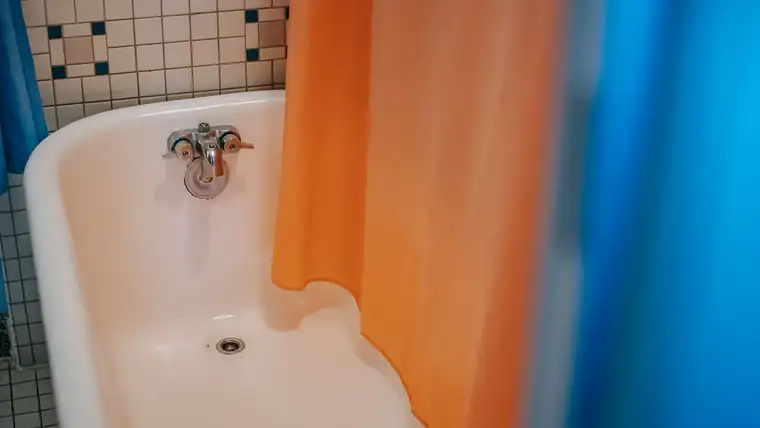
Step by step
- 1
Find out what you're cleaning
Porcelain enamel tubs and sinks and vitreous china toilets handle rust removers. Fiberglass and acrylic need products labeled for them. Marble, limestone, travertine and concrete need the gentler methods further down this page.
Why: Rust removers work because they're acidic, and the surface decides how much acid it can take.
- 2
Protect yourself and ventilate
Put on rubber gloves and eye protection, open a window or run the fan, and read the product label for its acid. Avoid products containing hydrofluoric acid on or near glass and any stone.
Why: New Mexico State University Extension notes that oxalic acid is poisonous and corrosive, and that hydrofluoric acid burns skin and etches glass.
- 3
Apply the acid and let it work
For a toilet bowl, apply an acid toilet cleaner under the rim and over the stain. For a tub or sink, apply a rust remover as the label directs. For light marks, make a paste of lemon juice with salt or baking soda and leave it on for up to 30 minutes.
Why: Acids such as oxalic, phosphoric, citric and gluconic acid dissolve iron oxide so it can be rinsed away. The contact time is what does the work.
- 4
Scrub gently and rinse thoroughly
Work the stain with a non-scratch sponge or nylon brush, then rinse the whole area with plenty of water. Flush the toilet two or three times.
Why: Acid left behind keeps working on enamel, grout and metal trim. Scratching porcelain makes it stain faster next time.
- 5
Repeat if the stain is still there
Old stains often need a second or third application. Rinse between rounds, and use only one product at a time.
Why: Each pass dissolves more iron. Mixing products adds risk, not strength.
- 6
Stop the source
Fix dripping faucets, keep metal cans and razors off tub ledges, and dry the fixture after use. If orange stains keep coming back, have your water tested for iron.
Why: Iron in the water is a common cause of orange toilet and tub stains. The American Cleaning Institute suggests an iron filter on the water supply for ongoing problems.
What rust stains are, and why acid removes them and bleach doesn't
Rust is iron oxide. In bathrooms it usually comes from iron dissolved in well or city water, left behind each time water drips or evaporates, or from metal cans, furniture and tools left sitting on a wet surface. It's a mineral stain, so it doesn't respond to the detergents and oxidizers that lift food or organic stains.
Rust removers are acids: New Mexico State University Extension lists acetic, citric, gluconic, glycolic, oxalic and hydrofluoric acid among their ingredients. The acid dissolves the iron so water can carry it off. Chlorine bleach does the opposite of what you want: the American Cleaning Institute warns it may intensify the rust color. Rust on fabric needs a different approach; see rust stains on clothes.
What each surface can take
- Porcelain and vitreous china (most tubs, sinks and toilets): rust removers and acid toilet cleaners, used per the label.
- Fiberglass and acrylic: the American Cleaning Institute suggests specialty rust products made for these fixtures; check the fixture maker's guidance.
- Marble, limestone and travertine: acids etch them. The Natural Stone Institute says rust must be drawn out with a poultice of diatomaceous earth and a commercial rust remover, and deep rust may be permanent.
- Granite: tolerates more than marble, but hydrofluoric acid attacks all stone.
- Concrete: cement dissolves in acid, so strong acids roughen it. Use the mildest option first.
- Stainless steel and chrome: see the situations below.
By situation
Rust ring in a toilet bowl
Use an acid toilet bowl cleaner rather than bleach, let it sit on the ring, scrub with the toilet brush and flush. If rings keep returning in the same place, iron in the water is the likely cause; see how to clean a toilet for the routine.
Rust stains on concrete or a driveway
Bare concrete is porous, and rust from metal furniture or irrigation water bonds to it. Start with an oxalic acid solution for light stains and rinse it off thoroughly. Commercial concrete rust removers are acid-based, so treat them as a last resort and test a hidden spot first: strong acids like muriatic (hydrochloric) acid etch the top layer. Pre-wet the concrete, always add acid to water when diluting, and never use a wire brush, which leaves metal bits that rust.
Rust on stainless steel
Rust spots on stainless usually mean iron particles from ordinary steel wool or a carbon-steel pad, or chlorides from bleach or salt that were left on the surface. Clean with a cream cleanser or a paste made for stainless steel and chrome, rinse and dry. If spots keep coming back or the metal looks pitted, contact the appliance maker.
Rust on chrome, metal and tools
University of Florida Extension's guidance for iron items is to wash with soap and a stiff brush, then wipe remaining rust with an oil-soaked cloth or use a commercial rust remover, and scour kitchen utensils with steel wool. Wash, dry thoroughly, and coat iron tools and hardware with petroleum jelly or machine oil to stop new rust. Where chrome plating is broken and the base metal has rusted, the same guide suggests cleaning, drying and waxing it.
Rust on cast iron pans
Cast iron needs its seasoning restored after rust is removed. See rust on cast iron for the short vinegar soak and re-seasoning steps.
What not to do
- Don't use chlorine bleach on rust. It doesn't dissolve iron oxide and may intensify the rust color.
- Don't mix a rust remover or acid toilet cleaner with bleach. Bleach plus an acid releases poisonous chlorine gas. See never mix.
- Don't use rust removers on marble, limestone or travertine, or any product with hydrofluoric acid on stone or glass. Acids etch calcareous stone, and hydrofluoric acid attacks all stone and glass.
- Don't use ordinary steel wool or wire brushes on stainless steel or concrete. They leave iron particles behind that rust and create new stains.
- Don't reuse cloths or brushes that applied oxalic acid for kitchen cleaning. Throw them out so the poison isn't transferred to dishes.
Other methods that work
Lemon juice paste
The Vermont Department of Health suggests a paste of lemon juice with baking soda or salt on sink and tub rust, left on for up to 30 minutes and rinsed off. It works on light stains.
Caution: Not on marble, limestone or travertine.
White vinegar
New Mexico State University Extension lists vinegar for rust stains in sinks. It's a mild acid, so it suits fresh, light marks.
Caution: Rinse and dry metal trim afterward, since water-based acids can corrode metal left wet. Never on stone.
Poultice for stone
For rust on natural stone, the Natural Stone Institute describes mixing diatomaceous earth with a commercial rust remover into a paste, covering it and leaving it to draw the stain out.
Caution: Deep rust in stone may be permanent. Consider a stone professional for marble and limestone.
Stain still there?
The stain faded but an orange shadow is left
Repeat the acid application with a longer contact time, then rinse. Very old stains on worn enamel can be in the pores of the surface and may not clear completely.
Orange stains come back within weeks
The source is still there, most often iron in the water. Test the water and look at an iron filter, and fix any dripping faucet.
The concrete looks lighter or rough where you treated it
The acid etched the surface. Rinse thoroughly and use milder products next time. Treating the whole slab evenly can help it blend.
Safety
- Wear gloves and eye protection with rust removers, and ventilate.
- Never combine rust removers or acid toilet cleaners with chlorine bleach.
- Keep oxalic acid and hydrofluoric acid products away from children; both are poisonous.
Never mix cleaning products; see chemicals you must never combine.
Questions
What causes rust stains in a toilet or tub?
Usually iron in the water supply, left behind each time water drips or evaporates. Metal cans and razors left on a wet surface also leave rust rings.
Does bleach remove rust stains?
No. Bleach doesn't dissolve iron oxide and can make the stain darker. Use an acid rust remover instead, and never combine the two.
How do you get rust stains off concrete?
Start with an oxalic acid solution for light stains and rinse well. Commercial concrete rust removers work on heavier stains, but they're acidic and can etch, so test first.
Can vinegar or lemon juice remove rust?
On light stains, yes. Both are mild acids. A lemon juice and salt paste left on for up to 30 minutes is one government-suggested option. Never use them on marble or limestone.
How do you remove rust from tools?
Scrub with soap and a stiff brush, then use steel wool, an oil-soaked cloth or a commercial rust remover. Dry thoroughly and coat with machine oil or petroleum jelly to prevent more rust.
More guides for this room
- How to clean a bathtub and get stains out of it
- How to clean glass shower doors (soap scum and hard water)
- How to remove hard water stains from any surface
- How to clean a shower curtain and liner (and the mildew on it)
- How to clean a shower head and remove calcium buildup from faucets
- How to clean tile grout, including mold in shower grout
- How to clean a toilet bowl and remove rings and stains
Sources
- Selection and Use of Home Cleaning Products, Guide G-304, New Mexico State University Cooperative Extension Service
- Bathroom Cleaning Tips, American Cleaning Institute
- Home Cleaning Problems and Solutions, American Cleaning Institute
- Stain Removal (natural stone) incl. Making and Using a Poultice, Natural Stone Institute
- CBD-153 Removal of Stains from Concrete Surfaces (Canadian Building Digest, 1972), National Research Council Canada (mirror copy)
- Cleaning Household Utensils and Metals (Disaster Handbook, DH 527), University of Florida IFAS Extension
- Frequently Asked Questions: Cleaning Stainless Steel in the Home, Euro Inox (hosted by worldstainless)
- Keeping Your Home Healthy, Safe & Clean: Living Green (June 2017), Vermont Department of Health
Last updated . Methods are drawn from the sources above; how we research and check our guides.