How to clean tile grout, including mold in shower grout
To clean tile grout, apply an alkaline or neutral tile-and-grout cleaner (or a baking soda paste), let it sit a few minutes, scrub the joints with a nylon brush, then pick up the dirty solution and rinse with fresh water. For black mold or mildew stains, use a diluted chlorine bleach solution. Avoid vinegar: grout is cement, and acids dissolve it.
- Best method
- Alkaline cleaner, brush, extract and rinse
- Time
- 30-60 minutes for a bathroom floor or shower
- Difficulty
- Moderate
You will need
- Alkaline or neutral tile-and-grout cleaner, or baking soda
- Nylon or soft-bristle grout brush (an old toothbrush works)
- Wet/dry vacuum or sponge and clean cloths
- Bucket of fresh rinse water
- Chlorine bleach and gloves, for mold stains
- Grout sealer, after a deep clean
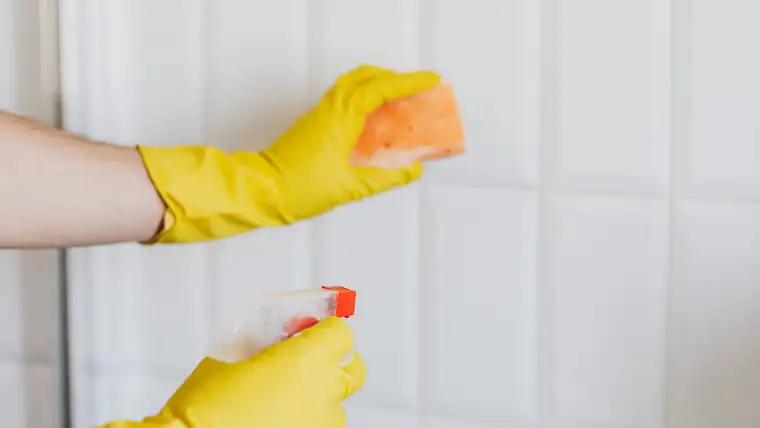
Step by step
- 1
Apply an alkaline or neutral cleaner
Spread a tile-and-grout cleaner along the joints, or make a paste of baking soda and a little water and work it into the lines.
Why: Cement in grout dissolves in acid but tolerates alkalis, so alkaline cleaners lift soap and oils without eating the joint.
- 2
Let it sit a few minutes
Leave the cleaner on for a few minutes without letting it dry out.
Why: Dwell time lets the cleaner loosen soil from the pores, so you need far less scrubbing.
- 3
Scrub the joints
Scrub along each grout line with a nylon or soft-bristle brush. Short strokes along the line work better than wide circles.
Why: Grout is porous and full of tiny pits. Bristles reach into them, and nylon won't scratch glazed tile or wear the grout down.
- 4
Pick up the dirty solution
Remove the loosened dirt and cleaner, ideally with a wet/dry vacuum, or with a sponge you rinse often. Don't just mop it around.
Why: The Tile Council of North America notes extraction pulls dirt out of the porous joint instead of pushing it back in.
- 5
Rinse with fresh water
Apply clean water from a fresh bucket, then vacuum or wipe it up again. Repeat if the surface feels slick.
Why: Leftover detergent leaves a sticky film that attracts dirt and makes grout darken again quickly.
- 6
Dry, then seal
After a deep clean, let the grout dry thoroughly, then apply a penetrating grout sealer within about 24 hours. Reapplying about once a year is typical.
Why: Sealing closes the pores before soap and body oils soak back in. Penetrating sealers last longer than topical ones, which can look plastic and wear off.
What grout is, and why it turns dark
Standard grout is mostly cement and sand. The sand is inert, but cement is alkaline and porous: it has a huge internal surface that soaks up soap scum, body oils and dirt. In a damp bathroom, that buildup also feeds mildew, which is why shower grout darkens fastest. Epoxy grout is different: it's nearly as stain-proof as the tile itself and rarely needs more than a wipe.
The chemistry explains the rules. The Tile Council of North America compares acid on cement grout to vinegar on baking soda: the cement fizzes and dissolves. So vinegar and acidic hard-water removers erode unsealed grout over time. Oil soaps and wax-based cleaners leave a film inside the pores. Alkaline or neutral cleaners are the safe choice.
How to get mold and mildew out of grout
For black, gray or pink spots that don't scrub out, the American Cleaning Institute suggests 3/4 cup of liquid chlorine bleach per gallon of water, or a mildew stain remover, brushed carefully onto the grout and then rinsed thoroughly. Open a window or run the fan, wear gloves, and keep the solution off colored grout until you've tested it, because bleach can lighten it.
TCNA notes pressurized steam can remove some stains that resist cleaners. If the mold keeps coming back within days or weeks, water may be trapped behind the tile through cracked grout or failed caulk, and cleaning won't fix that. Grout that is crumbling or permanently stained can be cut out and replaced, which is the last resort.
How often: clean with a neutral or mildly alkaline cleaner weekly in a shower, and save bleach and strong strippers for occasional deep cleans, because using them every week breaks down sealers.
By situation
Grout in the shower
Squeegee or wipe the walls after each shower to cut soap scum and moisture. Clean weekly with a neutral cleaner, and treat mildew spots with diluted bleach only as needed, with the fan running.
Grout between floor tiles
Floor grout darkens from tracked-in dirt more than mildew. Use an alkaline cleaner, a brush and a wet/dry vacuum to extract it, then reseal. See how to clean tile floors for the routine mop.
Grout haze on the tile
A cloudy film on new tile is grout residue from installation. TCNA warns that cleaning it too soon or with too much water can pull grout out of the joints, so follow the grout maker's timing and haze-remover instructions.
Colored grout
Bleach can lighten tinted grout. Use an alkaline cleaner or a mildew remover labeled safe for colored grout, and test any bleach solution on a hidden joint first.
Epoxy grout
Epoxy grout resists stains almost as well as the tile. A neutral cleaner and a soft brush are usually all it needs, and it doesn't need sealing.
What not to do
- Don't clean grout routinely with vinegar or other acids. Acid dissolves the cement binder and erodes unsealed grout joints.
- Don't use oil soaps or wax- or pine-oil-based cleaners. They leave a film in the porous grout that holds more dirt.
- Don't use bleach or high-pH strippers every week. Strong cleaners used regularly break down grout sealers.
- Don't mix bleach with ammonia, toilet bowl cleaners or rust removers. Bleach with ammonia or acids releases toxic chloramine or chlorine gas. See what never to mix.
Other methods that work
Baking soda paste
A paste of baking soda and water is a mild alkali and a gentle abrasive, which suits grout. Scrub, then rinse well.
Caution: It cleans soil but won't remove mildew stains.
Pressurized steam
TCNA notes that steam can remove some grout stains that resist cleaners.
Caution: Keep it off old or cracked grout and off caulk, and let everything dry before sealing.
Acid grout cleaners
Some installers dissolve the top layer of grout with acid to remove stubborn stains.
Caution: Grout makers don't recommend it, and it can leave you needing to regrout. Not a home method.
Stain still there?
Grout looks clean wet but dark again when dry
Soil is deeper in the pores, or detergent residue is left. Repeat with dwell time, extract with a wet/dry vacuum and rinse twice.
Mold comes back within weeks
Improve ventilation and squeegee after showers. If it still returns fast, water may be getting behind the tile; have the grout and caulk checked.
Grout is crumbling or sandy
Cleaning can't repair it, and acids make it worse. Damaged sections need to be cut out and regrouted.
Safety
- Use bleach only with plain water, never with ammonia or acidic cleaners.
- Ventilate and wear gloves when using bleach or mildew removers.
Never mix cleaning products; see chemicals you must never combine.
Questions
Can you use vinegar to clean grout?
Not routinely. Grout is cement, and acids dissolve it. Use an alkaline or neutral tile-and-grout cleaner or a baking soda paste instead.
How do you remove mold from grout?
Brush on a solution of 3/4 cup chlorine bleach per gallon of water or a mildew stain remover, then rinse thoroughly. Ventilate, wear gloves, and test colored grout first.
What is the best way to clean grout between tiles?
An alkaline cleaner left a few minutes, a nylon brush along each joint, then extraction and a clean-water rinse. Seal it once it's dry.
How do you get grout haze off tile?
Follow the grout maker's timing and haze remover. Cleaning too early or with too much water can pull grout out of the joints.
How often should grout be sealed?
A TCNA-hosted guide suggests resealing cement grout about once a year, after a deep clean and full drying. Epoxy grout doesn't need it.
More guides for this room
- How to clean a bathtub and get stains out of it
- How to clean glass shower doors (soap scum and hard water)
- How to remove hard water stains from any surface
- How to remove rust stains from a toilet, tub, sink or concrete
- How to clean a shower curtain and liner (and the mildew on it)
- How to clean a shower head and remove calcium buildup from faucets
- How to clean a toilet bowl and remove rings and stains
Sources
- How do I clean grout? (FAQ), Tile Council of North America
- Bathroom Tile and Grout - A Few Tips on Keeping Them Clean (TILE magazine Q&A, hosted by TCNA), Tile Council of North America
- Ask ACI: How do I clean grout?, American Cleaning Institute
- Cleaning Hard Surfaces, American Cleaning Institute
- Selection and Use of Home Cleaning Products, Guide G-304, New Mexico State University Cooperative Extension Service
- Grout (FAQ: grout haze, residue), Tile Council of North America
Last updated . Methods are drawn from the sources above; how we research and check our guides.