How to clean stainless steel appliances and sinks
To clean stainless steel appliances and sinks, wipe with a soft cloth and warm water with a little mild dish soap, always in the direction of the grain, then rinse and towel-dry right away. Use a glass cleaner for fingerprints, diluted vinegar for hard water spots, and a baking soda paste for stuck-on food. Skip steel wool, scouring powder and bleach: they scratch or corrode the thin oxide layer that keeps stainless from rusting.
- Best method
- Warm soapy water with the grain, then towel-dry
- Time
- 5-10 minutes per appliance
- Difficulty
- Easy
You will need
- Microfiber or soft cloths
- Mild dish soap
- Dry towel
- Glass cleaner, for fingerprints
- White vinegar, for water spots
- Baking soda, for stuck-on food
Step by step
- 1
Find the grain
Look closely for the fine brush lines in the metal. Most appliance stainless has them running either up and down or side to side.
Why: Wiping along the lines hides any micro-marks; wiping across them leaves visible swirls.
- 2
Wipe with warm water
Wipe the surface with a soft cloth soaked in warm water and wrung out, moving with the grain. Often that's all it needs.
Why: Warm water lifts most everyday soil without leaving any residue.
- 3
Add a little dish soap for grease
If grease or dirt remains, repeat with a few drops of mild dish soap in the water, then wipe again with a clean, damp cloth to rinse.
Why: Detergent dissolves grease, and rinsing prevents the streaks that soap film leaves.
- 4
Towel-dry immediately
Dry the surface with a clean towel, again with the grain.
Why: Water left to air-dry leaves mineral spots, especially in hard-water areas.
- 5
Spot-treat fingerprints and stains
For fingerprints, spray a glass cleaner onto a cloth and wipe. For stains, use a stainless steel cleaner applied with a paper towel per its label, testing in an inconspicuous spot first.
Why: Glass cleaner cuts the skin oils in prints. Stainless cleaners are formulated for the finish.
Why stainless steel stains, spots and sometimes rusts
Stainless steel resists rust because of a thin, self-renewing chromium oxide layer on its surface. Dirt, food and cleaner residue left sitting on it can interfere with that layer and trap corrosive substances, which is how "stainless" ends up with rust spots. That's why the routine is so simple: remove residue, rinse, dry.
It also explains what to avoid. Ordinary steel wool scratches and leaves iron particles that rust and impair the surface's ability to heal. Scouring powder leaves scratch marks. Bleach and chloride cleaners (look for "Cl" in the ingredients) can corrode stainless if concentrated, left on too long or not rinsed off, and silver dip cleaners are unsuitable. One appliance maker also says not to use waxes, polishes or abrasive pads on its stainless finishes.
Can you get scratches out of stainless steel?
Not by cleaning. A scratch is a groove in the metal, so no cleaner removes it. A stainless steel cleaner can make fine scratches less noticeable, which is how the American Cleaning Institute frames it. Light scratches are only cosmetic: the European stainless steel association notes superficial scratches don't damage the steel's corrosion resistance.
Abrasive scratch-remover kits work by sanding the surrounding metal to blend the scratch in. There's no independent or extension guidance on them, so treat them with care: they permanently change the finish, must follow the grain exactly, and can ruin appliances with a coated or fingerprint-resistant finish. Check your appliance maker's guidance first. For a deep scratch on an appliance door, ask the maker whether a replacement panel is available.
Hard water spots and stuck-on soil
Hard water spots and limescale are alkaline minerals, so a mild acid dissolves them. The European stainless steel association suggests a 25% vinegar solution (about 1 part vinegar to 3 parts water), left a little while to work, then rinsed and dried; citric acid is an odorless alternative. For a dull sink, the American Cleaning Institute suggests polishing with a cloth dipped in white vinegar. More on mineral deposits: hard water stains.
Cooked-on food and grease: rub gently with a baking soda paste or a nonabrasive cleaning powder on a sponge or nonabrasive pad, then rinse and towel-dry. For heavy soil on a stainless range top, spray a nonabrasive all-purpose cleaner, cover it with a damp paper towel for 15 minutes, then scrub gently.
By situation
Stainless steel sink
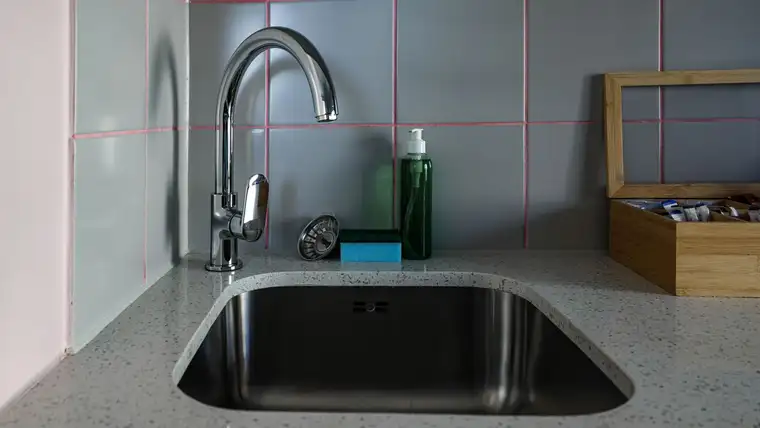
Sinks take more punishment than appliance doors. A cream cleanser handles grease and tea stains, a baking soda paste handles stuck food, and diluted vinegar removes water spots. Wipe the sink dry after use in hard-water areas, and never use or leave ordinary steel wool in it: the iron it sheds can leave rust marks.
Fingerprints on fridge and dishwasher doors
A slightly damp microfiber cloth often removes them alone. Glass cleaner on a cloth works for stubborn prints. Prints tend to show less once an appliance is past its first few weeks.
Rust spots on stainless
Small orange spots often come from iron left by another source (steel wool, a cast-iron pan) or residue that broke down the oxide layer. Clean with a stainless steel cleaner or a baking soda paste with the grain, rinse and dry. See rust stains.
Adhesive residue from stickers
Depending on the adhesive, water, rubbing alcohol or acetone remove it without harming the steel. Test on coated finishes, then wash with soapy water and dry.
What not to do
- Don't use steel wool or scouring powder. They scratch the finish, and ordinary steel wool leaves iron that can rust.
- Don't leave bleach or chloride cleaners on stainless. Over-concentration, long contact or poor rinsing can corrode it.
- Don't wipe across the grain. It leaves visible swirl marks.
- Don't let water air-dry on the surface. Minerals in the water leave spots.
- Don't mix ammonia, vinegar and bleach. Bleach with ammonia or acids produces toxic gases. See what never to mix.
Other methods that work
Stainless steel spray or polish
Most contain a silicone oil that makes cleaning easier and hides prints for a few days to several weeks. It washes off with soapy water.
Caution: It doesn't stop new prints. Some appliance makers advise against waxes and polishes on their finishes, so check first, and don't use it on food-contact surfaces.
Ammonia polish for a dull sink
The American Cleaning Institute also lists a cloth dipped in household ammonia for polishing a dull stainless sink.
Caution: Use vinegar or ammonia, never both, and never with bleach. Ventilate.
Stain still there?
Streaks after cleaning
Soap or cleaner residue. Wipe with a cloth dampened in plain water, then buff dry with a clean microfiber towel along the grain.
White spots won't wipe off
That's mineral scale. Apply diluted vinegar, give it a few minutes, then rinse and dry.
Safety
- Never combine bleach with ammonia or vinegar.
Never mix cleaning products; see chemicals you must never combine.
Questions
Can you get scratches out of stainless steel?
Not with a cleaner. A stainless steel cleaner can make fine scratches less visible, and abrasive kits can blend them by sanding the finish, but that's permanent and risky on coated appliances.
How do you clean hard water stains from stainless steel?
Wipe on a 25% vinegar solution (about 1 part vinegar to 3 parts water) or a citric acid solution, leave it briefly, then rinse and towel-dry.
What is the best thing to clean stainless steel with?
Warm water with a little mild dish soap and a soft cloth, wiped with the grain and dried with a towel. Glass cleaner handles fingerprints.
Can I use vinegar on stainless steel?
Yes. Diluted vinegar removes water spots and limescale safely. Rinse and dry afterward.
More guides for this room
- How to clean an air fryer, basket and heating element
- How to clean burnt pots and pans (and stuck-on cake)
- How to clean cast iron, and get rust off it
- How to clean a coffee maker with vinegar (and other descalers)
- How to clean a dishwasher and get rid of the smell
- How to clean granite countertops and remove stains
- How to remove grease from kitchen cabinets
- How to clean marble countertops, floors and showers
- How to clean a microwave and get smells out of it
- How to clean an oven, oven racks and oven glass
- How to get tomato stains out of plastic containers
- How to clean quartz countertops and get stains out
Sources
- Cleaning Stainless Steel Appliances, American Cleaning Institute
- Cleaning Hard Surfaces, American Cleaning Institute
- How to Clean Your Home Appliances Inside and Out, GE Appliances (manufacturer)
- Frequently Asked Questions: Cleaning Stainless Steel in the Home, Euro Inox (hosted by worldstainless)
- Selection and Use of Home Cleaning Products, Guide G-304, New Mexico State University Cooperative Extension Service
Last updated . Methods are drawn from the sources above; how we research and check our guides.