How to clean a dishwasher and get rid of the smell
To clean a dishwasher, pull out the bottom rack, clean the filter, wipe food debris out of the tub and door seal, clear the spray-arm jets, then run an empty hot cycle with 2 cups of white vinegar in an upright cup on the bottom rack (or a dishwasher cleaner). A bad smell almost always comes from rotting food trapped in the filter and sump, so the filter is the step that fixes it.
- Best method
- Clean the filter, then an empty vinegar or cleaner cycle
- Time
- 20 minutes hands-on, plus one or two cycles
- Difficulty
- Easy
You will need
- Your dishwasher manual
- Soft brush or old toothbrush
- Damp cloths
- White vinegar or dishwasher cleaner
- Baking soda
- Paper clip or tweezers, for spray-arm jets
Step by step
- 1
Remove the bottom rack and wipe out debris
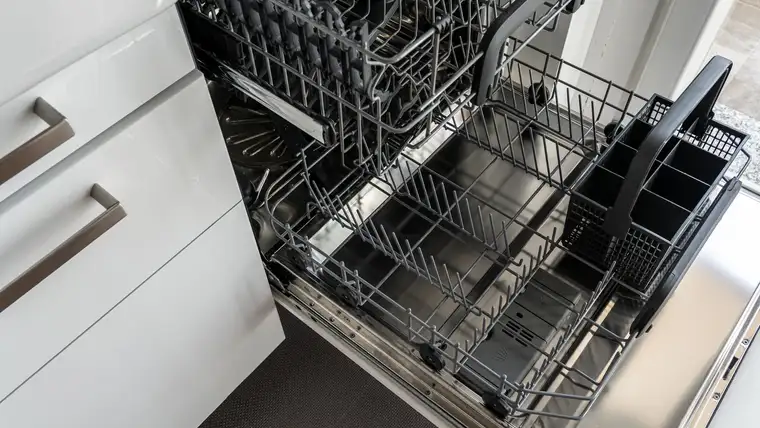
Slide out the lower rack. Pick out food scraps, glass chips and labels from the tub floor and around the drain, then wipe the bottom and the door edges with a damp cloth.
Why: Food soil that falls off dishes collects at the bottom and decomposes, causing odors and poor cleaning.
- 2
Clean the filter
Find the filter at the bottom center (many twist counterclockwise to release; your manual shows how). Rinse it under running water and brush off debris gently, without excessive force, then reinstall it so it locks in place.
Why: A clogged manual-clean filter holds rotting food that gives off a strong odor, and it also reduces cleaning performance.
- 3
Clear the spray arms
Spin the spray arms by hand and look at the small jets. Gently clear any blocked holes with a paper clip or tweezers.
Why: Blocked jets leave parts of the load dirty and let food film build up.
- 4
Run a vinegar cycle
Put 2 cups of white vinegar in an upright glass measuring cup on the lower rack. Run a normal cycle with no detergent and no dishes. One appliance maker uses heated dry; another says dry option off, so follow your manual.
Why: The vinegar spreads through the wash and loosens mineral film and detergent buildup.
- 5
Finish with baking soda (optional)
Sprinkle 1 cup of baking soda across the tub floor and run a short hot cycle.
Why: Baking soda helps deodorize. Illinois Extension describes this vinegar-then-baking-soda routine as one appliance makers recommend.
- 6
Keep it fresh
Scrape dishes rather than rinsing them, clean the filter regularly, and if you don't run the machine every day, run a rinse cycle on a partial load. Use a dishwasher cleaner about monthly if your manual suggests it.
Why: Food left sitting in a warm, closed, humid tub for days is what starts the smell.
Why a dishwasher smells bad
The usual cause is food soil decomposing in the filter, the sump under it and the bottom of the tub. A manual-clean filter that's never been cleaned is the most common culprit. Dishes left for days in a closed, warm, damp machine add to it, and plastic tubs can hold odors.
Other causes to check: standing water in the bottom means the drain or filter is clogged, and it smells quickly. A sewage smell rather than a food smell can point to a problem in the household drain or air gap, which is a plumbing issue rather than a cleaning one.
What the tub is made of: stainless steel or plastic, with a rubber door gasket and plastic spray arms. Abrasive pads and concentrated or abrasive cleaners can harm the finish, so the interior is cleaned with damp cloths, soft brushes and cycles rather than scrubbing.
How to remove mold from a dishwasher
Mold and mildew grow where water and food film sit undisturbed: the folds of the door gasket, the bottom edge of the door, and around the filter. One appliance maker's instructions: mix 1/2 cup of chlorine bleach in 3 cups of water, clean the gasket or interior with a cloth or sponge, then run a rinse cycle to remove the leftover cleaner before the next use. It also warns against abrasive or concentrated cleaners.
On a stainless steel tub, keep bleach contact short and rinse thoroughly, because bleach left on stainless steel can corrode it. Never do the bleach step in the same session as a vinegar cycle, and never with ammonia: see what never to mix. If black spots return quickly, look for the cause: standing water, a dirty filter or a machine left closed and damp for long stretches.
White film and spots: hard water, not dirt
A cloudy white film on the tub and glasses is mineral scale from hard water. The fix is in how you run the machine: water hot enough at the dishwasher (one appliance maker says at least 120°F; the American Cleaning Institute says not lower than 130°F), enough automatic dishwasher detergent for your water hardness, and a rinse aid so water sheets off. A vinegar cycle or a dishwasher cleaner removes existing scale. Very hard water (more than about 10.5 grains per gallon) may need a water softener. For mineral deposits elsewhere, see hard water stains.
By situation
Dishwasher smells like rotten food
Clean the filter and the area under it first, then wipe the door seal and tub bottom and run a vinegar cycle. If the smell is back within days, check that the machine drains fully and that you're running it often enough.
Dishwasher smells like sewage
That points to the household drain or the air gap, not food soil, so cleaning the machine won't fix it. Have a plumber check the drain connection if it persists.
Standing water in the bottom
Clean the filter and check for debris in the sump. If water still won't drain after a cycle, the drain hose or pump needs attention per the manual or a technician.
Dish soap went in by mistake
The American Cleaning Institute's advice: take the dishes out, scoop out the suds, splash cool water in to rinse the suds down, and run an empty rinse cycle. Smother any overflow suds with a towel.
Plastic tub
Plastic tubs can hold odors. Regular filter cleaning and monthly cleaner or vinegar cycles keep it fresher; skip abrasive pads.
What not to do
- Don't use hand dishwashing liquid, laundry detergent, baking soda, borax or vinegar in place of dishwasher detergent. Other soaps make too many suds and can overflow; substitutes clean poorly and can damage items or the machine.
- Don't use abrasive pads or concentrated cleaners on the interior. They can harm the finish of the tub and racks.
- Don't mix bleach with vinegar, ammonia or dishwasher cleaners. Bleach with acids or ammonia releases toxic gases.
- Don't pre-rinse dishes heavily. One appliance maker says scrape but don't rinse: clean-looking dishes can make the soil sensor choose a lighter cycle.
Other methods that work
Dishwasher cleaner product
Formulated to break down limescale, grease and detergent buildup. Run it in an empty cycle per the label; some makers suggest monthly.
Caution: Use one product at a time, and don't combine it with bleach.
Smaller vinegar dose
Amounts differ by maker: one suggests about 1 ounce of vinegar in a small bowl on the lower basket with the standard cycle, rather than 2 cups.
Caution: Follow your own manual where it gives an amount.
Stain still there?
Still smells after a vinegar cycle
The source is probably still in the filter, sump or door gasket. Remove and scrub the filter, wipe the gasket folds, and check for standing water.
Dishes come out gritty or dirty
Clean the filter and clear the spray-arm jets, load so the arms can spin freely, and check water temperature and detergent amount.
Cloudy glasses after cleaning
That's usually hard water. Add rinse aid, use more detergent if your water is hard, and run a vinegar or cleaner cycle.
Safety
- Store dishwasher detergent out of children's reach, not under the sink.
- Wear gloves and ventilate when using bleach on mold, and rinse it out with a cycle before the next load.
Never mix cleaning products; see chemicals you must never combine.
Questions
Why does my dishwasher smell bad?
Almost always from food soil rotting in the filter, sump or door seal. Cleaning the filter fixes most smells; standing water or a sewage smell points to a drain problem.
How do you get the smell out of a dishwasher?
Clean the filter, wipe the tub bottom and door gasket, then run an empty cycle with 2 cups of vinegar in an upright cup, optionally followed by a short cycle with baking soda.
How do you remove mold from a dishwasher?
Wipe the gasket and affected areas with 1/2 cup of bleach in 3 cups of water, then run a rinse cycle. Rinse stainless parts well and never combine bleach with vinegar.
How often should you clean a dishwasher?
Check and clean the filter regularly per the manual, wipe the bottom after messy loads, and run a cleaner or vinegar cycle about monthly.
More guides for this room
- How to clean an air fryer, basket and heating element
- How to clean burnt pots and pans (and stuck-on cake)
- How to clean cast iron, and get rust off it
- How to clean a coffee maker with vinegar (and other descalers)
- How to clean granite countertops and remove stains
- How to remove grease from kitchen cabinets
- How to clean marble countertops, floors and showers
- How to clean a microwave and get smells out of it
- How to clean an oven, oven racks and oven glass
- How to get tomato stains out of plastic containers
- How to clean quartz countertops and get stains out
- How to clean a refrigerator and get bad smells out
Sources
- How to Clean Your Dishwasher, GE Appliances (manufacturer)
- Dishwasher - How to Remove Mildew, GE Appliances (manufacturer support)
- Understanding Dishwashers, American Cleaning Institute
- Clean and Sanitize the Kitchen, University of Illinois Extension
- Dishwasher Mistakes, American Cleaning Institute
- Food Odors - Dishwasher, Maytag (Whirlpool Corp.) product help
- LG Dishwasher - How To Clean The Filter, LG Electronics USA (manufacturer support)
- Frequently Asked Questions: Cleaning Stainless Steel in the Home, Euro Inox (hosted by worldstainless)
Last updated . Methods are drawn from the sources above; how we research and check our guides.