How to clean a microwave and get smells out of it
To clean a microwave, steam it first: heat a microwave-safe bowl of water with lemon juice or baking soda until it boils, leave the door shut until it cools, then wipe the softened food off with a damp cloth and rinse. Steam loosens dried spatter so you never need to scrape. For burnt smells, remove every charred bit, repeat the lemon or vinegar steam, and air the kitchen out.
- Best method
- Steam with lemon or baking soda water, then wipe
- Time
- 10-20 minutes
- Difficulty
- Easy
You will need
- Microwave-safe bowl
- Lemon juice, baking soda or white vinegar
- Soft cloths or sponges
- Dish soap
- Paper towels
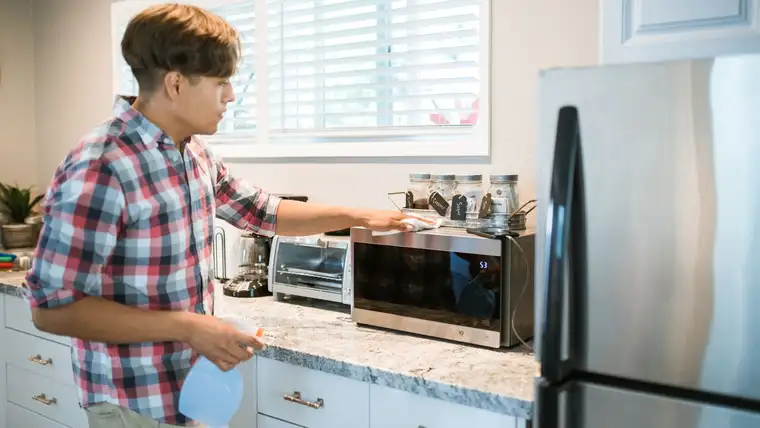
Step by step
- 1
Make a steam bowl
In a microwave-safe bowl, mix 1 cup of water with 1/2 cup lemon juice or 6 tablespoons of baking soda (University of Illinois Extension amounts).
Why: The lemon or baking soda helps deodorize. It also means you aren't heating plain water, which the FDA says can superheat and erupt.
- 2
Heat until it boils, then wait
Heat on high until the water boils, usually a few minutes. Leave the door closed until the bowl cools, 10 minutes or more.
Why: Trapped steam condenses on the walls and ceiling and softens dried food, so it wipes off without scraping that could damage the coating.
- 3
Take out and wash the turntable
Once it's cool, lift out the glass tray and the roller ring. Wash the tray in warm sudsy water or the dishwasher, and the ring gently by hand.
Why: Letting the glass cool first prevents it cracking from a sudden temperature change.
- 4
Wipe the cavity, ceiling and door
Wipe the walls, ceiling, floor and inside of the door with a damp cloth. Use a little sudsy water for stubborn spots, then wipe again with a cloth dampened in plain water. Clean the door seal area too.
Why: The door seal collects spatter. Rinsing matters because steam picks up cleaner residue during later cooking and can carry it into food.
- 5
Clean the outside and controls
Wipe the exterior with a soft cloth and mild detergent. Spray any cleaner onto the cloth, never onto the control panel, and keep the cloth damp rather than wet.
Why: Liquid running into the panel can damage the controls. Ammonia and alcohol cleaners can damage some exterior finishes.
What a microwave is made of, and what that rules out
Microwave interiors are painted or enameled steel, or stainless steel, with a glass turntable. The exterior may be painted, plastic or stainless, and over-the-range models have grease filters. Paint and coatings scratch, so oven cleaner, steel wool and abrasive cleansers are ruled out: an appliance maker and Illinois Extension both prohibit oven cleaner in microwaves. Ammonia and alcohol cleaners can damage exterior finishes, and stainless models take a stainless steel cleaner on the outside.
There's also a food-safety reason to keep chemicals out of the cavity. One microwave maker points out that steam picks up whatever is on the walls, so cleaner left behind can taint food. Water, steam, mild soap and a rinse wipe are all the inside needs.
How often: wipe splatters right after they happen, when a paper towel is enough, and do the steam clean when food dries on. Clean or replace grease filters on over-the-range models as the manual directs.
How to get burnt popcorn and other smells out of a microwave
A burnt smell comes from smoke particles and charred residue stuck to the cavity. Popcorn and bread burn most easily, and the acrid note of burnt fat is acrolein, formed when overheated oils break down. Every time the microwave heats up, steam lifts that residue back into the air, which is why air fresheners don't last.
- Remove the source. Pick out charred bits, then steam and wipe the interior as above, including the ceiling and door, where smoke residue collects.
- Deodorize with steam. Heat about 2 cups of water with lemon juice or a couple of tea bags on high for about 5 minutes or until boiling, and leave the door shut 10 to 30 minutes (one maker's method). Another maker uses water with lemon slices for 2 to 4 minutes, then a wipe. Repeat as needed. A wipe with diluted white vinegar also helps.
- Absorb what lingers. Leave an open box or bowl of baking soda inside with the door closed for several hours. One county extension recipe boils 1 tablespoon of white vinegar in 1 cup of water to clear cooking odors.
- Ventilate the kitchen. Run a range hood that vents outdoors, use exhaust fans and open windows.
More detail: burnt smell in a microwave, fish smell in a microwave and smoke smell in a microwave.
By situation
Caked-on, dried food
Repeat the steam step rather than scraping, then wipe with sudsy water and rinse. Several rounds may be needed for food that has been reheated over many times.
Stainless steel interior or exterior
Use mild soap and water and a soft cloth, wiping with the grain. Use a stainless steel cleaner on the outside if the maker recommends one, and skip abrasive pads.
Over-the-range microwave
The underside and grease filters collect cooking grease from the stove. Clean or replace the filters as the manual directs, and wipe the underside with warm sudsy water.
Fish or strong food smells
Wipe the interior with a vinegar and water solution, then do a lemon-water steam. Acids reduce the volatility of the amines that make fish smell, so less of them reaches your nose.
What not to do
- Don't use oven cleaner on any part of a microwave. An appliance maker and Illinois Extension both prohibit it; it damages the interior coating.
- Don't use steel wool or abrasive cleansers inside. They scratch the paint or coating of the cavity.
- Don't spray cleaner straight onto the control panel. Liquid can seep into the controls and damage them.
- Don't leave cleaning chemicals on the interior walls. Steam picks up the residue during cooking and can taint food.
- Don't heat plain water for a long time in a smooth, clean cup. The FDA warns it can superheat and erupt violently when disturbed.
Other methods that work
Dish soap and water only
For light splatters, a cloth with warm sudsy water, followed by a plain-water wipe, is the routine method one appliance maker recommends.
Caution: Wring the cloth out well so water doesn't drip into vents.
White vinegar wipe
One microwave maker allows wiping the interior with white vinegar and water to cut residue and odor before a steam deodorize.
Caution: Never use it together with bleach-based products.
Stain still there?
The burnt smell came back the next time I used it
Charred residue is still inside, often on the ceiling, in the door seal or under the turntable. Steam and wipe again, then leave baking soda inside for several hours.
Brown stains remain after steaming
Repeat the steam with baking soda water and wipe with sudsy water. If marks remain after several rounds, they may be discoloration of the coating rather than soil. Don't reach for abrasives, which scratch it.
Safety
- Use only microwave-safe bowls, and let the bowl cool before lifting it out: the steam and water are hot enough to scald.
Never mix cleaning products; see chemicals you must never combine.
Questions
How do you get the burnt popcorn smell out of a microwave?
Remove the burnt bits, steam the microwave with lemon water, wipe every surface including the ceiling and door, then leave baking soda inside for several hours. Ventilate the kitchen while you do it.
What is the fastest way to clean a microwave?
Heat a bowl of water with lemon juice or baking soda until it boils, leave the door shut until it cools, then wipe. The steam does most of the work.
How do you deodorize a microwave naturally?
Steam it with water and lemon juice, lemon slices or tea bags, or wipe with diluted vinegar, then leave an open container of baking soda inside for several hours.
Can I use vinegar to clean a microwave?
Yes. A vinegar and water wipe or a steam bowl with a spoonful of vinegar cuts residue and odors. Wipe with plain water afterward.
More guides for this room
- How to clean an air fryer, basket and heating element
- How to clean burnt pots and pans (and stuck-on cake)
- How to clean cast iron, and get rust off it
- How to clean a coffee maker with vinegar (and other descalers)
- How to clean a dishwasher and get rid of the smell
- How to clean granite countertops and remove stains
- How to remove grease from kitchen cabinets
- How to clean marble countertops, floors and showers
- How to clean an oven, oven racks and oven glass
- How to get tomato stains out of plastic containers
- How to clean quartz countertops and get stains out
- How to clean a refrigerator and get bad smells out
Sources
- Clean and Sanitize the Kitchen, University of Illinois Extension
- How to Clean Your Home Appliances Inside and Out, GE Appliances (manufacturer)
- LG Microwave Cleaning, LG Electronics USA (manufacturer care guide)
- Eliminating odors from the Samsung Microwave Oven, Samsung (manufacturer support, India site)
- Microwave Ovens, U.S. Food and Drug Administration
- Homemade Cleaners (Johnson County Extension compilation), K-State Research and Extension, Johnson County
- Strategies for Improving Indoor Air Quality While Cooking (infographic text), U.S. Environmental Protection Agency
- Is Fish Smelly?, American Society for Nutrition (citing McGee, On Food and Cooking)
Last updated . Methods are drawn from the sources above; how we research and check our guides.