How to remove coffee stains from clothes, couches, mugs and steel
To remove coffee stains, blot, sponge or soak the spot in cool water, pretreat with liquid detergent or a prewash stain remover (not bar soap), then wash with a bleach safe for the fabric in the hottest water it allows. Coffee is a tannin stain: its brown compounds cling to fibers, and natural soap can set them, while an oxidizing bleach breaks the color down. On mugs and steel, warm sudsy water and a little baking soda handle most rings.
- Best method
- Cool soak, liquid detergent, bleach wash
- Time
- 30 minutes plus a wash
- Difficulty
- Easy
- Stain type
- Tannin
You will need
- White cloths or paper towels
- Cool water
- Liquid laundry detergent or prewash stain remover
- Oxygen bleach, or chlorine bleach for white cotton
- Baking soda, for mugs and steel
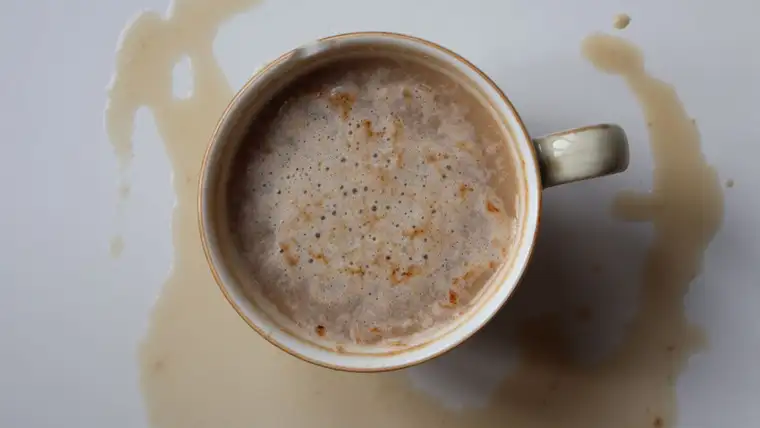
How to remove coffee stains
- 1
Blot right away
Press a white cloth or paper towel onto the spill to soak up as much coffee as you can. Don't rub.
Why: Less coffee left in the fabric means less pigment to bind.
- 2
Sponge or soak in cool water
Sponge the stain with cool water or soak the item in cool water for a few minutes.
Why: Cool water rinses out soluble color and keeps any milk protein from setting.
- 3
Pretreat with liquid detergent
Rub in a prewash stain remover, liquid laundry detergent or a paste of powder detergent and water. Skip bar soap.
Why: Detergent loosens tannin residue and breaks up milk fat. Natural soap can set tannin stains.
- 4
Wash with bleach in hot water
Launder in the hottest water the fabric allows, with chlorine bleach if it's safe for the fabric, or oxygen bleach.
Why: Oxidizing bleach breaks down the brown color that's left.
- 5
Air-dry and check
Air-dry and check in daylight. For an old stain that's still there, soak it in an enzyme product, then launder again.
Why: Heat sets coffee stains, and enzymes help with aged residue and milk protein.
Why coffee stains, and why bar soap makes it worse
Brewed coffee is water carrying dark-brown roasted compounds and polyphenols, the tannin-type substances that cling to fibers. Add milk or cream and you add protein and fat; add sugar and it gets sticky. Extension guides class coffee and tea as tannin stains.
Tannins have one quirk that trips people up: natural soap, such as bar soap or soap flakes, can make them harder to remove or even permanent. So the method uses detergent, not soap. Cool water comes first, partly for the milk protein. The finish is a bleach that oxidizes the brown. Kentucky's extension guide notes that old tannin stains may need bleaching to come out completely.
Coffee on a couch, mugs, stainless steel and the coffee maker
On a couch or carpet, use as little liquid as possible. The Carpet and Rug Institute's order for coffee is a dilute dish-detergent solution (¼ teaspoon per cup of lukewarm water), then a vinegar solution, a warm-water rinse and a spot kit. For coffee with cream and sugar, it starts with a dry-cleaning solvent on a cloth to cut the fat. Check the couch's cleaning code first; see coffee on carpet.
For mugs, cups and glass, the University of Georgia extension washes stains in warm sudsy water and wipes old coffee rings with a soft damp cloth dipped in baking soda. On stainless steel, use warm soapy water and a soft cloth, and a gentle baking soda paste for coffee deposits, wiping with the grain and rinsing. Avoid steel wool and chlorine cleaners left on the metal. Brown buildup inside a coffee maker is coffee oil plus mineral scale, which needs descaling rather than stain removal.
Coffee on every surface
The method changes with the surface: fabrics can soak, carpets and mattresses can't. Pick yours for the full steps.
| Surface | What works |
|---|---|
| Carpet | Blot, mild dish-soap solution, vinegar solution, warm rinse, weight-dry |
| Clothes | Cool rinse, liquid detergent, bleach-safe hot wash |
| White clothes | Cool rinse, liquid detergent, hot wash with bleach safe for the fabric |
| Appliance | Wash carafes and filter baskets in hot soapy water, and descale the brewer as its booklet directs; brown buildup inside is coffee oil plus mineral scale. |
| Couch | Check the cleaning code, then blot on a dilute dish-detergent solution with minimal liquid; for coffee with cream, start with a dry-cleaning solvent on a cloth if the code allows. |
| Stainless steel | Wipe with warm soapy water, then rub stubborn coffee deposits gently with a baking soda paste along the grain, rinse and dry; never use ordinary steel wool. |
By situation
Old or dried coffee stains
Soak in oxygen bleach and rewash. The American Cleaning Institute notes older beverage stains may respond to an enzyme pretreatment or soak before laundering.
A tan ring survived the wash or dryer
Soak in oxygen bleach and rewash hot, or use chlorine bleach on colorfast whites if the label allows. After machine drying, it may take several soaks.
Coffee on a white shirt
Soak in cool water, pretreat with prewash remover or liquid detergent, then launder with chlorine bleach if it's safe for the fabric, or oxygen bleach. See coffee on white clothes.
Coffee with milk or cream
Keep the first rinse cool so the milk protein doesn't set, and use an enzyme product if a greasy or yellow mark stays after washing.
Silk, wool and dry-clean-only items
Blot and sponge with cool water only. No enzymes or chlorine bleach on silk or wool; take them to a dry cleaner.
What not to do
- Don't use bar soap or soap flakes. Natural soap can set tannin stains.
- Don't dry or iron until the stain is gone. Heat sets the remaining color.
- Don't combine vinegar with chlorine bleach. It releases chlorine gas. Rinse thoroughly between products.
- Don't use ordinary steel wool on stainless steel. It scratches and leaves iron particles that rust.
Other methods that work
White vinegar on carpet
The Carpet and Rug Institute's second step for coffee is 1 cup white vinegar in 2 cups water, blotted on after the detergent solution.
Caution: Rinse it out, and never use it with bleach.
Enzyme presoak
Useful for older beverage stains and for coffee with milk, before laundering.
Caution: Not for silk or wool.
Boiling water through cotton or linen
A traditional method for fresh coffee on sturdy washable fabric: stretch it over a bowl and pour boiling water through. Weak evidence.
Caution: Never on wool or silk, and not if the coffee had milk in it. Watch for scalding.
Stain still there?
A brown ring is left around the edge
Color wicked outward as it dried. Soak the whole area in oxygen bleach and rewash.
Mugs still have rings after washing
Wipe them with a soft damp cloth dipped in baking soda, rinse well and dry.
Safety
- Never mix vinegar or ammonia with chlorine bleach.
- Use dry-cleaning solvent with a cloth, in a ventilated room, away from flames.
Never mix cleaning products; see chemicals you must never combine.
Questions
Do coffee stains come out?
Usually, especially if you blot and rinse with cool water quickly. Old stains may need an enzyme soak and oxygen bleach, and a few may only fade.
How do you get coffee out of a couch?
Blot, check the cleaning code, then dab on a dilute dish-detergent solution and blot with clean water, using as little liquid as possible. For coffee with cream, start with a dry-cleaning solvent if the code allows.
How do you remove coffee stains from mugs?
Wash in warm sudsy water, then wipe stubborn rings with a soft damp cloth dipped in baking soda. Rinse and dry.
How do you clean a coffee maker with vinegar?
Descaling ratios and cycles differ by model, so follow your brewer's booklet. The coffee maker guide explains why vinegar works on mineral scale and how to rinse it out.
Other tannin stains
Sources
- Stain Removal Guide, American Cleaning Institute
- Stain Removal for Washable Fabrics (HE 2-840), University of Kentucky Cooperative Extension Service
- Spot Solver: Coffee, The Carpet and Rug Institute
- Spot Solver: Coffee with Cream & Sugar, The Carpet and Rug Institute
- Remove Stains From Coffee, Tea, University of Georgia Cooperative Extension
- Frequently Asked Questions: Cleaning Stainless Steel in the Home, Euro Inox (hosted by worldstainless)
Last updated . Methods are drawn from the sources above; how we research and check our guides.