How to remove grease and oil stains from fabric, couches and kitchens
To remove grease and oil stains, blot off the excess, work full-strength dish soap or liquid laundry detergent into the spot, and wash in the hottest water the fabric allows. Use a dry-cleaning solvent for heavy or old stains. Oil repels water, so it only lifts once a detergent or solvent surrounds it. Keep the item out of the dryer until the stain is gone, because heat sets oil.
- Best method
- Detergent pretreatment, then a hot wash
- Time
- 20 minutes plus a wash; old stains may need several rounds
- Difficulty
- Easy
- Stain type
- Oil and grease
You will need
- Paper towels
- Liquid dish soap or heavy-duty liquid laundry detergent
- Cornstarch or baking soda, for fresh spills
- Dry-cleaning solvent, for heavy or old stains
- Oxygen bleach, for yellowing
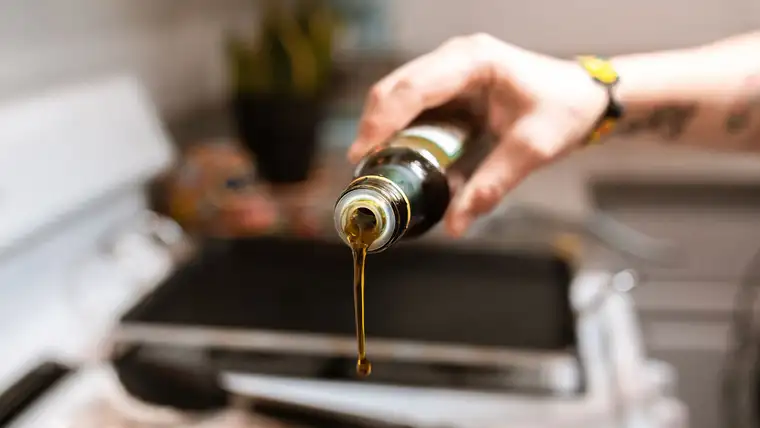
How to remove grease and oil stains
- 1
Blot or scrape off the excess
Press paper towels onto fresh oil without rubbing, and scrape solid grease such as butter or bacon fat off with a dull knife.
Why: This removes oil before it wicks along the yarns and spreads the stain.
- 2
Absorb what's left on the surface
On a spill you can't rinse right away, such as on a couch or carpet, sprinkle cornstarch or baking soda over it. Let it sit, then brush or vacuum it off.
Why: Fine absorbent powders soak up surface oil. They only remove the excess, so a detergent step still has to follow.
- 3
Work in full-strength detergent
Rub full-strength liquid dish soap, heavy-duty liquid laundry detergent or a prewash stain remover into both sides of the stain. Leave it about 10 minutes.
Why: Detergent molecules have one end that grabs oil and one end that holds water, so they wrap oil droplets and let water carry them away.
- 4
Use solvent on heavy or old stains
For motor oil, chain grease or an old yellowed stain, lay the fabric face down on paper towels and dab dry-cleaning solvent onto the back. Change the towels often, let the solvent evaporate, then apply detergent.
Why: Solvent dissolves oil directly and pushes it out into the towels instead of deeper through the fabric.
- 5
Wash in the hottest safe water
Launder in the hottest water the care label allows, with the normal amount of detergent. An enzyme prewash or an oxygen bleach detergent helps.
Why: Heat softens fats so detergent can lift them, and enzyme products include lipase, which breaks fats down.
- 6
Air-dry and inspect
Check the spot in daylight before you use the dryer. A darker, see-through patch means oil is still there, so repeat the pretreatment and wash again.
Why: Dryer heat bakes any remaining oil into the fiber and can make the stain permanent.
Why oil won't rinse out with water
Food fats are triglycerides, while motor oil and lubricants are hydrocarbons. Both are non-polar, so they repel water instead of mixing with it, which is why rinsing an oil spot under the tap does almost nothing. Oil also wicks along fibers, and it dissolves into oil-loving synthetics such as polyester. Iowa State Extension notes that oil stains on polyester often darken and become more noticeable over time.
Removing oil takes something that can hold onto it. A dish soap or detergent surrounds oil droplets so water can carry them off, and a solvent dissolves the oil outright. Hot water helps by softening fats. Motor and bike grease add black carbon and metal particles, so they may need a second round after the oil is gone. Grease and oil are the classic oil stains.
Grease on kitchen cabinets, pans, appliances and wood
Kitchen grease is cooking-oil vapor that settles and turns tacky as it collects dust. The same chemistry applies: a few drops of dish soap in warm water. On kitchen cabinets, wipe with a cloth wrung out until barely damp, follow the grain, rinse with a fresh damp cloth and dry right away. Skip abrasives and strong chemicals, which can damage cabinet finishes, and don't leave the wood wet.
Pans, air fryer baskets and other metal parts come clean in hot water with dish detergent and a soft sponge. A 5 to 10 minute soak loosens baked-on residue, and soft tools protect non-stick coatings. For a microwave's over-the-range grease filter, follow the model's manual. On finished wood, oil sits on top of the finish, so the cabinet method works. Bare wood soaks oil in; blot it, cover it with an absorbent powder, and ask a refinisher about a dark, old stain.
Grease and oil on every surface
The method changes with the surface: fabrics can soak, carpets and mattresses can't. Pick yours for the full steps.
| Surface | What works |
|---|---|
| Carpet | Absorb, solvent on a cloth, dilute dish detergent, rinse, weight-dry |
| Clothes | Detergent or dish soap pretreat, hot wash |
| Concrete | Absorb, scrub with degreaser, poultice old stains |
| Hair | Shampoo on dry hair, warm rinse, wash twice |
| Leather | Blot, absorbent paste, brush off, condition |
| Suede | Blot, absorbent powder for hours, brush, repeat |
| Appliance | Wipe grease off with a few drops of dish soap in warm water on a soft cloth, then rinse and dry. Skip abrasive pads and oven cleaner, and follow the manual for grease filters. |
| Couch | Blot, cover the spot with cornstarch to absorb oil, then follow the cleaning code: dish soap foam on W or W/S fabric, dry-cleaning solvent used sparingly on S, and a professional for X. |
| Wood | On finished wood, wipe oil off with diluted dish soap on a damp cloth and dry immediately. On bare wood, blot and cover with an absorbent powder, and call a refinisher for old stains. |
By situation
Old or set-in oil stains
Aged oil oxidizes into a yellow-brown mark, especially on polyester. Repeat the solvent and detergent pretreatment with a longer wait, wash hot, and use oxygen bleach on the discoloration. Some old stains on polyester never fully release.
It already went through the dryer
Heat may have set the stain. Use the solvent method from the back, then detergent and a hot wash, and repeat several times. A garment that has been dried with an oil stain may keep a mark, so success isn't guaranteed.
Whites versus colors
The oil removal steps are the same. On whites, a final oxygen bleach or chlorine bleach wash (if the label allows) clears yellowing from oxidized oil. On colors, use oxygen bleach only, after a test.
Oil stain on a couch or sofa
Blot, then let cornstarch draw out the surface oil and vacuum it off. Check the cleaning code before using anything wet: dish soap foam suits W or W/S fabric, a dry-cleaning solvent used sparingly suits S, and X fabric needs a professional. Over-wetting leaves a ring, and the University of Georgia extension warns that heavy use of solvent cleaners can destroy upholstery foam and backing.
Silk, wool, leather, suede and dry-clean-only items
Blot without wetting and take silk, wool and dry-clean-only pieces to a dry cleaner, since dry-cleaning solvents dissolve oil well. Don't use enzyme products on silk or wool. Extension guides advise taking leather and suede to a leather specialist.
Garage floor, driveway or asphalt
Cover fresh oil with cat litter or another absorbent, sweep it up, then scrub with detergent. See grease on concrete for degreasers and poultices on old stains. On asphalt, stick to absorbents and detergent, because asphalt is itself a petroleum product and solvents can soften it.
What not to do
- Don't put the item in the dryer until the stain is gone. Heat sets oil stains, sometimes permanently.
- Don't rely on a cold wash alone. Oil needs a detergent pretreatment and, where the fabric allows, hot water to break it up.
- Don't use solvents on fuel-soaked clothes or put them in the dryer. Iowa State Extension advises washing fuel stains with liquid detergent only and air-drying outdoors until the smell is gone, because of the fire risk.
- Don't pour solvent onto carpet or upholstery. Solvents can damage the latex that holds carpet backings together and the foam inside cushions. Apply it with a white cloth.
Other methods that work
Cornstarch or baking soda
Absorbent powders soak up fresh surface oil, which is especially useful on upholstery and carpet. See cornstarch and other absorbents.
Caution: They remove only the excess. Brush or vacuum them off and follow with detergent.
Waterless hand cleaner
The Kentucky extension guide notes that degreasing waterless hand cleaners are especially effective on greasy stains and safe for most fabrics.
Caution: Test first and wash afterward.
White chalk
Rubbing white chalk into a grease spot before washing is an old absorbent trick from historical government bulletins. It's traditional, with weak evidence.
Caution: Colored chalk can add a new stain, so use white only.
Stain still there?
A darker, translucent patch is left after washing
That's oil the wash didn't remove. Don't dry it. Pretreat again with full-strength detergent or solvent and rewash hot.
A grey or black mark remains after motor or chain grease
The oil is gone but carbon and metal particles are left. Work in heavy-duty liquid detergent with a soft brush and wash again.
Kitchen cabinets still feel tacky after cleaning
There is grease left in a thin film. Repeat with fresh dish soap solution, rinse with a clean damp cloth and dry. Don't switch to harsh degreasers or abrasives, which damage cabinet finishes.
Safety
- Dry-cleaning solvents are toxic and may be flammable. Ventilate, keep away from flames and let them evaporate before laundering.
- Air fuel-soaked clothes outdoors until the smell is gone before washing, and never dry them while they smell of fuel.
Never mix cleaning products; see chemicals you must never combine.
Questions
Can you get an oil stain out of clothes?
Usually, as long as you pretreat before the item goes in the dryer. Work in full-strength detergent or dish soap, wash in the hottest safe water and check before drying.
How do you get old oil stains out of clothes?
Dab dry-cleaning solvent onto the back of the stain over paper towels, then apply liquid detergent and wash hot. Repeat if needed, and use oxygen bleach on yellowing. Very old stains on polyester may not fully come out.
What is the best oil stain remover?
For most washable fabrics, full-strength liquid dish soap or heavy-duty liquid laundry detergent followed by a hot wash. For heavy or old stains, a dry-cleaning solvent applied from the back works better.
How do you remove grease from kitchen cabinets?
Wipe them with a few drops of dish soap in warm water on a barely damp cloth, following the grain, then rinse with a clean damp cloth and dry immediately.
How do you remove grease from soup?
Fat is lighter than water and solidifies as it cools, so chill the soup and lift the hardened layer off the top. Spoon off what you can while it's hot if you need it sooner.
Other oil and grease stains
Sources
- Stain Removal Guide, American Cleaning Institute
- Stain Removal for Washable Fabrics (HE 2-840), University of Kentucky Cooperative Extension Service
- Quick and Easy Stain Removal for Clothing (HS 305, May 2026), Iowa State University Extension and Outreach
- Common Holiday Stain Removal Guide (AnswerLine), Iowa State University Extension and Outreach
- Remove Stains From Oil-Based Foods, University of Georgia Cooperative Extension
- Cleaning Hard Surfaces, American Cleaning Institute
Last updated . Methods are drawn from the sources above; how we research and check our guides.