How to remove petroleum jelly and diaper cream stains
To remove petroleum jelly stains, scrape off the excess, dissolve the grease from the back with a dry-cleaning solvent or work in full-strength liquid detergent or dish soap, then wash in the hottest water the fabric allows. Check it before drying. Petroleum jelly is a mix of heavy hydrocarbons that won't mix with water at all, so an untreated wash just leaves a darker, see-through patch that the dryer then sets.
- Best method
- Solvent or full-strength detergent, then a hot wash
- Time
- 20 to 30 minutes plus a wash
- Difficulty
- Easy
- Stain type
- Oil and grease
You will need
- Dull knife
- Paper towels
- Dry-cleaning solvent, for heavy stains
- Heavy-duty liquid detergent or dish soap
- Cornstarch, for excess on bedding or upholstery
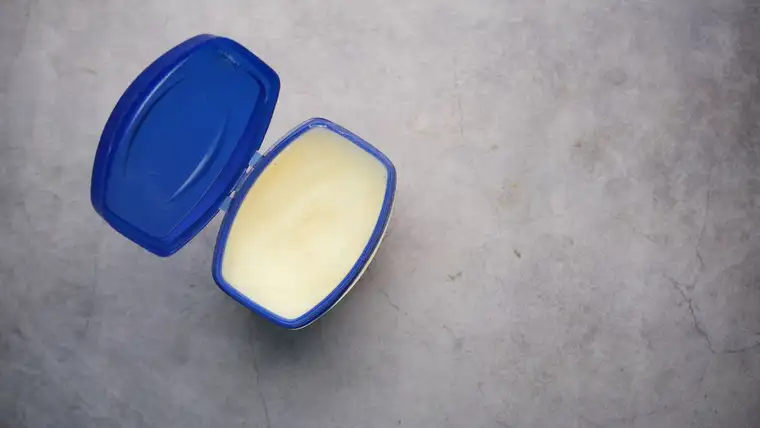
How to remove petroleum jelly stains
- 1
Scrape off the excess
Lift off as much jelly or ointment as you can with a dull knife.
Why: Less grease to dissolve, and scraping doesn't push it deeper the way wiping does.
- 2
Heavy stains: solvent from the back
Lay the stain face down on paper towels and dab dry-cleaning solvent onto the back, changing the towels often. Let it evaporate.
Why: The hydrocarbons in petroleum jelly dissolve in solvent and move out into the towels.
- 3
Work in full-strength detergent
Rub full-strength heavy-duty liquid detergent or dish soap into both sides of the stain.
Why: Detergent wraps the remaining grease so water can carry it away.
- 4
Wash in the hottest safe water
Launder in the hottest water the care label allows.
Why: Heat softens the grease and helps detergent lift it.
- 5
Inspect before drying, and repeat
Look at the spot while it's wet and again once air-dried. A darker, translucent patch means grease is left; repeat the pretreatment and wash.
Why: Dryer heat sets any grease that remains.
Why petroleum jelly won't wash out on its own
Petroleum jelly, or petrolatum, is a semi-solid mix of long-chain hydrocarbons. It never dries and never mixes with water, so it spreads into fibers as a greasy, darkened patch. A plain wash slides right past it, and the dryer then bakes it in. That puts it firmly among the oil stains, and it's treated like any heavy grease: solvent or concentrated detergent first, then hot water.
Many healing ointments are similar. Diaper creams usually add zinc oxide, a white mineral pigment, to a petrolatum or oil base, so the stain has two parts: the grease and a white residue. Remove the grease first; the pigment usually lets go once its greasy base is gone, but it may need a second pretreatment and wash.
Petroleum jelly on every surface
The method changes with the surface: fabrics can soak, carpets and mattresses can't. Pick yours for the full steps.
By situation
Diaper cream on baby clothes
Scrape, apply cleaning fluid from the back over paper towels, then full-strength liquid detergent, and wash in the hottest safe water. If white residue remains, pretreat and rewash. Inspect before drying.
Ointment on sheets and pillowcases
Ointment and lip balm transfer to bedding night after night. Sprinkle cornstarch on a fresh spot to soak up excess, brush it off, then pretreat with full-strength detergent and wash hot if the fabric allows.
It already went through the wash or dryer
A greasy patch after washing needs solvent plus detergent pretreatment and a hot rewash. After machine drying, it may take several cycles.
Yellowing on whites
Once the grease is out, oxygen bleach can clear a yellow tinge left on white fabric.
Silk, wool and dry-clean-only items
Blot gently and take them to a dry cleaner. Dry-cleaning solvent dissolves petroleum jelly well.
What not to do
- Don't wash it without pretreating. Water alone can't dissolve petrolatum, so the stain survives and can then set in the dryer.
- Don't dry before checking. Heat sets oily stains.
- Don't pour solvent onto carpet. It can damage the adhesive that holds the carpet backing together. Apply it with a cloth.
- Don't put solvent-damp items in the washer or dryer. Dry-cleaning solvent is flammable. Let it evaporate fully first.
Other methods that work
Cornstarch or baking soda
An absorbent powder lifts surface grease before washing, especially on bedding and upholstery. See absorbent powders.
Caution: It only removes the excess. Follow with detergent.
Waterless hand cleaner
The Kentucky extension guide notes degreasing waterless hand cleaners are especially effective on greasy stains and safe for most fabrics.
Caution: Test it first and launder afterward.
Stain still there?
A dark, see-through patch remains after washing
That's grease. Don't dry it. Apply solvent from the back, then full-strength detergent, and rewash hot.
A white, chalky mark remains from diaper cream
That's zinc oxide pigment. Pretreat with liquid detergent and wash again.
Safety
- Dry-cleaning solvent is flammable and toxic. Ventilate, and never put solvent-damp items in the washer or dryer.
Never mix cleaning products; see chemicals you must never combine.
Questions
How do you get diaper cream out of clothes?
Scrape off the excess, dab cleaning fluid on the back over paper towels, rub in full-strength liquid detergent and wash in the hottest safe water. Rewash if white residue remains.
Will petroleum jelly come out in the wash?
Not on its own. It doesn't mix with water, so pretreat it with solvent or full-strength detergent first, or it will leave a greasy patch.
How do you get petroleum jelly out of carpet?
Blot with dry-cleaning solvent on a white cloth, then a dilute dish-detergent solution, rinse with warm water and blot dry. Call a professional for large spots.
Other oil and grease stains
Sources
- Stain Removal Guide, American Cleaning Institute
- Stain Removal for Washable Fabrics (HE 2-840), University of Kentucky Cooperative Extension Service
- Quick and Easy Stain Removal for Clothing (HS 305, May 2026), Iowa State University Extension and Outreach
- Removing Clothing Stains (Guide C-502), New Mexico State University Cooperative Extension Service
- Spot Solver: Vaseline, The Carpet and Rug Institute
- A General Guide to Stain Removal (Extension Bulletin E-1453), Michigan State University Cooperative Extension Service (archived bulletin)
Last updated . Methods are drawn from the sources above; how we research and check our guides.