How to remove tree sap stains from clothes, carpet and more
To remove tree sap stains, scrape off what you can (chill soft sap with ice first), dissolve the rest from the back with a dry-cleaning solvent, rubbing alcohol or adhesive remover, then rub in liquid detergent and wash in the hottest water the fabric allows. Sap is plant resin made mostly of terpenes, which don't dissolve in water, so washing alone just smears it. A solvent has to break it up first.
- Best method
- Scrape, dissolve with solvent, then detergent and a hot wash
- Time
- 30 to 45 minutes plus a wash
- Difficulty
- Moderate
- Stain type
- Wax, gum and resin
You will need
- Ice in a plastic bag
- Dull knife
- Dry-cleaning solvent, rubbing alcohol or adhesive remover
- Paper towels
- Liquid laundry detergent
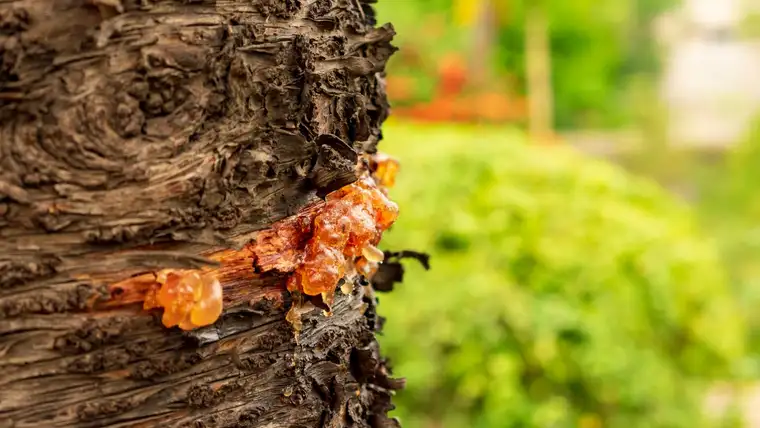
How to remove tree sap stains
- 1
Chill and scrape off the bulk
If the sap is soft, hold ice in a bag against it until it firms up, then scrape it off with a dull knife. Chip hardened sap away gently.
Why: Cold resin is brittle and lifts off; warm resin smears.
- 2
Dissolve the residue from the back
Test first, then lay the stain face down on paper towels and sponge the back with dry-cleaning solvent, rubbing alcohol or an adhesive remover. Replace the towels often.
Why: Resin dissolves in solvent and moves into the towels instead of spreading through the fabric.
- 3
Work in liquid detergent
Once the solvent has evaporated, rub in liquid laundry detergent and let it work for 10 to 15 minutes. Then scrub the spot under hot water.
Why: Detergent carries off the solvent and the dissolved resin. This is Iowa State Extension's method.
- 4
Stubborn pine resin: detergent and ammonia soak
For pine resin that hangs on, the American Cleaning Institute soaks the item for at least 30 minutes in 1 cup of liquid detergent with a few drops of ammonia, after the solvent step.
Why: The soak loosens remaining residue before the wash. Keep ammonia far away from any chlorine bleach.
- 5
Wash hot, air-dry and check
Launder in the hottest water the fabric allows, then air-dry and check for stickiness or a brown mark.
Why: Dryer heat melts leftover resin deeper into the fibers.
Why sap sticks, and why water can't touch it
Conifer sap, or pitch, is mainly plant resin: a sticky mix of water-insoluble compounds, mostly terpenes such as pinenes. As the lighter parts evaporate, it hardens and darkens. Because it repels water, a regular wash just warms it up and spreads it. That's why sap sits with the wax and resin stains, alongside gum and candle wax.
The fix is a solvent that dissolves resin: dry-cleaning fluid, rubbing alcohol or an adhesive remover. Detergent then removes the solvent and the dissolved sap. Old sap can leave a brown mark after the resin is gone; treat that with detergent and a bleach safe for the fabric.
Sap on carpet, a tree skirt, hair and cars
On carpet, Iowa State blots sap with rubbing alcohol on a cloth until it breaks down, without rubbing. On a washable Christmas tree skirt, it suggests applying a little detergent and massaging with a warm damp cloth until the sap softens and comes off, then laundering per the label.
Hair and skin need gentler treatment than solvents; see tree sap in hair. On car paint, owner's manuals advise removing tree sap as quickly as possible to avoid lasting damage, using products made for automotive finishes rather than household solvents.
Tree sap on every surface
The method changes with the surface: fabrics can soak, carpets and mattresses can't. Pick yours for the full steps.
By situation
Fresh versus hardened sap
Fresh sap is soft and smears, so chill it before scraping. Hardened sap chips off but leaves a resin film that still needs solvent.
It went through the wash or dryer
Sap that's been washed usually stays sticky or dark. Treat it with solvent from the back, then detergent, then rewash. Dryer heat can melt it further into the fibers.
Whites versus colors
The solvent method is the same for both. A brown mark on whites may respond to oxygen or chlorine bleach if the label allows; on colors, use oxygen bleach after testing.
Silk, wool, acetate and dry-clean-only items
Scrape gently and take them to a dry cleaner. Never use acetone on acetate.
What not to do
- Don't wash in hot water before dissolving the sap. Heat softens the resin and spreads it.
- Don't mix the ammonia soak with chlorine bleach. Ammonia and bleach release toxic chloramine gas.
- Don't rub sap on carpet. Rubbing spreads it. Blot it with alcohol instead.
- Don't use household solvents on car paint. Vehicle makers warn they can damage the finish. Use products made for automotive paint.
Other methods that work
Adhesive remover
Iowa State lists adhesive remover for tree sap, tar and sticker residue.
Caution: Test it first, ventilate, and wash the item afterward.
Hand sanitizer
It's alcohol-based, so it's often suggested for sap on hands or fabric. No stain guide covers it; treat it as traditional, with weak evidence.
Caution: Test on colored fabric.
Butter or cooking oil
Oils soften resin, a traditional trick for sap on skin or in hair. Weak evidence for fabric.
Caution: It leaves an oil stain on fabric that then needs detergent.
Stain still there?
The spot is still tacky after washing
Resin is left in the fibers. Sponge the back with solvent again over fresh paper towels, let it evaporate, then detergent and rewash.
A brown mark remains
Old sap can leave color behind. Pretreat with detergent and wash with a bleach safe for the fabric.
Safety
- Solvents and rubbing alcohol are flammable. Ventilate and let them evaporate before washing or drying.
- Never mix ammonia with chlorine bleach.
Never mix cleaning products; see chemicals you must never combine.
Questions
How do you get sap out of clothes?
Scrape off the excess, sponge the back with a dry-cleaning solvent over paper towels, rub in liquid detergent for 10 to 15 minutes, scrub under hot water and launder in the hottest safe water.
Does rubbing alcohol remove tree sap?
Yes, it dissolves resin. Iowa State uses it on a cloth to blot sap out of carpet. Test it on colored fabric first.
How do you remove pine sap from a coat?
If it's washable, use solvent from the back, then detergent and a wash. For wool, leather, suede or dry-clean-only coats, scrape gently and take it to a cleaner.
Why won't sap come out in the wash?
Sap is resin that doesn't dissolve in water. It needs a solvent such as dry-cleaning fluid, rubbing alcohol or adhesive remover first.
Other wax, gum and resin
Sources
- Stain Removal Guide, American Cleaning Institute
- Quick and Easy Stain Removal for Clothing (HS 305, May 2026), Iowa State University Extension and Outreach
- Summer Stains (AnswerLine), Iowa State University Extension and Outreach
- Common Holiday Stain Removal Guide (AnswerLine), Iowa State University Extension and Outreach
- Spot Solver: Pitch, Tree, The Carpet and Rug Institute
- 2017 Sentra Owner's Manual, section 7: Appearance and care, Nissan North America (vehicle owner's manual)
Last updated . Methods are drawn from the sources above; how we research and check our guides.