How to remove candle wax from clothes, glass, floors, walls and wood
To remove wax stains, harden the wax with ice and scrape it off, then deal with the thin film left behind. On fabric, melt it out between paper towels with a warm iron and sponge the rest with a prewash stain remover. On hard surfaces, wipe with detergent and water. Wax is brittle when cold, melts with heat and dissolves in oil-type solvents, not water, so cold lifts the bulk and heat or solvent removes the rest.
- Best method
- Ice and scrape, then iron (fabric) or wash (hard surfaces)
- Time
- 15 to 30 minutes
- Difficulty
- Easy
- Stain type
- Wax, gum and resin
You will need
- Ice cubes in a plastic bag
- Dull knife, spoon or plastic card
- White paper towels and an iron, for fabric
- Prewash stain remover or dry-cleaning solvent
- Dish detergent or washing soda, for hard surfaces
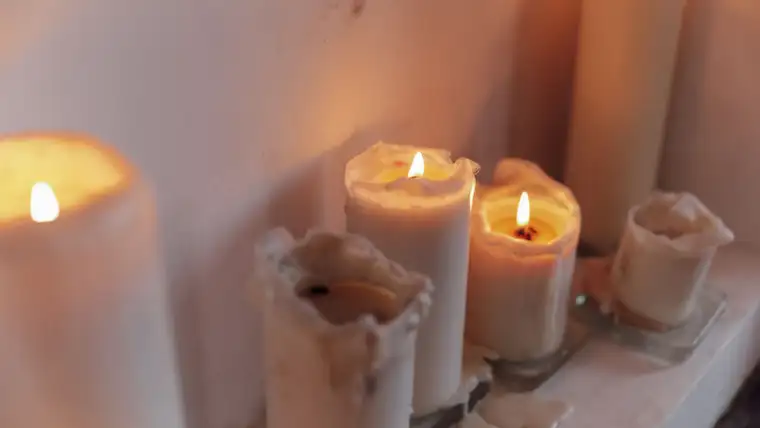
How to remove wax stains
- 1
Let it cool, then harden it with ice
Wait until melted wax is completely cool. Hold ice in a sealed plastic bag against it, or put a small item in the freezer.
Why: Cold wax is brittle and lets go of the surface, while warm wax smears. The bag keeps meltwater off carpet and wood.
- 2
Scrape off the bulk
Chip the wax away with a dull knife, a spoon or the edge of a plastic card. On glass, tile and wood, work gently so you don't scratch the surface.
Why: Mechanical removal gets most of the wax off before you use any heat or liquid.
- 3
Fabric and carpet: melt the rest into paper towels
Sandwich the spot between white paper towels and press with a warm (not hot) iron, moving to clean areas of towel as they pick up wax. On carpet, lay the towels on top and iron over them.
Why: Heat re-melts the wax and the paper wicks it out of the yarns. Fresh paper keeps it from going back in.
- 4
Sponge away the oily film
Lay fabric face down on a towel and sponge the back with prewash stain remover or a dry-cleaning solvent. Blot and let it dry fully before any more heat.
Why: Wax dissolves in oil-type solvents, which pick up the faint greasy ring that ironing leaves behind.
- 5
Hard surfaces: wash with detergent and water
On glass, tile, painted walls and similar surfaces, wipe with detergent and water or a washing soda solution, rinse with clear water and dry.
Why: Only a thin film is left after scraping, and detergent emulsifies it. The University of Georgia extension specifies detergent or washing soda here, not bar soap.
- 6
Launder fabric and bleach out any dye
Wash fabric as the care label allows. If a colored candle left a tint, rewash with chlorine bleach if safe for the fabric, or oxygen bleach.
Why: Candle dye stays behind as a separate dye stain once the wax is gone.
Why cold, then heat or solvent
Candle wax is paraffin (a petroleum hydrocarbon), soy or another plant wax, or beeswax. It's solid at room temperature, soaks into yarns and pores while it's liquid, and hardens around them as it cools. It doesn't dissolve in water at all, which is why washing it in hot water just melts it and spreads it through the load.
That gives you three levers. Cold makes wax brittle, so the bulk snaps off. Gentle heat turns the leftover wax liquid again so an absorbent can wick it away. Oil-type solvents dissolve the final film. Colored candles add a fourth problem, dye, which the Kentucky extension guide treats as a separate stain. That waxy, oil-soluble behavior puts candle wax with the other wax and resin stains, alongside gum and crayon.
Wax on glass, jars, floors, walls and wood
The University of Georgia extension uses the same first move on every hard surface: ice in a bag, then a gentle scrape with a dull knife, spoon or plastic card. What follows depends on the material. Glass, ceramic, glazed tile, grout and stone or concrete floors get a wipe with detergent and water or a washing soda solution, a clear-water rinse and a dry cloth. Vinyl and other resilient floors get a wipe with rubbing alcohol on a cloth, then clear water.
Painted walls, drywall and plaster get the detergent wipe, gently, so you don't dull the paint. On finished wood, the guide removes leftover wax with mineral spirits and buffs with a chamois; test the solvent in a hidden spot first. Don't use an iron or hair dryer on wood or walls, which can push melted wax deeper into the grain or paint.
Wax on every surface
The method changes with the surface: fabrics can soak, carpets and mattresses can't. Pick yours for the full steps.
| Surface | What works |
|---|---|
| Carpet | Ice pack, chip off, warm iron over paper towels, alcohol for color |
| Clothes | Freeze and scrape, iron between paper towels, stain remover, wash |
| Hair | Harden and crumble, loosen with oil, shampoo twice |
| Walls | Ice the drip, scrape gently with a plastic card, then wipe with detergent and water, rinse and dry; avoid heat, which drives wax into the paint. |
| Wood | Ice and gently scrape, remove the remaining film with mineral spirits on a cloth after a hidden-spot test, then buff with a soft cloth. |
By situation
Candle wax on clothing or a tablecloth
Use the iron-and-paper-towel method, then prewash remover and a wash. For details on delicates and colored wax, see wax on clothes.
It already went through the wash or dryer
The wax has probably spread as a greasy patch and may be on other items. Repeat the paper-towel ironing and solvent sponging on each spot, rewash, and bleach any leftover color if the fabric allows.
Colored wax left a tint
Wash with chlorine bleach on whites if the label allows, or oxygen bleach on colors after a test. On carpet and upholstery, the University of Georgia extension dabs the dye with 1 part rubbing alcohol in 2 parts water, blotting after each application.
Old candle jars and wax warmer dishes
Put the jar in the freezer until the wax is hard and brittle, then pry it out with a butter knife. Wipe the film away with hot water and dish detergent. For a plug-in warmer, unplug it, let it cool fully, and follow the maker's instructions.
Wax on a tile or wood floor
Ice and scrape gently. Wipe tile with detergent and water, and finished wood with a little mineral spirits after a hidden-spot test, then buff dry.
Silk, velvet, acetate and dry-clean-only fabrics
Iron only if the fabric tolerates the temperature, at the lowest setting that works. Otherwise scrape gently and take the item to a cleaner.
What not to do
- Don't wash wax-stained items in hot water first. Hot water melts the wax and spreads it through the garment and onto other laundry.
- Don't iron directly on the wax. Without paper towels to absorb it, the wax spreads and coats the iron.
- Don't let ice-melt water soak into carpet or wood. Iowa State Extension notes that moisture makes the carpet stain harder to remove, and standing water damages wood. Keep the ice in a bag.
- Don't apply heat near a solvent. Dry-cleaning solvents and mineral spirits are flammable. Let them evaporate completely before you use an iron.
Other methods that work
Hair dryer instead of an iron
Warm air re-melts wax so it can be blotted into a towel, the same principle as ironing. It isn't in the cited stain guides, so treat it as traditional, with weak evidence.
Caution: Keep the heat moderate. Colored wax can spread as it melts.
Boiling water in a candle jar
Pouring hot water into a jar melts the wax so it floats to the top and can be lifted off once it cools. It's a traditional method rather than one from a cited guide.
Caution: Thin or cracked glass can break from the sudden heat. Never pour wax down the drain, where it hardens.
Rubbing alcohol for colored wax
Iowa State finishes colored wax on carpet by blotting with rubbing alcohol to lift the dye.
Caution: Test for color change first. It damages acetate and acrylic fibers, and it's flammable.
Stain still there?
A greasy ring is left after ironing
That's the last film of wax. Sponge the back with prewash remover or dry-cleaning solvent, let it dry, and launder.
The wax is gone but a colored mark remains
It's candle dye. Bleach it as the fabric allows, or dab carpet and upholstery with diluted rubbing alcohol.
Glass still looks cloudy after scraping
There's a thin wax film left. Wash with hot water and detergent, rinse with clear water and dry with a soft cloth.
Safety
- Let solvents evaporate fully before applying any heat, and keep them away from open flames.
- Ventilate when using dry-cleaning solvent, mineral spirits or alcohol.
Never mix cleaning products; see chemicals you must never combine.
Questions
How do you get candle wax out of clothing?
Freeze and scrape it, then iron between paper towels until no more wax transfers. Sponge the back with prewash remover, launder, and bleach any leftover color if the fabric allows.
How do you remove candle wax from glass?
Harden it with ice or in the freezer, scrape gently with a plastic card or dull knife, then wash with detergent and water and dry.
How do you remove wax from a wall?
Harden it with ice in a bag, scrape very gently, then wipe with detergent and water, rinse and dry. Avoid an iron or hair dryer on painted walls.
How do you get candle wax off wood?
Harden and scrape it gently, then remove the remaining film with a little mineral spirits on a cloth after testing a hidden spot. Buff the wood afterward.
Does this work for earwax or wax on apples?
No. Those are different substances, and this page covers candle and paraffin wax only. Never use cleaning solvents on skin, ears or food.
Other wax, gum and resin
Sources
- Stain Removal Guide, American Cleaning Institute
- Common Holiday Stain Removal Guide (AnswerLine), Iowa State University Extension and Outreach
- Stain Removal for Washable Fabrics (HE 2-840), University of Kentucky Cooperative Extension Service
- Spot Solver: Wax, The Carpet and Rug Institute
- Remove Stains From Candle Wax, Paraffin, University of Georgia Cooperative Extension
- A General Guide to Stain Removal (Extension Bulletin E-1453), Michigan State University Cooperative Extension Service (archived bulletin)
Last updated . Methods are drawn from the sources above; how we research and check our guides.