How to remove paint stains from fabric, wood, concrete and more
To remove paint stains, act while the paint is still wet: scrape off the excess, then flush water-based (latex or acrylic) paint out with water and detergent, or dissolve oil-based paint with the thinner named on the can. Timing matters because latex paint turns into a plastic film as it dries, and that film no longer dissolves in water. Dried paint can sometimes be softened with a solvent, but often only fades.
- Best method
- Scrape, then water (latex) or thinner (oil)
- Time
- 15 to 30 minutes wet; dried paint may not fully come out
- Difficulty
- Moderate
- Stain type
- Glue, paint and polymers
You will need
- Dull knife or spoon
- Liquid laundry detergent or dish soap
- Paint thinner named on the can, for oil-based paint
- Dry-cleaning solvent, for partly dried latex
- White cloths or paper towels
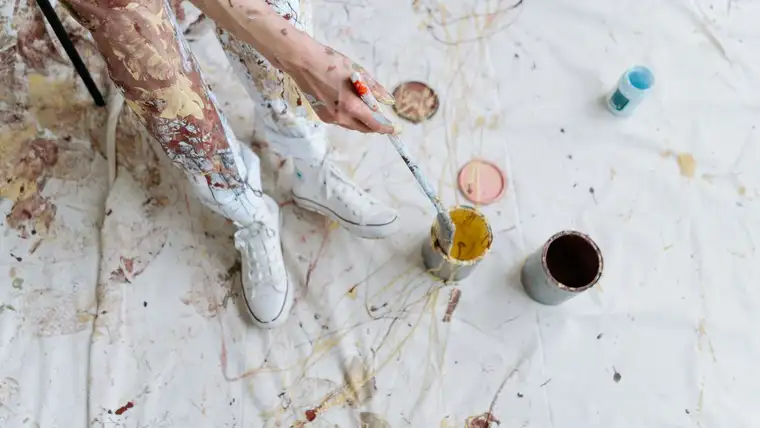
How to remove paint stains
- 1
Scrape off the excess
Lift thick wet paint off with a dull knife or spoon, working from the edge toward the center. Don't wipe it sideways.
Why: Less paint to dissolve, and lifting instead of wiping keeps the stain from growing.
- 2
Check what kind of paint it is
Read the can. Latex, acrylic and most craft paints are water-based and clean up with water. Oil-based paints, enamels and varnishes say to clean up with mineral spirits or another thinner.
Why: Each paint only dissolves in its own carrier, so the label tells you the method.
- 3
Water-based paint: flush it while it's wet
On fabric, run water through the stain from the back, then work in liquid laundry detergent or dish soap and rinse again. On hard surfaces, wipe it up with a damp cloth before it skins over.
Why: Wet latex is still tiny polymer particles floating in water, and they rinse away before they fuse into a film.
- 4
Oil-based paint: blot with the thinner on the label
Put the stained fabric face down on paper towels and dab the back with the thinner the can recommends, changing the towels as they pick up paint. Then rinse and pretreat with detergent or bar soap.
Why: Oil paint dissolves only in an organic solvent. Detergent then removes the solvent along with the loosened pigment.
- 5
Partly dried latex: soften, then scrub
After a soak, dab on a dry-cleaning solvent, rub in liquid laundry detergent and wait 10 to 15 minutes. Scrub under hot water, pretreat again and wash.
Why: The solvent softens a film that has only started to form, and the detergent carries the pigment out. This is Iowa State Extension's method for partly set paint.
- 6
Wash, air-dry and check
Launder washable items in the warmest water the label allows, then air-dry and check in daylight. Repeat the treatment if paint remains.
Why: Dryer heat bakes leftover paint into the fibers.
Why wet paint comes out and dried paint usually doesn't
Paint is pigment held in a binder that forms a film. In latex and acrylic paint, the binder is plastic particles suspended in water. While the paint is wet, water carries them out. As the water evaporates, the particles fuse into a flexible plastic skin that water can't dissolve anymore. Oil-based paints cure a different way: their oils and resins react with air into a hard film.
That's why every reliable guide says to act fast. The American Cleaning Institute says water-based paint can't be removed from fabric once it dries, and Iowa State Extension says removal gets very difficult after 6 to 8 hours. Paint behaves like the other adhesive stains, so treat dried paint as a film to soften and lift, not a color to bleach. Bleach does little to pigment and can damage dyed fabric.
Paint on wood, concrete and walls
On finished wood (floors, trim, doors, furniture), the wood is protected by its own film finish, so anything strong enough to dissolve dried paint may soften the finish too. Wipe up wet latex with a damp cloth right away. For dried drips, gently lift the edge with a plastic scraper and test any solvent on a hidden spot first; the National Park Service advises testing even mild solvents on wood finishes. Shellac finishes dissolve in alcohol, and acetone can strip most finishes. If a drip won't lift without chemicals or sanding, a refinisher is the safer call.
On concrete, absorb fresh paint with a cloth and scrub it with scouring powder. A Canadian building-science digest warns against solvents on fresh paint because they spread it deeper into the pores. Old, hardened paint on driveways, patios, steps or walls usually needs mechanical removal such as abrasive blasting, which is a job for a pro. Avoid wire brushes, which can leave metal bits that rust.
Paint on every surface
The method changes with the surface: fabrics can soak, carpets and mattresses can't. Pick yours for the full steps.
| Surface | What works |
|---|---|
| Carpet | Scoop, dish-soap blotting for latex; remover and solvent for acrylic or oil |
| Clothes | Scrape, flush from the back, detergent, wash |
| Hair | Shampoo wet paint; loosen dried paint with oil and comb |
| Car | Wipe fresh drips off with car-wash soap and lukewarm water before they dry. For dried paint, follow your owner's manual or ask a detailer, because household solvents and abrasives can dull the clear coat. |
| Concrete | Absorb fresh paint with a cloth and scrub with scouring powder rather than solvent, which spreads it into the pores; old dried paint usually needs professional abrasive removal. |
| Walls | Wipe wet paint off with a damp sponge right away. For dried drips, test any cleaner in a hidden spot first, because solvents also attack the wall's own paint. |
| Wood | Wipe wet paint up immediately. For dried drips, lift them gently with a plastic scraper and test any solvent in a hidden spot, because it can soften the wood's finish. |
By situation
The paint is already dry on clothes
Scrape off what flakes, then try Iowa State's solvent-and-detergent method above. Expect partial success at best: the American Cleaning Institute treats dried water-based paint on fabric as permanent.
It went through the washer or dryer
A wash rarely removes dried latex and can spread loose flakes. If the item was dried hot, scrape off any loosened surface paint and try the solvent step, but most fabrics will keep a mark.
Silk, wool, acetate and dry-clean-only clothes
Don't use paint thinner, turpentine or acetone. Acetone dissolves acetate and triacetate outright. Take the item to a dry cleaner quickly and tell them the paint type.
Paint on carpet
Never pour solvent onto carpet, because it can attack the latex that bonds the backing. Apply everything with a cloth and blot from the edges inward. See paint on carpet for the full step order by paint type.
Cleaning painted walls and baseboards without removing paint
Dust first, then wash the walls with plain warm water on a soft sponge, moving to a few drops of mild dish soap only if needed. Work from the bottom up so drips land on clean areas, rinse with a damp cloth and dry. Flat and matte finishes are the least durable, so use light pressure and little water, and test in a hidden spot. Paint makers warn that glass cleaners and heavy-duty sprays contain solvents that can damage the finish, and that fresh paint needs about two weeks before washing.
What not to do
- Don't let latex paint dry before you treat it. Once its particles fuse into a film, water won't dissolve it anymore.
- Don't rub wet paint to work it out. Rubbing spreads the pigment and pushes it into the yarns or pores. Blot and flush instead.
- Don't put solvent-damp items in the washer or dryer. Thinners and dry-cleaning solvents are flammable. Let them evaporate fully outdoors first.
- Don't use solvents on fresh paint on concrete. They thin the paint and carry it deeper into the porous surface.
- Don't use acetone or thinner on painted walls, finished wood or car paint without testing. The same solvents that dissolve the spill can soften or strip the surface's own finish.
Other methods that work
Rubbing alcohol
Widely suggested for softening dried latex or acrylic paint, and Iowa State lists alcohol among solvents for oil paint. No extension guide confirms it for dried latex on fabric, so treat it as traditional, weak evidence.
Caution: It can fade dyes and soften shellac finishes. It's flammable, so test first and ventilate.
Acetone nail polish remover
A strong solvent for some acrylic and oil-based paint films on sturdy surfaces. See acetone for what it does and doesn't damage.
Caution: It dissolves acetate, triacetate and modacrylic, and can damage carpet backing and wood finishes. Ventilate; it's highly flammable.
Baking soda paste on concrete
A gentle abrasive you can use for scouring fresh paint off concrete without harsh chemicals. It's milder than scouring powder, so expect it to be slower.
Caution: It won't lift old, cured paint.
Stain still there?
A faint color shadow is left on fabric
That's pigment trapped in a thin film. Repeat the solvent-and-detergent step and wash again. Bleach does little to pigment and can damage dyed fabric.
Concrete looks blotchy after cleaning
Let it dry completely before judging, because wet concrete looks darker. A freshly cleaned patch often looks lighter at first and usually blends in over time.
Old paint on trim or a door won't lift without scraping
Check the age of the house first. In homes built before 1978, the paint may contain lead, so don't sand or dry-scrape it; hire a lead-safe certified contractor.
Safety
- Thinners, turpentine and acetone are flammable and give off harmful vapors. Ventilate and keep them away from flames and pilot lights.
- In homes built before 1978, don't sand or dry-scrape paint that may contain lead.
- Never mix solvents with bleach or other cleaners.
Never mix cleaning products; see chemicals you must never combine.
Questions
Can you get paint out of clothes after it dries?
Sometimes, but often not completely. Iowa State Extension says removal gets very difficult after 6 to 8 hours, and the American Cleaning Institute treats dried water-based paint as permanent. A dry-cleaning solvent with detergent is the best attempt.
How do you remove paint from wood without damaging the wood?
Wipe up wet paint with a damp cloth immediately. For dried drips, lift them gently with a plastic scraper and test any solvent in a hidden spot first, since it can soften the finish along with the paint.
How do you remove paint from concrete without chemicals?
If it's only a few days old, wipe up what you can with an absorbent cloth and scrub with scouring powder or a baking soda paste and a stiff nylon brush. Old paint usually needs mechanical removal.
How do you clean walls without removing paint?
Use plain warm water, then mild dish soap only if needed, with a soft sponge and light pressure. Test in a hidden spot first, and be especially gentle with flat and matte paint.
Does vinegar remove paint?
None of the sources here recommends vinegar for paint. Water-based paint needs water and detergent while wet, and oil-based paint needs the thinner on the can.
Other glue, paint and polymers
Sources
- Stain Removal Guide, American Cleaning Institute
- Summer Stains (AnswerLine), Iowa State University Extension and Outreach
- CBD-153 Removal of Stains from Concrete Surfaces (Canadian Building Digest, 1972), National Research Council Canada (mirror copy)
- How to Clean Walls Without Damaging Paint, Benjamin Moore (manufacturer)
- Conserve O Gram 7/1: Cleaning Wood Furniture, U.S. National Park Service
- Protect Your Family From Lead in Your Home, U.S. EPA, HUD and CPSC
Last updated . Methods are drawn from the sources above; how we research and check our guides.