How to remove toy putty from clothes, carpet and hair
To remove putty stains, chill the putty with ice so it firms up, scrape off as much as you can, then blot the residue with rubbing alcohol on a cotton ball. If a mark remains, rub in liquid dish soap and wash. Toy putty is a silicone polymer that flows like a very thick liquid when warm, so it creeps into weaves and carpet pile; cold makes it behave like a solid that lifts off in pieces.
- Best method
- Ice, scrape, rubbing alcohol, then dish soap
- Time
- 20 to 30 minutes, plus a wash
- Difficulty
- Easy
- Stain type
- Glue, paint and polymers
You will need
- Ice cubes
- Dull knife or metal spoon
- Rubbing alcohol and cotton balls
- Liquid dish soap
- Nail polish remover, for carpet
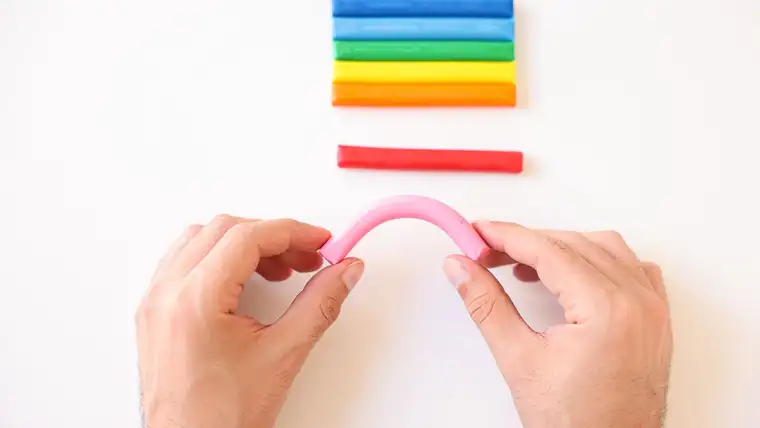
How to remove putty stains
- 1
Chill the putty
Hold ice cubes against the putty until it's firm.
Why: Cold putty acts like a solid and comes away in pieces instead of stretching.
- 2
Scrape off as much as possible
Scrape the hardened putty away with a dull knife or metal spoon. Re-chill it as soon as it starts to soften.
Why: Getting the bulk off first leaves only a thin film to dissolve.
- 3
Blot with rubbing alcohol
Test on a hidden spot, then saturate a cotton ball with rubbing alcohol and blot the stained area.
Why: Alcohol helps release the silicone film and the color it carries.
- 4
Rub in dish soap and wash
If a mark persists, rub liquid dish soap into it and wash as normal. Repeat as needed.
Why: Dish soap removes the oily residue that putty leaves behind.
- 5
Air-dry and check
Air-dry and check before using the dryer.
Why: Heat re-softens leftover putty and spreads it.
Why toy putty creeps into fabric
Silicone toy putty is mostly a silicone polymer, cross-linked with boric acid, plus a silica filler, an oil and color. It's a strange material: it flows slowly like a thick liquid when left alone, yet snaps or bounces like a solid when pulled fast. Left on a couch cushion or carpet, it slowly sinks into the weave and leaves an oily, colored film. That film behavior puts it with the adhesive stains.
Cold slows the flow, which is why ice works so well. Rubbing alcohol and other solvents release the film, and dish soap carries off the oily residue. The word putty can also mean glazing or wall putty; the Carpet and Rug Institute's putty guidance doesn't say which, so its solvent-first order is general guidance.
Putty on every surface
The method changes with the surface: fabrics can soak, carpets and mattresses can't. Pick yours for the full steps.
By situation
It went through the wash or dryer
Chill whatever is left, scrape it off, then use rubbing alcohol and dish soap and rewash. Check the other items in the load, since putty can transfer. The putty maker's fabric method covers heat-set putty too.
Putty in carpet
Chill and scrape, then blot with nail polish remover on a cotton ball, or rubbing alcohol as a substitute, and repeat. See putty in carpet.
Putty in hair
Hair needs gentler handling than fabric; see putty in hair.
Colored fabric
Alcohol and nail polish remover can fade dyes, so test first. On whites, leftover color can be treated with oxygen bleach.
Acetate, silk, wool and dry-clean-only items
Keep nail polish remover off acetate, triacetate and modacrylic, which acetone dissolves. Take silk, wool and dry-clean-only items to a cleaner.
What not to do
- Don't wash or dry before the putty is off. Heat and agitation spread it and push it deeper into the fibers.
- Don't pull warm putty off. It stretches and leaves more residue. Chill it first.
- Don't use acetone on acetate fabrics. Acetone dissolves acetate.
Other methods that work
Dry-cleaning solvent on carpet
The Carpet and Rug Institute's putty order starts with a dry-cleaning solvent on a cloth, then a dilute dish-detergent solution and a warm-water rinse.
Caution: Apply it with a cloth and ventilate.
Petroleum-based lubricant spray
A popular tip, since petroleum solvents loosen silicone putty. No cited stain guide recommends it; treat it as traditional, with weak evidence.
Caution: It leaves an oil stain that needs dish soap, and it's flammable.
Stain still there?
An oily, darker patch remains
Rub in more dish soap and rewash. Blot with alcohol again if the film is still there.
A colored tint stays after the putty is gone
Repeat the alcohol blotting, then wash. On whites, soak in oxygen bleach.
Safety
- Rubbing alcohol and nail polish remover are flammable. Ventilate and keep them away from flames.
Never mix cleaning products; see chemicals you must never combine.
Questions
How do you get putty out of clothes?
Chill it with ice, scrape off what you can, blot with rubbing alcohol on a cotton ball, then rub in dish soap and wash. Repeat as needed.
How do you get putty out of carpet?
Chill and scrape, then blot with nail polish remover on a cotton ball, or rubbing alcohol, and repeat until it's gone.
Can you get putty out after it went through the dryer?
Usually. Chill and scrape the hardened bits, then use alcohol and dish soap and rewash.
Other glue, paint and polymers
Sources
- Silly Putty on Fabric (Fresh/Heat Set), Crayola (manufacturer stain-removal guidance)
- Silly Putty on Carpeting, Crayola (manufacturer stain-removal guidance)
- Spot Solver: Putty, The Carpet and Rug Institute
- Stain Removal for Washable Fabrics (HE 2-840), University of Kentucky Cooperative Extension Service
Last updated . Methods are drawn from the sources above; how we research and check our guides.